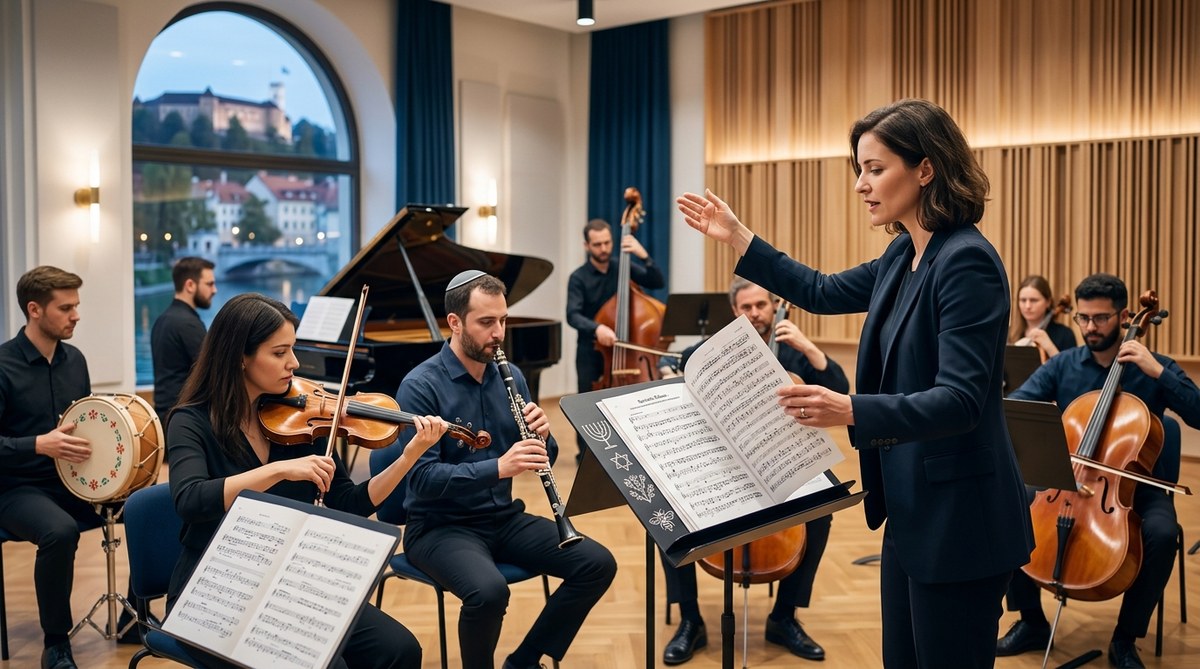
Jewish musical influence in Slovenian compositions is a rich and nuanced story that weaves through centuries of cultural interactions. While Slovenia is known for its diverse musical landscape, the subtle yet profound impact of Jewish melodies, rhythms, and traditions has left its mark on contemporary Slovenian composers. Understanding this influence offers a deeper appreciation of Slovenia’s vibrant musical tapestry and the shared cultural heritage that continues to inspire artists today.
Jewish musical elements, rooted in centuries of tradition, have subtly influenced Slovenian composers. Recognizing these elements reveals a shared cultural history and enriches our understanding of contemporary Slovenian music. From traditional melodies to innovative adaptations, Jewish influence continues to inspire and shape Slovenian compositions today.
The historical roots of Jewish music in Slovenia
Jewish communities have existed in Slovenia for centuries, particularly in Ljubljana and other towns along historic trade routes. Their musical traditions, especially klezmer music and liturgical chants, have traveled across borders and influenced local musical practices over time. These traditions were often characterized by lively dance tunes, soulful melodies, and distinctive ornamentation that resonated beyond their original communities.
The Jewish population in Slovenia faced upheavals, including expulsions and the Holocaust, which threatened their cultural presence. Despite these hardships, their musical legacy persisted through recorded music, oral traditions, and the influence on local musicians. Many Slovenian composers, particularly in the 20th and 21st centuries, began to incorporate Jewish motifs into their works as a way of honoring this shared heritage.
Key ways Jewish musical influence manifests in Slovenian compositions
Jewish musical influence appears in Slovenian compositions through various techniques and stylistic elements. Composers often draw inspiration from traditional klezmer scales, rhythmic patterns, and modal melodies. These elements, when integrated into classical, folk, or contemporary music, create a unique fusion that pays homage to Jewish culture.
Some common methods include:
- Using traditional klezmer scales and modes, such as the Freygish or Ahava Rabboh.
- Incorporating rhythmic patterns like the hora or freilach, which are lively dance rhythms.
- Embedding specific melodic motifs recognizable from Jewish liturgical or folk music.
- Employing ornamentation styles, including mordents and slides, characteristic of klezmer performance.
Techniques and common mistakes in incorporating Jewish musical influence
| Technique | Description | Common Mistakes |
|---|---|---|
| Modal melodies | Using Jewish modes like Freygish or Phrygian | Overuse leading to stereotypical sound |
| Rhythmic patterns | Incorporating dance rhythms like hora | Ignoring the cultural context of rhythms |
| Ornamentation | Adding slides, mordents, and trills | Over-embellishing, making melodies unnatural |
| Melodic motifs | Embedding recognizable Jewish motifs | Copying without understanding underlying scales |
Expert advice from ethnomusicologists emphasizes the importance of respecting the authenticity of Jewish musical traditions. They suggest that composers should study traditional klezmer recordings and understand the cultural significance behind the melodies and rhythms before integrating them into their work.
“When incorporating Jewish musical elements into compositions, it’s vital to approach with sensitivity and respect. Authenticity comes from understanding the cultural context and history behind the music.” — Dr. Miriam Goldstein, ethnomusicologist
Modern Slovenian composers and their Jewish influences
Contemporary Slovenian composers have found inspiration in Jewish music, blending traditional motifs with modern techniques. For example, the works of Igor Vukadin and Tomaž Pengov have demonstrated how Jewish scales and rhythmic patterns can enrich Slovenian folk and classical music. These composers often aim to preserve the cultural memory of Jewish communities while creating new, innovative sounds.
Some notable examples include:
- Incorporation of klezmer-inspired clarinet passages in Slovenian chamber music.
- Use of Jewish rhythmic motifs in contemporary dance compositions.
- Fusion of liturgical melodies with Slovenian folk tunes to produce a cross-cultural musical dialogue.
This ongoing influence highlights a deep appreciation for Jewish cultural heritage and its role in shaping Slovenia’s musical identity.
Tracing the influence through specific musical works
While many compositions subtly echo Jewish musical influence, some stand out for their explicit references. For example, Slovenian composers like Marjan Kogoj have incorporated klezmer-like melodies into their orchestral works, capturing the lively spirit of Jewish folk dance.
Moreover, certain choral pieces and songs pay homage to Jewish liturgical traditions by using Hebrew texts or melodies. These pieces serve as musical bridges connecting Slovenia’s diverse cultural history.
Practical steps for researchers and students
- Study traditional Jewish music: Listening to klezmer recordings and liturgical chants provides a foundation for understanding key motifs and styles.
- Analyze Slovenian compositions: Identify recurring scales, rhythms, or motifs that resemble Jewish musical elements.
- Compare and contrast: Map specific Jewish motifs to their Slovenian counterparts to trace influence.
- Consult experts: Reach out to ethnomusicologists or visit cultural centers that focus on Jewish heritage in Slovenia.
- Incorporate in research: Use findings to write papers or develop performances that highlight these cross-cultural influences.
Common pitfalls to avoid
- Appropriating Jewish music without understanding its cultural significance.
- Relying solely on stereotypes or clichés.
- Ignoring the historical context of Jewish communities in Slovenia.
- Overusing motifs, which can lead to superficial references rather than meaningful integration.
Techniques and mistakes in incorporating Jewish influence
| Technique | Description | Common Mistakes |
|---|---|---|
| Authentic research | Studying original Jewish music sources | Superficial or misinterpreted motifs |
| Cultural sensitivity | Respecting the traditions | Cultural appropriation or trivialization |
| Musical fusion | Blending styles seamlessly | Forced or disconnected transitions |
Final reflections: Cultivating cultural understanding through music
The influence of Jewish musical traditions in Slovenian compositions exemplifies how cultural exchanges shape artistic expression. Recognizing and respecting these influences enriches our appreciation of Slovenia’s diverse heritage. As music researchers or students, engaging authentically with Jewish musical styles can open new avenues for creativity and understanding.
By approaching this heritage with curiosity and respect, you can contribute to preserving these traditions and fostering a deeper connection across cultures. Incorporating Jewish motifs thoughtfully into Slovenian compositions not only honors history but also keeps these vibrant traditions alive for future generations.
Embracing shared melodies in Slovenian musical landscapes
Understanding the Jewish musical influence in Slovenian compositions invites us to see beyond borders and recognize the interconnectedness of cultural expression. Whether through studying traditional klezmer tunes or analyzing contemporary works, discovering these influences encourages a deeper appreciation of Slovenia’s rich musical tapestry.
Applying these insights in your own research or performances can highlight the enduring legacy of Jewish music. It fosters a dialogue that celebrates diversity, history, and shared human experiences. Let this knowledge inspire you to explore and honor the subtle melodies that continue to shape Slovenian musical identity.
Feel encouraged to listen closely to Slovenian compositions and notice the echoes of Jewish melodies and rhythms. Each musical piece is a story waiting to be uncovered, revealing our shared cultural heritage in every note.
Leave a Reply