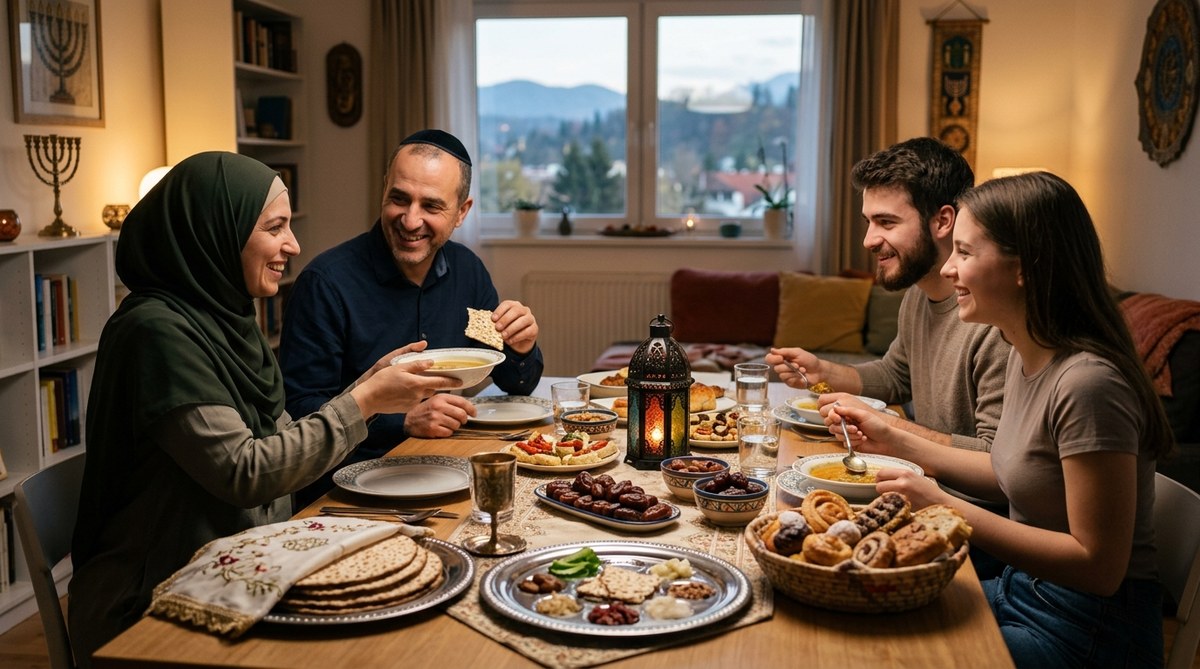
Jewish communities in Slovenia often find themselves celebrating alongside Muslim neighbors when Ramadan and Passover coincide. This rare overlap creates a unique opportunity for cultural exchange, shared experiences, and mutual respect. Slovenian families, whether religious or simply curious, approach this period with openness and a desire to honor traditions while fostering unity. Understanding how they navigate these overlapping holidays reveals the beauty of coexistence and the importance of inclusivity in Slovenia’s diverse society.
Slovenian families manage overlapping Ramadan and Passover through mindful planning, community involvement, and mutual respect. This period highlights the nation’s commitment to [interfaith harmony](https://en.wikipedia.org/wiki/Interfaith_harmony) by combining traditions, sharing meals, and fostering understanding among diverse faith communities.
How families in Slovenia balance Ramadan and Passover celebrations
When Ramadan and Passover happen at the same time in Slovenia, families often adjust their routines to honor both traditions. This balancing act reflects a broader societal effort to promote respect and coexistence among different religious groups. Here are some ways families manage this overlap:
Practical steps for managing dual celebrations
-
Coordinating meal times and menus
Since Ramadan involves fasting from dawn until sunset, families plan evening gatherings that respect both the fast and Passover’s dietary laws. For example, if a family observes Passover, they might prepare special matzah meals for the evening, or host a shared iftar meal that includes kosher options. These gatherings often become moments of community bonding, where neighbors share traditional dishes from both traditions. -
Scheduling religious activities thoughtfully
Religious leaders and community organizers may coordinate prayer times and celebrations to avoid conflicts. In some cases, community events are held at neutral times, allowing Muslims and Jews to participate without compromising their practices. For example, a communal iftar might be scheduled during a time that allows Jewish families to observe their Passover Seder without interruption. -
Fostering interfaith dialogue and understanding
During this overlap, many Slovenian communities organize interfaith gatherings, such as joint prayers or educational sessions about each tradition. These initiatives promote dialogue and help dispel misconceptions. Sharing stories about Ramadan and Passover can deepen mutual understanding, highlighting shared values like family, charity, and gratitude.
How communities support this coexistence
-
Shared spaces and community centers
Religious facilities often open their doors for joint events. Synagogues and mosques may host open houses, inviting neighbors to learn about each other’s faiths. These efforts foster friendships and break down barriers. -
Educational programs for youth
Schools and youth groups organize activities that teach children about Ramadan and Passover traditions. Engaging young minds in stories, crafts, and cooking classes helps build a culture of respect and curiosity. -
Local media and social media campaigns
Slovenian media sometimes highlight stories of families celebrating both holidays, emphasizing the country’s commitment to diversity. Social media campaigns share photos and messages of unity, encouraging others to participate in interfaith understanding.
Techniques and pitfalls in managing overlapping holidays
| Technique | Benefit | Common Mistake |
|---|---|---|
| Open communication | Prevents misunderstandings | Assuming others know your plans |
| Respecting dietary laws | Shows consideration | Mixing non-kosher or non-halal foods during shared meals |
| Inclusive community events | Builds bonds | Overlooking the needs of minority groups |
| Early planning | Ensures smooth celebrations | Last-minute scheduling conflicts |
“When communities approach overlapping holidays with openness and respect, they turn a challenging situation into an opportunity for dialogue and friendship,” says Dr. Mira Novak, a Slovenian interfaith coordinator.
Celebrating traditions side by side
Many families in Slovenia find ways to honor their faith’s customs while sharing the holiday spirit. Here are some examples:
- Joint family meals where kosher and halal dishes are served alongside traditional Passover and Ramadan foods.
- Educational sessions explaining the significance of each holiday’s rituals, fostering appreciation.
- Community service projects that embody the values of charity central to both religions.
- Cultural exchanges like music and storytelling events that highlight shared histories and values.
Unique challenges and creative solutions
While the overlapping of Ramadan and Passover can be harmonious, it also presents challenges. These might include scheduling conflicts, limited resources for special dietary needs, or misunderstandings about religious requirements. Slovenian families often find creative ways to address these issues:
- Hosting flexible events that accommodate both fasting and dietary restrictions.
- Using digital tools to coordinate schedules and share recipes or educational materials.
- Engaging youth in organizing joint activities that foster leadership and understanding.
Common mistakes to avoid
| Mistake | Explanation | How to prevent it |
|---|---|---|
| Ignoring dietary restrictions | Can offend or cause health issues | Communicate dietary needs early |
| Overlooking cultural sensitivities | May alienate community members | Educate yourself about traditions |
| Rushing planning | Leads to confusion | Start preparations well in advance |
How Slovenian families foster ongoing interfaith respect
The success of managing overlapping Ramadan and Passover celebrations in Slovenia hinges on ongoing dialogue and shared experiences. Communities often establish long-term initiatives like:
- Interfaith cooking classes
- Shared holiday community service projects
- Collaborative cultural festivals
- Interfaith study groups focused on common values and histories
Such efforts create enduring bonds and pave the way for future cooperation.
Bridging traditions for a harmonious future
In Slovenia, the way families and communities approach the overlap of Ramadan and Passover exemplifies the potential for harmony amid diversity. By respecting each other’s customs, communicating openly, and sharing resources, they turn a rare occurrence into a celebration of unity. This approach not only enriches individual families but also strengthens the social fabric of the nation.
In practical terms, if your community ever faces overlapping holidays, consider initiating conversations and joint activities. Embrace the opportunity to learn and grow together. Celebrating diversity can be as simple as sharing a meal, exchanging stories, or attending each other’s events. These small acts build lasting bridges and nurture a culture of mutual respect.
Celebrating diversity in Slovenia’s vibrant tapestry
The overlap of Ramadan and Passover in Slovenia serves as a reminder of the country’s rich cultural mosaic. It demonstrates how different traditions can coexist peacefully and even enrich each other. Families across Slovenia show that with patience, understanding, and a willingness to learn, shared celebrations can become moments of genuine connection.
As you observe or participate in these festivities, remember that the essence of both Ramadan and Passover lies in reflection, gratitude, and community. By embracing both, Slovenian families exemplify the best of interfaith harmony. You too can foster this spirit in your own community by approaching differences with curiosity and kindness.
This period offers a unique opportunity for learning and connection. Whether you are part of a family celebrating or simply a curious observer, take the chance to engage with your neighbors’ traditions. Sharing in these moments can deepen your appreciation for diversity and help build a more inclusive society.
Leave a Reply