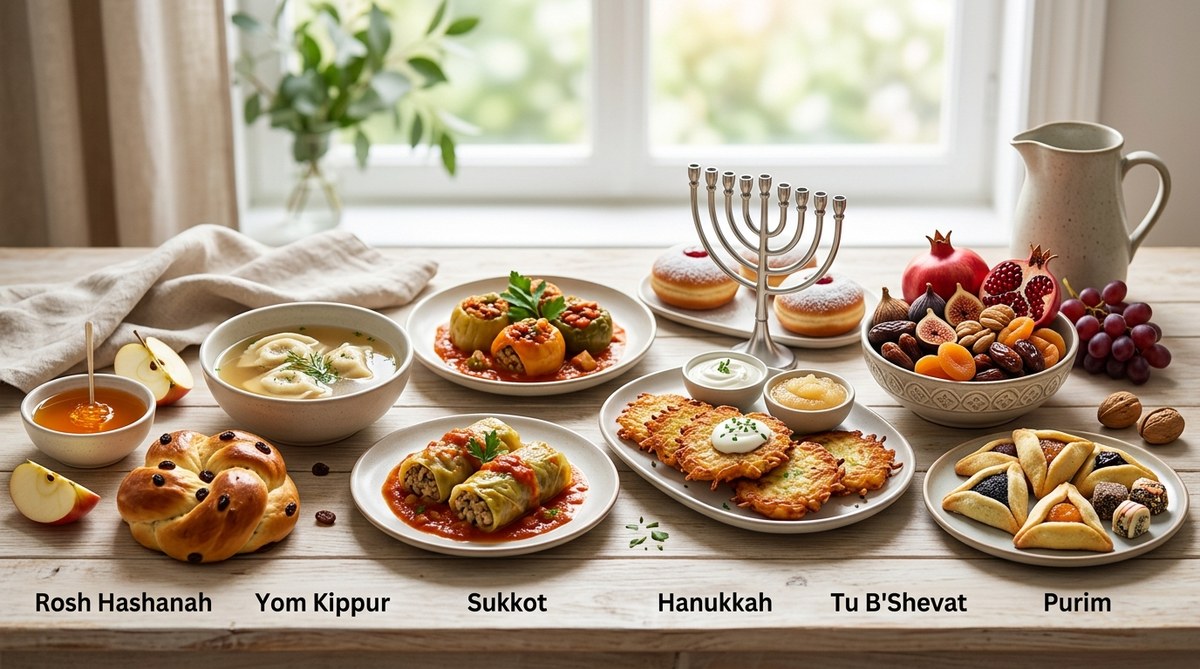
Jewish holidays are rich in history, meaning, and, of course, food. Each celebration brings its own set of traditional dishes that connect us to generations past and add flavor to our current observances. From the sweet apples and honey of Rosh Hashanah to the festive hamantaschen of Purim, understanding the culinary calendar helps deepen your connection to Jewish culture. Whether you’re a seasoned cook or just starting to explore holiday traditions, knowing what foods are associated with each event makes your celebrations more meaningful and delicious.
A Jewish holiday foods calendar guides you through the year, highlighting traditional dishes for each celebration. This knowledge enhances your experience and helps preserve cultural heritage while making holiday meals more special.
Understanding the Jewish holiday foods calendar
The Jewish calendar is filled with holidays that each carry unique culinary customs. These foods are more than just ingredients; they symbolize hopes, blessings, and historical events. Learning about the foods associated with each holiday can help you prepare traditional dishes, teach the next generation, and feel more connected during your observance.
Major Jewish holidays and their signature foods
Rosh Hashanah: Starting the Year with Sweetness
Rosh Hashanah marks the Jewish New Year and is celebrated with foods that symbolize sweetness and prosperity. Apples dipped in honey are a staple, representing the wish for a sweet year. Pomegranates are also popular, as their many seeds symbolize fertility and abundance.
Traditional foods include:
- Apples and honey
- Pomegranate seeds
- Round challah bread, symbolizing continuity and the cycle of the year
- Fish head or tail to symbolize leadership and a good beginning
Sukkot: Celebrating the Feast of Tabernacles
Following Rosh Hashanah, Sukkot commemorates the wandering in the desert. It’s a harvest festival, and foods are often seasonal produce like squash, eggplants, and gourds.
Key foods are:
- Stuffed vegetables, such as stuffed peppers or zucchini
- Fruit salads with seasonal fruits
- Sukkah-specific baked goods, often featuring honey or apples
Hanukkah: The Festival of Lights
Hanukkah’s foods are characterized by their fried nature, symbolizing the miracle of the oil that lasted eight days. The most iconic dish is latkes, crispy potato pancakes. Sufganiyot, jelly-filled doughnuts, are also a favorite.
Hanukkah treats include:
- Potato latkes
- Sufganiyot (jelly doughnuts)
- Brisket and other slow-cooked meats
- Gelt chocolates
Tu B’Shevat: The New Year for Trees
This holiday celebrates renewal and the environment with foods that are tree-based. Fruits such as figs, dates, and olives are central.
Common foods are:
- Dried fruits and nuts
- Fruit platters
- Tree-themed salads and dishes
Purim: Celebrating with Joy and Masks
Purim is a festive holiday marked by giving gifts, reading the Megillah, and enjoying sweet treats. Hamantaschen, triangular cookies filled with fruit preserves or poppy seeds, are the hallmark.
Purim foods include:
- Hamantaschen in various flavors
- Treyf (non-kosher) delicacies are sometimes enjoyed, but many communities stick to traditional treats
- Festive meals often include meat or vegetarian dishes
Passover: Commemoration and Freedom
Passover’s food traditions are deeply tied to the story of the Exodus. Matzah, unleavened bread, is central, symbolizing haste. The holiday meal includes brisket, charoset (a sweet fruit paste), and vegetables.
Key Passover foods:
- Matzah and matzah ball soup
- Charoset
- Gefilte fish
- Roasted vegetables
- Saltwater for dipping
Shavuot: The Festival of the Giving of the Torah
Shavuot is associated with dairy foods to symbolize the Torah’s nourishment. Cheesecake, blintzes, and cheeseburgers are common.
Popular dishes are:
- Cheesecake
- Blintzes (thin pancakes filled with cheese)
- Dairy salads and spreads
Yom Kippur: Day of Atonement
Yom Kippur is a day of fasting. The pre-fast meal is hearty and filling, often including bread, eggs, and fish. After the fast, a light break-fast meal is customary.
Pre-fast foods:
- Challah bread
- Fish
- Fruits and vegetables
Post-fast meal:
- Light soups
- Bagels and cream cheese
- Fresh fruits
Sigd: The Ethiopian Jewish Holiday
Celebrated with communal prayers and foods like injera (flatbread) and stews such as doro wat, a spicy chicken stew.
Practical steps for celebrating with traditional foods
- Plan your menu early. Knowing the signature dishes helps you prepare ahead.
- Source seasonal ingredients. Fresh fruits and vegetables reflect the holiday’s themes.
- Involve family and friends. Cooking together makes traditions more meaningful.
- Practice kashrut. Ensure your ingredients and methods comply with dietary laws.
- Get creative. Adapt traditional recipes to your taste and dietary needs.
Techniques and common mistakes in holiday cooking
| Technique | Mistake to Avoid |
|---|---|
| Frying latkes at the right temperature | Burning or soggy latkes due to incorrect heat |
| Using fresh ingredients | Dull flavors from old or stale produce |
| Properly sealing hamantaschen | Filling leaking during baking |
| Ensuring kosher preparation | Cross-contamination with non-kosher items |
An expert chef advises, “The secret to perfect holiday dishes is patience. Respect the traditional methods, but don’t be afraid to add your personal touch.”
Connecting the culinary dots throughout the year
Understanding the foods associated with Jewish holidays transforms your celebrations. It offers a chance to teach children about history, share meaningful moments with loved ones, and keep traditions alive. Whether you are baking challah for Rosh Hashanah or frying latkes during Hanukkah, each dish is a celebration of heritage.
Carrying tradition into everyday life
Incorporating holiday foods into your daily routine can turn even ordinary meals into opportunities for connection. For example, enjoying seasonal fruits on a weekday or making a special Shabbat challah helps keep your cultural roots vibrant. The more you learn about these foods, the more naturally they will become part of your life.
Celebrating the culinary journey of the Jewish calendar
Traditional foods are more than just recipes; they are stories, symbols, and bonds that tie generations together. As you explore the Jewish holiday foods calendar throughout the year, you’ll find each celebration offers a chance to gather, reflect, and enjoy. Embrace these traditions with enthusiasm and creativity.
Warming up your kitchen for the year ahead
Starting with a solid understanding of the foods linked to each holiday makes your celebrations more authentic and joyful. Gather family recipes, learn new techniques, and experiment with seasonal ingredients. Remember, every dish is an opportunity to connect with your heritage and create lasting memories.
Happy cooking and celebrating!
Leave a Reply