html
Slovenia’s synagogues tell a layered story of Jewish life, expulsion, and resilience. From the medieval Jewish quarters of Ljubljana and Maribor to the preserved synagogue in Lendava and the reconstructed center in Murska Sobota, these sacred spaces reveal centuries of Slovenian Jewish heritage. This photographic journey explores their architecture, history, and modern preservation efforts across the country.
A Small Country with a Deep Jewish Story
Slovenia is tiny. Yet its Jewish history is surprisingly rich. For centuries, Jewish communities lived, prayed, and created vibrant cultural hubs across this small Central European land. Today, many of their synagogues are gone. A few remain standing. Others exist only in faded photographs and archival records. Exploring the lost synagogues of Slovenia offers a window into a world that was nearly erased.
This journey through sacred spaces reveals how Slovenia synagogues history shaped the region’s identity. You do not need to be Jewish or Slovenian to appreciate these stories. You just need a love for history and a curiosity about the past.
Slovenia synagogues history is a story of resilience, loss, and quiet memory. From medieval Jewish quarters in Maribor and Ljubljana to the preserved synagogue in Lendava, these sacred spaces reveal centuries of Jewish life. This guide helps you explore their architecture, context, and preservation.
Why Slovenia’s Synagogues Deserve a Closer Look
Slovenia is a small country with a very long memory. Tucked between the Alps and the Adriatic, this Central European nation holds traces of Jewish life that go back to the Middle Ages. Most visitors never notice the faded doorways, the walled-up windows, or the quiet corners where synagogues once stood. Yet those places tell a remarkable story. For anyone fascinated by Jewish heritage, the Slovenia synagogues history is a layered narrative of settlement, expulsion, renewal, and memory.
Many of Slovenia’s old synagogues no longer exist as houses of worship. Some were converted into schools, storehouses, or private homes. Others survive only as ruins or archaeological sites. A few still stand, carefully preserved as museums and memorials. Each one carries centuries of Jewish life in a small but vibrant community that once stretched across the region.
If you are planning a heritage trip or doing research, this guide will walk you through the most significant synagogues in Slovenia, the stories behind them, and how to visit them respectfully.
Slovenia’s Jewish heritage is small but deeply layered. Its synagogues, many now vanished, tell stories of medieval communities, Renaissance tolerance, and modern memory. This journey through Slovenia synagogues history reveals surviving sites, museum collections, and the quiet work of preservation. A meaningful path for anyone tracing Jewish life in Central Europe.
Why Slovenia Holds a Surprising Jewish Past
Slovenia sits at a cultural crossroads. It connects the Alps, the Mediterranean, and the Pannonian Plain. This small nation has a long Jewish story that many travelers overlook. For centuries, Jewish communities lived, prayed, and built synagogues across Slovenian lands. Most of those buildings are gone now. But the traces remain, and they are worth exploring.
When you search for Slovenia synagogues history, you are really asking about memory. You are asking how a community of a few thousand people left a mark that still shapes the landscape. From medieval Ljubljana to the Adriatic port of Koper, synagogues once served as spiritual anchors. Today, only a few survive as museums, galleries, or cultural halls. Others exist only in old drawings and photographs. This guide walks you through the stories behind these sacred spaces and how you can experience them today.
A Small Country With a Deep Jewish Past
Slovenia sits at the crossroads of Germanic, Romance, and Slavic worlds. Jewish communities have lived here for over a thousand years. The first written records date to the 12th and 13th centuries, when Jewish merchants and moneylenders settled along trade routes.
The history of Slovenia’s synagogues is not a story of grand cathedrals or massive temples. Instead, it is a story of small, intimate spaces. These were community anchors. They hosted prayer, study, weddings, and mourning. Their walls held generations of memory.
Today, only a few traces remain. Some buildings were repurposed. Others were destroyed. But their stories still matter. This article explores the lost synagogues of Slovenia, the history behind them, and how you can trace their memory today.
Slovenia once hosted vibrant Jewish communities whose synagogues served as spiritual and cultural anchors. Though most of these sacred spaces were destroyed or repurposed, their stories survive through records, archaeology, and memory. This guide explores the lost synagogues of Slovenia, the forces that erased them, and the preservation efforts now reclaiming this rich Jewish heritage.
Opening the Door to Slovenia’s Jewish Past
Slovenia is a small country with a very old story. Tucked between the Alps and the Adriatic, it holds traces of Jewish life that go back many centuries. Most visitors pass by without knowing that synagogues once stood in towns like Maribor, Ljubljana, and Lendava. Today, only a few traces remain. But those traces matter. They tell a story of faith, survival, and memory. This guide explores the lost synagogues of Slovenia, the history behind them, and how you can still experience their presence through photographs, documents, and carefully preserved ruins.
The Deep Roots of Jewish Presence in Slovenia
Jewish communities in the area we now call Slovenia have deep roots. Written records mention Jewish merchants in the Middle Ages. They lived in towns like Ptuj, Maribor, and Ljubljana. These communities built synagogues, schools, and ritual baths. For centuries, they contributed to trade, medicine, and local culture.
The medieval Jewish community in Slovenia was small but vibrant. It existed alongside Christian neighbors, sometimes peacefully, sometimes not. Royal decrees and church rulings shaped where Jewish families could live and work. Over time, expulsions and fires erased many physical traces. Yet some synagogues survived, hidden in plain sight. Others left only faint outlines in old city walls.
When you trace Slovenia synagogues history, you find a story of resilience. You also find a story of silence, because so many buildings vanished without a trace.
Slovenia’s lost synagogues tell a layered story of medieval Jewish life, expulsion, and modern memory. From Maribor’s 15th century synagogue to the vanished prayer houses of Ptuj and Ljubljana, these sacred spaces shaped local culture. This guide explores their architecture, history, and the ongoing efforts to preserve their legacy.
Why Slovenia’s Synagogues Matter
Slovenia sits at a crossroads. It is small, green, and often overlooked in Jewish history. Yet for centuries, Jewish communities called this land home. Their synagogues were not just places of worship. They were centers of learning, community life, and cultural exchange. Today, only a handful survive. Their stories deserve attention.
When you search for Slovenia synagogues history, you are stepping into a world of medieval stone walls, hidden prayer rooms, and communities that shaped towns across the region. This article takes you through that world, one building at a time.
A Land of Tiny Communities, Huge Stories
Slovenia’s Jewish history is not like the big Jewish centers of Poland or Germany. It is smaller, quieter, and often overlooked. Jewish communities lived in Ljubljana, Maribor, Ptuj, and a handful of other towns. They built synagogues, studied Torah, and contributed to local economies. Most of these buildings are gone now, but their stories remain carved into stone and memory.
The oldest records of Jews in the area that is now Slovenia go back to the 12th century. Some communities flourished under local lords. Others faced expulsion and violence. The surviving buildings are rare. That is what makes them so precious.
Why Slovenia’s Synagogues Matter
Slovenia is not the first place most people associate with Jewish history. Yet this small country holds traces of a once thriving Jewish presence. The synagogues of Slovenia tell a story of settlement, expulsion, renewal, and memory. They are not just religious buildings. They are witnesses to centuries of change.
For history enthusiasts and cultural heritage travelers, these sacred spaces offer a window into a world that no longer exists. Each stone, each arch, each carved Hebrew inscription carries the weight of a community that contributed to the broader tapestry of Central European Jewish life. The Jewish community site is dedicated to preserving these stories and sharing them with the world.
Slovenia’s synagogues tell a layered story of Jewish life, persecution, and memory. From medieval prayer houses to restored cultural landmarks, these sacred spaces reveal how a small community shaped a nation. This guide traces their history, architecture, and the preservation efforts keeping their legacy visible today.
Opening the Door to Slovenia’s Jewish Past
Slovenia is a small country with a big story hidden in plain sight. Tucked between the Alps and the Adriatic, this Central European nation once hosted vibrant Jewish communities in towns like Maribor, Lendava, and Ljubljana. Today, only fragments remain: a medieval synagogue turned cultural center, a few carved stones, and a handful of memorials. But those fragments carry centuries of memory. For anyone interested in the hidden synagogues of medieval Ljubljana and their stories, Slovenia offers a deeply moving journey through time.
The story of Slovenia’s synagogues is not just about buildings. It is about communities that thrived, suffered, and endured. It is about how a small Jewish presence shaped the cultural landscape of this Central European country. And it is about the quiet power of remembering. This guide walks through the lost synagogues of Slovenia, their architecture, their history, and the ways you can still trace their presence today.
Slovenia’s synagogues tell a story of faith, expulsion, and resilience. From medieval Maribor to Ljubljana’s vanished prayer houses, these sacred spaces shaped Jewish life for centuries. Today, only a few fragments remain, yet their memory anchors Slovenia’s Jewish heritage and invites thoughtful exploration.
A Land of Vanished Voices
Slovenia is small on the map, but it holds deep layers of Jewish history. Walk through Ljubljana, Maribor, or Ptuj, and you are stepping on stones that once echoed with Hebrew prayers. The story of Slovenia synagogues history is one of thriving communities, tragic ruptures, and quiet acts of remembrance. For history enthusiasts and cultural heritage travelers, these sacred spaces offer a window into a world that was nearly erased.
This article explores the lost synagogues of Slovenia, the communities that built them, and how you can trace these stories today.
What Makes Slovenia’s Synagogue Heritage Unique?
Slovenia sits at a crossroads of cultures. Its Jewish history goes back to the Middle Ages, when small communities lived in towns along the Adriatic and the Sava River. Unlike the grand synagogues of Prague or Budapest, Slovenian synagogues were modest. They served tight knit communities that often numbered only a few hundred people.
What makes them special is their silence. Most are gone. A few survive as warehouses, homes, or galleries. Only one, the synagogue in Ljubljana, functions as a place of worship again. This layered history makes Slovenia synagogues history feel like a mystery waiting to be uncovered, one stone at a time.
Slovenia’s synagogues tell a layered story of medieval Jewish life, expulsion, and quiet renewal. This guide explores their history, architecture, and preservation, offering practical tips for visiting sacred sites and tracing Jewish heritage across the country. Perfect for cultural travelers and history lovers planning a meaningful journey.
Why Slovenia’s Synagogues Deserve a Closer Look
Slovenia is small, but its Jewish history is deep and layered. Most travelers pass through without realizing that this tiny Central European country once hosted vibrant Jewish communities in towns like Maribor, Ljubljana, and Lendava. The synagogues of Slovenia are not just religious buildings. They are time capsules of a world that was nearly erased. They hold stories of medieval trade, rabbinic scholarship, and community life that shaped the region for centuries.
For history enthusiasts and cultural heritage travelers, Slovenia offers a unique chance to explore sacred spaces that are often overlooked. The hidden synagogues of medieval Ljubljana reveal a complex past. Many of these structures no longer stand as places of worship. Some were repurposed, others destroyed, and a few remain as museums and memorials.
Slovenia’s synagogues tell a layered story of Jewish life, persecution, and memory. From medieval Ljubljana to the surviving synagogue in Lendava, these sacred spaces reveal centuries of history. This guide traces their origins, destruction, and the careful preservation work keeping their heritage visible today. (75 words)
Why Slovenia’s Synagogues Deserve a Closer Look
Slovenia is a small country with a surprisingly layered Jewish past. Most travelers pass through without realizing that this Alpine nation once hosted thriving Jewish communities. The synagogues here were more than places of worship. They were community centers, schools, and witnesses to centuries of change. Today, only a few traces remain, but those traces tell a powerful story.
If you are a history enthusiast or a cultural heritage traveler, exploring Slovenia’s lost synagogues is like opening a time capsule. You will find Romanesque doorways, Gothic windows, and walls that carry memories of a community that once flourished. This journey is not just about buildings. It is about the people who prayed, celebrated, and lived within them.
In this guide, I will walk you through the history of Slovenia’s synagogues, what remains today, and how you can explore these sacred spaces with respect and understanding.
Slovenia’s synagogues tell a layered story of Jewish life, expulsion, and resilience. This article explores their history, architectural traces, and modern preservation efforts. You will learn about the Maribor Synagogue, the lost synagogues of Ljubljana and Lendava, and how to explore these sacred sites today. Perfect for heritage travelers and history lovers.
Opening
Slovenia hides a remarkable secret. Tucked between the Alps and the Adriatic, this small Central European country once hosted a vibrant Jewish presence. Today, only one synagogue survives intact. The rest exist as memory, stone foundations, and quiet stories waiting to be told. For travelers and history lovers, these lost synagogues offer a powerful window into centuries of Jewish life, expulsion, and resilience. This journey through Slovenia’s Jewish heritage reveals how sacred spaces shaped communities, survived turbulent times, and still echo their stories today.
Why Slovenia’s Synagogues Matter
Slovenia sits at a crossroads of cultures. Its Jewish history stretches back to the Middle Ages. Yet most visitors never realize how rich this heritage is. The story of Slovenia’s synagogues is a story of thriving communities, tragic loss, and careful preservation. For history enthusiasts and cultural travelers, these sites offer a deeply personal connection to European Jewish life.
The territory of modern Slovenia was home to Jewish communities as early as the 12th century. These communities lived in towns like Maribor, Ptuj, and Ljubljana. They built synagogues, established schools, and contributed to local economies. Their synagogues were not just places of worship. They were centers of learning, community gatherings, and cultural preservation.
Today, only a few traces remain. But those traces tell powerful stories. They speak of a once vibrant Jewish life that flourished in the heart of Central Europe. This journey through Slovenia’s lost synagogues will help you understand their importance, their architecture, and their legacy.
Slovenia holds the quiet ruins and restored walls of a Jewish past stretching back to the Middle Ages. This guide traces the known synagogues, their destruction, and what remains today. It offers context for visitors and researchers, with practical tips for exploring these sacred spaces. Learn how memory, architecture, and community intertwine across Slovenia’s small but meaningful Jewish heritage.
Why Slovenia’s Synagogues Deserve a Deeper Look
Slovenia is a small country with a big story. Tucked between the Alps and the Adriatic, it has been a crossroads of cultures for centuries. Among its many layers of history, the Jewish communities and their synagogues hold a unique place. Most visitors know about Ljubljana Castle or Lake Bled, but few realize that Slovenia once hosted vibrant Jewish life with synagogues that shaped local identity.
When we talk about Slovenia synagogues history, we are not just talking about buildings. We are talking about people, traditions, and a world that was largely erased during the Holocaust. Today, what remains are fragments: a wall here, a prayer niche there, a plaque on a quiet street. Yet these traces tell powerful stories of resilience, scholarship, and community life that spanned centuries.
For history enthusiasts and cultural heritage travelers, Slovenia offers a deeply moving journey through sacred spaces that most tourists never see. This guide will walk you through the lost synagogues of Slovenia, their architectural significance, and how you can explore them respectfully.
Slovenia’s synagogue history spans over 800 years, from medieval Jewish communities in Maribor and Ljubljana to modern preservation efforts. While only a few physical structures remain, their stories survive through archives, archaeology, and memorial projects. This guide explores the architecture, the people, and the ongoing work to keep these sacred spaces alive for future generations.
The Quiet Footprints of a Vanished World
Slovenia is a land of dense forests, alpine lakes, and winding medieval streets. Few travelers realize that beneath this peaceful surface lies a deep Jewish history, one marked by synagogues that once rang with prayer and study. These sacred spaces tell a story of thriving communities, tragic expulsions, and quiet resilience. For history enthusiasts and cultural heritage travelers, the lost synagogues of Slovenia offer a unique lens into European Jewish life. The story is not always visible. Many of these buildings are gone, transformed, or barely remembered. Yet their traces remain in city archives, old photographs, and the memories of descendants scattered across the world. Exploring Slovenia synagogues history is like opening a time capsule filled with architectural beauty, religious devotion, and the persistence of memory.
Slovenia’s synagogues tell a layered story of Jewish life, expulsion, and resilience. From medieval Ljubljana to the preserved Maribor synagogue, these sites reveal centuries of religious practice and cultural exchange. This guide explores their architecture, history, and the preservation efforts keeping these sacred spaces alive for future generations.
Why Slovenia’s Synagogues Matter
Slovenia is small, but its Jewish history is deep. For centuries, Jewish communities lived, prayed, and built synagogues across this land. Today, only a few of those structures remain. Yet each one carries a story of faith, survival, and memory. For travelers and history lovers, these sites offer a window into a world that once thrived.
The story of Slovenia’s synagogues is not just about buildings. It is about people. It is about the rhythm of Jewish life in towns like Ljubljana, Maribor, and Lendava. It is about the tragic disruptions of the Holocaust and the quiet work of preservation happening today. This journey through sacred spaces reveals how architecture mirrors resilience, adaptation, and identity.
Why Slovenia’s Synagogues Matter
Slovenia sits at a crossroads of cultures. Its Jewish history stretches back to the Middle Ages, and the synagogues that remain tell a story of small, vibrant communities. Many of these buildings were later repurposed, damaged, or destroyed. Yet the ones that survive offer a rare window into a world that once thrived.
Understanding Slovenia synagogues history means looking at the spaces where people gathered, prayed, studied, and built lives. These buildings hold memory in their walls. They show how Jewish communities lived alongside their neighbors, adapted to changing political winds, and maintained their traditions in a place that was often at the center of European upheaval.
Slovenia’s lost synagogues are more than empty stone walls. They are layered records of medieval Jewish life, expulsion, war, and renewal. This guide traces their history, from the oldest surviving synagogue in Ljubljana to hidden prayer rooms and memorial sites, and shows you how to visit these sacred spaces today.
Why Slovenia’s Synagogue History Matters
Slovenia is a small country with a big story hiding in plain sight. Tucked between the Alps and the Adriatic, this Central European land holds traces of Jewish life that go back nearly a thousand years. Synagogues once stood in many of its towns, from the coastal city of Koper to the heart of Ljubljana. Today, only a few survive. Some are museums, some are cultural centers, and others exist only in old documents and faded photographs.
Understanding Slovenia synagogues history means understanding how a small Jewish community shaped the broader story of Central Europe. It is a story of trade, scholarship, expulsion, and resilience. For travelers and researchers alike, these sacred spaces offer a window into a world that was nearly lost.
The journey through Slovenia’s synagogue heritage is not always easy. Many buildings were destroyed. Others were repurposed. But the traces remain. And for those who know where to look, the stories are still vivid.
Slovenia’s synagogue heritage tells a layered story of Jewish life, expulsion, and memory. Though only a few physical structures survive, their walls hold centuries of prayer, study, and community. From medieval Ljubljana to the Adriatic port of Koper, these sacred spaces reveal how Jewish Slovenians lived, worked, and worshipped. This guide explores the lost synagogues of Slovenia, their architecture, and the preservation efforts keeping their memory alive today.
Why Slovenia’s Lost Synagogues Matter
Slovenia holds a quiet secret. Tucked between the Alps and the Adriatic, this small country once hosted vibrant Jewish communities. Their synagogues were more than places of worship. They were community centers, schools, and courts. They were where people gathered for weddings, for mourning, for study, and for song. Today, most of these buildings are gone. Some were destroyed in fires or wars. Others were repurposed, forgotten, or torn down.
For anyone fascinated by Slovenia synagogues history, these lost spaces tell powerful stories about Jewish life in Central Europe. They also reveal how deeply Jewish communities shaped Slovenian towns over centuries.
A Land of Small Communities, Rich Heritage
Slovenia’s Jewish history is not defined by grand synagogues like you might find in Prague or Budapest. Instead, its strength lies in the small, tightly knit communities that dotted the region for centuries. The history of Slovenia synagogues history is one of modest buildings, quiet prayer houses, and communities that often lived at the crossroads of Germanic, Romance, and Slavic worlds.
The earliest Jewish presence in the area dates back to the Middle Ages. Jewish merchants and scholars settled in towns along trade routes, bringing their traditions with them. For a time, these communities flourished. They built synagogues, opened schools, and contributed to local economies. But the path was never smooth. Expulsions, fires, and later the Holocaust erased most traces of their presence. Today, only a handful of these sacred spaces remain, and many exist only in photographs and archival records.
That is why this photographic journey matters. It is not just about old buildings. It is about the memory of communities that once thrived in the heart of Europe. If you love exploring The Hidden Synagogues of Medieval Ljubljana: Uncovering Lost Jewish Architecture, you will understand why every stone and archway carries meaning.
Slovenia once hosted vibrant Jewish communities whose synagogues served as spiritual, educational, and social anchors. Today, only a handful of these sacred buildings remain, and most exist as ruins or repurposed structures. This guide traces their history, highlights their architectural significance, and offers practical ways to explore them respectfully and meaningfully.
The Lost Synagogues of Slovenia: A Photographic Journey Through Sacred Spaces
Slovenia sits at the crossroads of Central Europe and the Mediterranean, yet few travelers realize how deeply Jewish history runs through this small country. For centuries, Jewish communities built synagogues in Slovenian towns, only for war, expulsion, and shifting borders to erase nearly all of them. Today, a handful of structures survive, some repurposed, others in ruins, and a few lovingly restored. Each one holds a story worth telling.
Slovenia’s synagogues tell a layered story of Jewish life, expulsion, and memory. While few buildings remain, their walls still echo centuries of prayer, study, and community. This guide explores the most important sites, what happened to them, and how you can trace Slovenian Jewish heritage through architecture and archives today.
Why Slovenia’s Synagogues Deserve a Closer Look
Slovenia is a small country with a surprisingly rich Jewish past. Most travelers pass through its Alpine towns and Adriatic coast without realizing that Jewish communities once shaped some of the region’s most important trading centers. The story of Slovenia’s synagogues is not one of grand cathedrals or towering minarets. It is a quieter story, written in stone foundations, medieval city walls, and the memory of families who lived here for centuries.
For history enthusiasts, cultural heritage travelers, and researchers, the lost synagogues of Slovenia offer a window into a world that was vibrant, complex, and deeply connected to the broader Jewish experience in Central Europe. These sacred spaces tell stories of migration, commerce, persecution, and resilience. They also help us understand how Jewish life evolved in a region where the community was once small but influential.
Slovenia’s lost synagogues reveal centuries of Jewish life, from medieval Ljubljana to the once thriving community in Maribor. Although only fragments survive, their stories illuminate the resilience of Slovenian Jews. This guide explores their architecture, history, and the preservation efforts keeping these sacred spaces alive for future generations.
Why Slovenia’s Synagogues Matter
Slovenia sits at a crossroads. Its Jewish communities have lived here for centuries, often in small numbers but with deep roots. The synagogues of Slovenia were more than places of worship. They were community centers, schools, and quiet witnesses to history. Today, many exist only in photographs, documents, and memory. But their stories still matter.
For history enthusiasts and cultural heritage travelers, these lost spaces open a window into a world that once thrived. The Jewish communities of Slovenia built synagogues that blended local architectural styles with Jewish tradition. They were small, intimate, and deeply tied to the towns where they stood.
This article explores Slovenia synagogues history through the lens of photography, memory, and preservation. You will learn where these synagogues stood, what they looked like, and why their stories still matter today.
Slovenia once hosted small but active Jewish communities with synagogues in towns like Maribor, Lendava, and Rožna Dolina. Most were destroyed or repurposed over centuries. This guide explores their history, architecture, and preservation, helping heritage travelers and researchers trace these lost spaces through archives, museums, and surviving artifacts.
The Jewish Presence in Slovenia: A Historical Overview
Slovenia’s Jewish story is not a simple one. It is layered, surprising, and often overlooked. For centuries, small Jewish communities lived within the borders of what is now Slovenia, mostly in the eastern regions of Prekmurje and Styria, as well as in coastal towns like Koper and Piran. These communities built synagogues that served as places of worship, study, and gathering. Many of these buildings have vanished, but their memory shapes the landscape. Understanding Slovenia synagogues history means understanding how a small but vibrant community left an outsized architectural and cultural footprint.
The Jewish presence in Slovenia dates back to at least the 12th century, with records of Jewish merchants and settlers in towns along key trade routes. By the Middle Ages, Jewish communities had established themselves in Ljubljana, Maribor, Ptuj, and elsewhere. They faced expulsions, fires, and shifting borders. Yet they built synagogues that became centers of religious and communal life. These sacred spaces were not just places of worship. They were schools, meeting halls, and sometimes even shelters during times of persecution.
The Jewish Presence in Slovenia Through the Centuries
Jewish life in Slovenia has always been small but significant. At its peak before World War II, the community numbered only around 2,500 people. But their cultural footprint was far larger than their numbers. Synagogues dotted the urban landscape, from the capital Ljubljana to the coastal town of Piran and the northeastern region of Prekmurje.
The story of Slovenia’s synagogues is not one of grand, towering structures like you might find in Prague or Budapest. Instead, it is a story of modest prayer houses, hidden behind unassuming facades, often in the middle of medieval streets. Many were destroyed during the Holocaust. Others were repurposed. A few remain as preserved landmarks.
For anyone interested in Jewish heritage in Slovenia, these buildings are more than stone and wood. They are witnesses to a world that once thrived and a reminder of what was lost.
What Exactly Is Slovenia Synagogues History?
Slovenia synagogues history is the study of Jewish places of worship on the territory of present day Slovenia, from the Middle Ages to the Holocaust and beyond. It is not just about buildings. It is about the communities that prayed in them, the laws that restricted them, and the memory work happening today. The story spans medieval urban centers, rural trading posts, and modern memorial spaces.
Jews lived in Slovenian lands as early as the 13th century. Most settled in towns along trade routes. Maribor, Ptuj, and Ljubljana all had small but active Jewish quarters. Synagogues were not just religious spaces. They were community halls, schools, and courts. They anchored Jewish life in places that were sometimes welcoming and sometimes hostile.
Today, very few of these synagogues remain. Many were destroyed, repurposed, or hidden inside ordinary buildings. But their stories survive. This article takes you through the history of Slovenia’s lost synagogues, the communities that built them, and what remains today for curious travelers and researchers.
What Was the Role of Synagogues in Slovenian Jewish Life?
Synagogues in Slovenia were never just places of prayer. They served as community centers, study halls, and social gathering spots. In medieval towns like Maribor, Ptuj, and Ljubljana, the synagogue was the beating heart of Jewish life.
Jewish communities in Slovenia were small but influential. They often lived in designated areas near trade routes. Their synagogues reflected that mix of isolation and connection. The architecture blended local styles with Jewish traditions, creating spaces that felt both Slovenian and distinctly Jewish.
The Maribor Synagogue, for instance, dates back to the 13th century. It is one of the oldest surviving synagogue buildings in Central Europe. Today it operates as a museum and cultural center. Its Gothic windows and medieval stone walls tell a story that spans more than 700 years.
For those interested in the deeper artistic side of this heritage, our piece on how Jewish artists shaped modern art movements in Central Europe offers a creative lens on the same cultural moment.
1. The Early Jewish Presence in Slovenia
Jewish communities in Slovenia date back to the Roman era, but the medieval period brought real growth. Jewish merchants and scholars settled in towns along the Ljubljanica River and in coastal areas like Piran and Koper. By the 13th century, Jewish quarters began to appear in urban centers, and with them, the first synagogues.
These synagogues were not just places of worship. They were community centers, schools, and courts. They anchored Jewish life in a mostly Christian world. The architecture reflected local building styles, with Romanesque and later Gothic influences.
Slovenia’s Jewish history is often overlooked. Most people know about the grand synagogues of Prague or Krakow. But Slovenia’s small, humble prayer houses tell a different story. They survived expulsions, fires, and wars. Some still stand today, often repurposed, sometimes forgotten.
The Oldest Synagogue in Slovenia: Ljubljana’s Buried Past
Ljubljana once had a vibrant Jewish quarter. The earliest records point to the 13th century. The synagogue stood near the old town, close to the Ljubljanica River. It was not a grand building. It was a modest prayer house, tucked between houses and workshops.
The Jewish community in medieval Ljubljana was small but influential. They worked as merchants, physicians, and moneylenders. The synagogue served as a spiritual and social anchor. It also functioned as a school and a meeting place. When the community was expelled in 1496, the synagogue was repurposed. The exact location was lost for centuries. Recent archaeological work has reignited interest in this lost space. The story of this synagogue is one of silence and rediscovery. It reminds us how much physical memory can vanish when a community is removed.
For a deeper look at how Jewish culture continues to shape Slovenia, see how Jewish artists shaped modern art movements in Central Europe.
Why Slovenia Synagogues History Matters
Slovenia sits at a cultural crossroads. For centuries, Jewish communities lived here, built synagogues, and left behind traces of their spiritual life. But most of those synagogues are gone. Wars, expulsions, and urban renewal erased them. What remains are fragments, foundations, and a handful of buildings that still stand.
Understanding Slovenia synagogues history helps us see how Jewish life once thrived in this small but diverse land. It also shows how memory and identity survive through architecture, even when the original communities have vanished.
A Brief Glimpse of Jewish Life in Slovenia
Jewish presence in the area of modern Slovenia dates back to Roman times. By the Middle Ages, Jewish communities had established themselves in towns like Maribor, Ptuj, and Ljubljana. They worked as merchants, moneylenders, and artisans. They lived side by side with their Christian neighbors, though often in separate quarters.
The oldest recorded Jewish community in Slovenia dates to the 13th century. These communities were not huge, but they were active. They built synagogues, maintained schools, and kept their traditions alive. That changed dramatically with expulsions in the late medieval period and, much later, the Holocaust.
The Synagogue as a Community Hub
A synagogue was never just a place for prayer. It was a school, a courthouse, a community hall, and a refuge. In medieval Slovenia, synagogues anchored Jewish life. They stood near town centers, often close to markets or town halls. This closeness reflected how integrated Jewish families were in local trade and civic life.
The architecture varied. Some followed the single hall layout, with the bimah in the center. Others had a women’s gallery above. Stone walls, vaulted ceilings, and narrow windows were common features. These buildings were not just religious centers. They were also places where Jewish law was taught, disputes were settled, and festivals were celebrated.
Sadly, many of these synagogues have vanished. They were demolished, repurposed, or destroyed during periods of expulsion and the Holocaust. Today, only a few physical traces remain. But their stories still echo through Slovenia’s towns and cities.
A Brief Timeline of Jewish Life in Slovenia
Jewish presence in the area we now call Slovenia dates back to Roman times. By the Middle Ages, Jewish communities thrived in towns like Maribor, Ptuj, and Ljubljana. These communities built synagogues, schools, and ritual baths. They took part in trade and crafts. Their lives changed dramatically over the centuries.
The history of Slovenia synagogues history is not a straight line. It is a story of expulsion, tolerance, and erasure. The medieval period saw thriving communities. Then came expulsions in the 15th century. The Jewish communities scattered. Many never returned. Later, the Habsburg Empire allowed some settlement again. The 19th and early 20th centuries brought a small renewal. Then the Holocaust wiped out nearly all that remained.
Today, only a handful of physical traces survive. That makes every stone, every archway, and every preserved wall precious. The story of Slovenia’s synagogues is not just about buildings. It is about the people who built them, prayed in them, and kept their identity alive across centuries.
The Lost Synagogues of Slovenia: A Hidden Heritage
Slovenia’s Jewish history is often overlooked. Most travelers know about Prague, Krakow, and Budapest. Few realize that tiny Slovenia once hosted vibrant Jewish communities in towns like Maribor, Ptuj, and Lendava. Their synagogues were not just places of worship. They were community centers, schools, and cultural landmarks. Today, only a handful remain, and most exist as ruins, museums, or memory markers.
The story of Slovenia synagogues history is one of presence, expulsion, erasure, and quiet remembrance. It is a story that deserves to be told.
A Brief History of Jews in Slovenia
Jews lived in the area we now call Slovenia for centuries. They arrived as merchants and traders, often settling along the trade routes that connected the Adriatic Sea with Central Europe. By the Middle Ages, Jewish communities thrived in towns like Maribor, Ptuj, and Ljubljana. These communities built synagogues, maintained schools, and contributed to local economies.
The history was not always peaceful. Expulsions and restrictions pushed many Jews out of the region during the 15th and 16th centuries. The Jewish communities in Slovenia were often small, but their presence left a lasting mark on the architectural and cultural landscape. Today, the remaining synagogues and prayer halls stand as quiet witnesses to that history.
The most famous surviving example is the Ljubljana Synagogue, which was discovered during renovations in the 1990s. It is one of the oldest preserved synagogues in Europe and now operates as a museum and cultural center. Similarly, the synagogue in Lendava, in the Prekmurje region, has been restored and repurposed as a gallery. The synagogue in Maribor is also a significant heritage site. These spaces tell stories of prayer, community, and resilience. They connect us to a world that was nearly erased.
Slovenia’s synagogue history reveals a once vibrant Jewish presence woven through medieval towns and border regions. Though most buildings vanished or were repurposed, their stories survive in city archives, tombstones, and memory. This guide traces the rise, decline, and quiet revival of Slovenia’s sacred Jewish spaces, showing travelers and researchers where to look and what these sites reveal about centuries of Jewish life.
Slovenia is a small country with a surprisingly deep Jewish story. Walk through the narrow streets of Ljubljana, Maribor, or Ptuj today, and you will find almost no trace of the synagogues that once stood there. Yet their memory lingers in old city walls, in street names, and in the archives of distant communities. This journey through Slovenia synagogues history is not just about buildings. It is about the people who prayed, studied, and built lives in a land that often forgot them. For history enthusiasts and cultural heritage travelers, these sacred spaces offer a quiet but powerful connection to a world that was nearly erased. Let us explore what remains, what was lost, and what is being remembered.
Slovenia’s lost synagogues tell a story of resilience, faith, and cultural fusion. From medieval Ljubljana to the Adriatic port of Koper, these sacred spaces reveal how Jewish communities lived, prayed, and shaped Slovenian towns for centuries. This guide traces their rise, ruin, and modern rediscovery.
A Land of Crossings: Where Slovenian Jewish History Began
Slovenia sits at a crossroads. The ancient trade routes that connected the Adriatic to Central Europe brought Jewish merchants, scholars, and craftspeople to this land centuries ago. Their presence left behind a remarkable architectural legacy, even if only fragments remain today. For anyone fascinated by Slovenia synagogues history, the story is one of resilience, memory, and quiet preservation.
Jewish communities flourished in medieval Slovenia, especially in towns along the Ljubljanica River and the Sava basin. They built synagogues that served as spiritual centers, study halls, and community gathering places. Today, only a few of these sacred spaces survive. Most were destroyed, repurposed, or forgotten. Yet the ones that remain tell a powerful story about Jewish life in Central Europe.
What Made Slovenian Synagogues Distinctive?
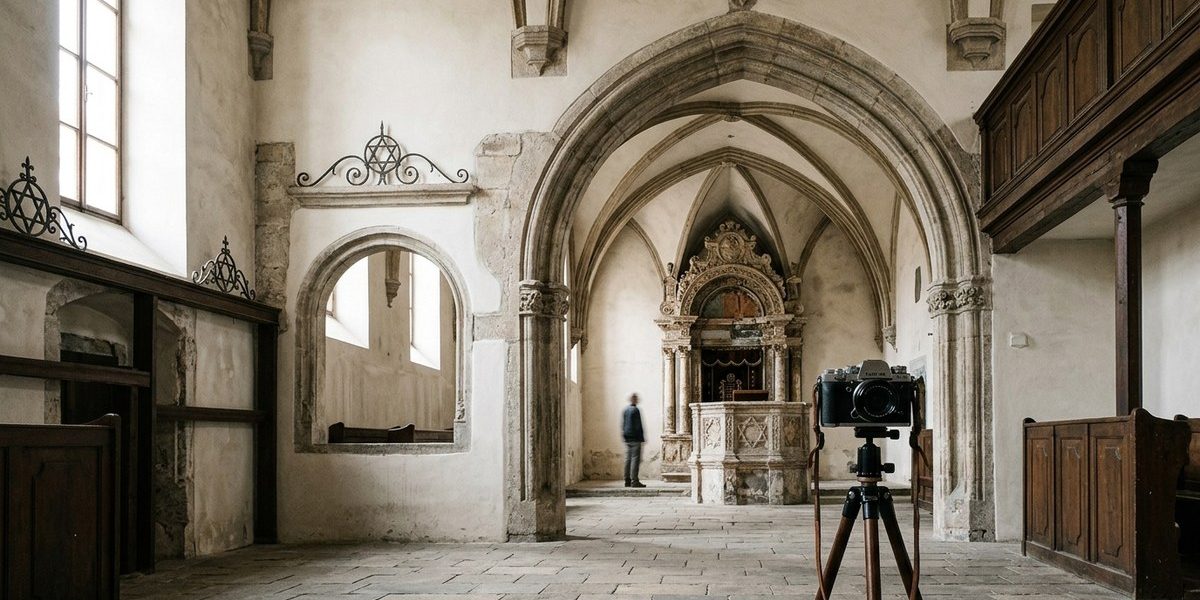
Slovenia’s synagogue architecture reflects a blend of regional styles and Jewish traditions. Unlike the grand synagogues of Prague or Budapest, Slovenian synagogues tended to be smaller, practical buildings. They often sat within medieval town walls, close to Jewish quarters. The Maribor Synagogue, built in the 13th century, is one of the oldest surviving synagogue buildings in Central Europe. Its Gothic stone walls have witnessed centuries of change.
The Koper Synagogue, another important site, shows Italian influence due to the city’s location near the Adriatic coast. These buildings were not just places of worship. They served as community centers, schools, and gathering halls. Their architecture tells a story of adaptation and survival in a region where Jewish communities were often small and vulnerable.
The Historical Arc of Slovenia’s Jewish Communities
Jewish presence in Slovenia dates back to Roman times, but the medieval period brought more organized communities. Jews lived in towns like Maribor, Ptuj, and Ljubljana, often under royal protection. They worked as merchants, physicians, and moneylenders. Their communities thrived in the 13th and 14th centuries.
The year 1496 changed everything. Emperor Maximilian I expelled Jews from Styria, and the once vibrant communities scattered. Some found refuge in nearby towns. Others moved to Italy or Austria. The physical synagogues often became churches, storehouses, or fell into ruin. This is why many people know Slovenia only through traces, not through living communities.
The story of Slovenia’s lost synagogues is one of silence, rediscovery, and memory. It is also a story of architectural preservation and cultural reckoning. For history enthusiasts and cultural travelers, these sacred spaces offer a window into a world that once thrived and then vanished.
Slovenia’s lost synagogues tell a layered story of Jewish life, expulsion, and quiet resilience. This guide traces their origins, destruction, and the careful preservation work happening today. You will learn which sites still exist, how to visit them, and why these sacred spaces matter for understanding Central European Jewish history. Perfect for heritage travelers and researchers planning a meaningful journey through Slovenia’s Jewish past.
Why Slovenia’s Synagogues Deserve a Closer Look
Slovenia sits at a crossroads of cultures. For centuries, its Jewish communities lived in small towns and bustling cities, building prayer houses, study halls, and community centers. Today, most of those buildings are gone. Some were destroyed during the Holocaust, others during postwar urban renewal, and a few simply crumbled with time. Yet the story of Slovenia’s lost synagogues is not just a story of loss. It is a story of memory, resilience, and the slow work of recovering what was almost forgotten.
If you are planning a heritage trip or researching Slovenia synagogues history, this guide will help you understand what once stood, what remains, and how you can trace these sacred spaces today.
Slovenia’s synagogue history spans from medieval Jewish quarters in Maribor and Ljubljana to the modern Škofja Loka synagogue. Most were destroyed or repurposed, yet a few survive as museums and cultural centers. This journey through photographs and stories reveals how architecture, memory, and community keep Slovenian Jewish heritage alive. (75 words)
Why Slovenia’s Synagogues Matter
Slovenia is small. But its Jewish history is deep. Most travelers never notice the quiet buildings that once served as synagogues. They walk past old walls in Ljubljana, Maribor, and Lendava without knowing the stories those stones hold. That is why we are going to explore the lost synagogues of Slovenia together, one photograph and one story at a time.
The story of Slovenian Jews goes back many centuries. It includes merchants, scholars, and craftspeople who shaped the towns we see today. Their synagogues were more than places of worship. They were community centers, schools, and archives of memory. Today, most of these buildings are gone, repurposed, or barely recognizable. But their history still matters.
This photographic journey is not just about architecture. It is about memory, resilience, and the quiet traces of Jewish life that remain in Slovenia.
Slovenia’s lost synagogues tell a story of a small but vibrant Jewish community that flourished for centuries before the Holocaust erased it. This guide traces their history, architectural remnants, and modern preservation efforts. You will learn where these synagogues stood, how to explore them today, and why remembering them matters. (75 words)
Why Slovenia’s Synagogue Heritage Matters
Slovenia often appears on maps of Europe as a small green gem between the Alps and the Adriatic. But most travelers never realize how deeply Jewish history runs through this land. Jewish communities lived here for centuries, and their synagogues were once centers of prayer, study, and daily life. Today, only fragments remain. Walking through Slovenia’s old town centers, you can still trace the outlines of these lost sacred spaces if you know where to look.
The story of Slovenia synagogues history is not a simple one. It is layered with medieval arrivals, expulsions, brief returns, and the shadow of the Holocaust. Understanding this history helps us see how a small but significant Jewish presence shaped Slovenian towns for hundreds of years. This journey through photographs and records brings those spaces back to life.
Slovenia’s synagogues tell a layered story of faith, expulsion, and resilience. While only a handful survive today, their architecture and records reveal centuries of Jewish life. This guide walks you through the most important sites, their histories, and how to explore them respectfully and knowledgeably.
A Land of Crossroads: Why Slovenia Matters in Jewish History
Slovenia sits at the meeting point of Germanic, Italian, and Slavic worlds. For centuries, Jewish communities lived in its towns and traded along its routes. Their synagogues were not just places of worship. They were community centers, schools, and symbols of belonging.
Most people do not think of Slovenia when they picture historic synagogues. That is exactly why this story matters. The history of Slovenia synagogues history is a window into a small but resilient Jewish presence in Central Europe. From medieval Ljubljana to the Adriatic port of Koper, these sacred spaces tell stories of migration, persecution, renewal, and loss.
Today, many of these synagogues are gone. Some survive as museums, galleries, or cultural centers. Others exist only in photographs, documents, and memory. This journey explores the lost synagogues of Slovenia and what they reveal about Jewish life across the centuries.
Slovenia’s Jewish heritage is a story of small but resilient communities whose synagogues once dotted the landscape from the Middle Ages to the modern era. Today, only a handful of these sacred spaces survive as museums, galleries, and memorial sites. This photographic journey explores their architecture, their people, and the preservation efforts keeping memory alive.
Why Slovenia’s Synagogues Matter
Slovenia often flies under the radar in European Jewish history. Yet this small country once hosted vibrant Jewish communities with synagogues that served as centers of worship, learning, and community life. The history of Slovenia synagogues history is a story of survival, loss, and quiet rediscovery. It is a story written in stone, in prayer books, and in the memories of families who trace their roots to these sacred spaces.
When you walk through the narrow streets of Ljubljana or Maribor today, you might not realize that beneath the modern facades lie the remnants of medieval Jewish quarters. The synagogues of Slovenia were not just places of worship. They were community hubs, schools, and shelters. Their story is one of beauty, tragedy, and resilience.
Why Slovenia’s Synagogues Deserve Attention
Slovenia is not the first country that comes to mind when you think of European Jewish heritage. Yet its synagogues tell a fascinating story. These buildings reflect centuries of Jewish life, expulsion, and quiet endurance. For history enthusiasts and cultural travelers, they offer a window into a world that is often overlooked.
The Jewish presence in Slovenia dates back to the Middle Ages. Jewish communities lived in towns like Maribor, Ljubljana, and Ptuj. They built synagogues, studied Torah, and contributed to local trade. The architecture of these buildings blends local styles with Jewish traditions. That mix makes them unique in Central Europe.
Today, only a few traces remain. But those traces are powerful. They help us understand how Jewish communities lived, worshipped, and shaped Slovenian towns over centuries.
Slovenia synagogues history is a story of presence, loss, and quiet resilience. From medieval Maribor to the vanished prayer houses of Ljubljana and Prekmurje, these sacred spaces reveal centuries of Jewish life. This guide traces their origins, their destruction, and the careful efforts preserving what remains for future generations.
Why Slovenia’s Synagogues Matter
Slovenia is small, but its Jewish history is deep. For centuries, Jewish communities lived, prayed, and built synagogues across the region. Today, only a handful of these sacred spaces remain. Most were destroyed, repurposed, or left to fade. Yet their stories matter. They reveal a world of coexistence, creativity, and resilience. For travelers and history lovers, these sites offer a powerful window into a past that shaped modern Slovenia. The history of Slovenia synagogues is not just about buildings. It is about people, memory, and the layers of culture that survive in plain sight.
A Land of Small Communities, Big Histories
Slovenia never had huge Jewish communities like Poland or Hungary. The population was small, often scattered. But those communities left an outsized mark. Medieval Jewish life centered on trade routes, market towns, and the protection of local lords. Synagogues were modest, practical structures, built close to homes and workshops. They served as prayer houses, study halls, and gathering places all at once.
Many of these buildings vanished over the centuries. Wars, expulsions, urban renewal, and the Holocaust erased most traces. Yet a handful of synagogues and prayer rooms survive, and their stories matter.
Where Did Slovenia’s Jews Live?
Jews lived in Slovenia as early as the 12th century. They settled in towns along the Adriatic trade routes. Places like Maribor, Ptuj, and Ljubljana had small but active communities. The oldest documented synagogue in Slovenia stood in Ljubljana, likely from the early 13th century. Over time, the community grew, built institutions, and left a deep mark on the local culture.
Many of these synagogues were not grand buildings. They were modest prayer houses tucked into medieval streets. Some were later converted into churches, warehouses, or apartment buildings. A few survive in some form today.
For a closer look at the broader story of Slovenian Jewish life, explore the hidden synagogues of medieval Ljubljana and how their architecture shaped the urban landscape.
Why Slovenia Synagogues History Matters
Slovenia sits at a crossroads of cultures. Its Jewish history reaches back to the Middle Ages, when small communities lived in towns like Maribor, Ptuj, and Ljubljana. Their synagogues were not just places of worship. They were community centers, schools, and courts. They anchored Jewish life in the region.
Today, most of these buildings are gone. Some were destroyed by fires, others by urban renewal, and many were lost during the Holocaust. But their memory remains. Photographs, old records, and archaeological findings help us piece together what once stood. For anyone interested in Slovenia synagogues history, this is a story about presence, loss, and quiet resilience.
This guide takes you through the most important synagogues in Slovenia, what remains of them, and how you can trace their stories today.
Slovenia synagogues history is a story of small, vibrant communities whose sacred spaces were erased by time and tragedy. Today, only a handful of original synagogue buildings remain, and just one, the Maribor Synagogue, functions as a museum. This guide explores these lost spaces and the efforts to preserve their memory.
Exploring the Lost Synagogues of Slovenia: A Photographic Journey Through Sacred Spaces
Slovenia sits at a crossroads of cultures, and its Jewish history is one of the country’s most intriguing layers. The synagogues of Slovenia were never grand like those in Prague or Budapest. They were smaller, quieter, and deeply woven into tight knit communities. Today, only fragments remain. But those fragments tell a powerful story of faith, resilience, and memory.
For history enthusiasts and cultural heritage travelers, tracing Slovenia synagogues history is like opening a time capsule. Each location holds whispers of medieval Jewish life, Renaissance scholarship, and the tragic ruptures of the Holocaust. This guide takes you through the lost synagogues of Slovenia, what happened to them, and where you can still feel their presence today.
Slovenia’s Jewish heritage is a layered story of medieval communities, urban growth, expulsion, and erasure. While few synagogue buildings survive, their memory shapes the cultural landscape of towns like Ljubljana, Maribor, and Lendava. This guide traces the history, architecture, and preservation of Slovenia’s lost synagogues, offering practical ways to explore these sacred spaces today.
The Jewish Presence in Slovenia: A Brief Historical Frame
Jewish communities have called the territory of modern Slovenia home for over eight centuries. The earliest records date back to the 13th century, when Jewish merchants and moneylenders settled in towns along key trade routes. These communities were small but vibrant, with synagogues serving as the center of religious, social, and communal life. The history of Slovenia synagogues history is deeply tied to these communities, which thrived in towns like Maribor, Ptuj, and Ljubljana. By the late Middle Ages, expulsions and restrictions pushed many Jews out, yet the architectural remnants of their sacred spaces remain. For history enthusiasts, these synagogues are not just buildings; they are silent witnesses to centuries of Jewish life in Central Europe.
The Medieval Jewish Presence in Slovenia
Jewish communities in Slovenia date back to at least the 12th century. They arrived as merchants and scholars, often invited by local nobility. They settled in trading centers and along important commercial routes. The oldest records point to a vibrant community in Ljubljana, with a synagogue mentioned in the 13th century. These early communities built synagogues not only as places of worshi