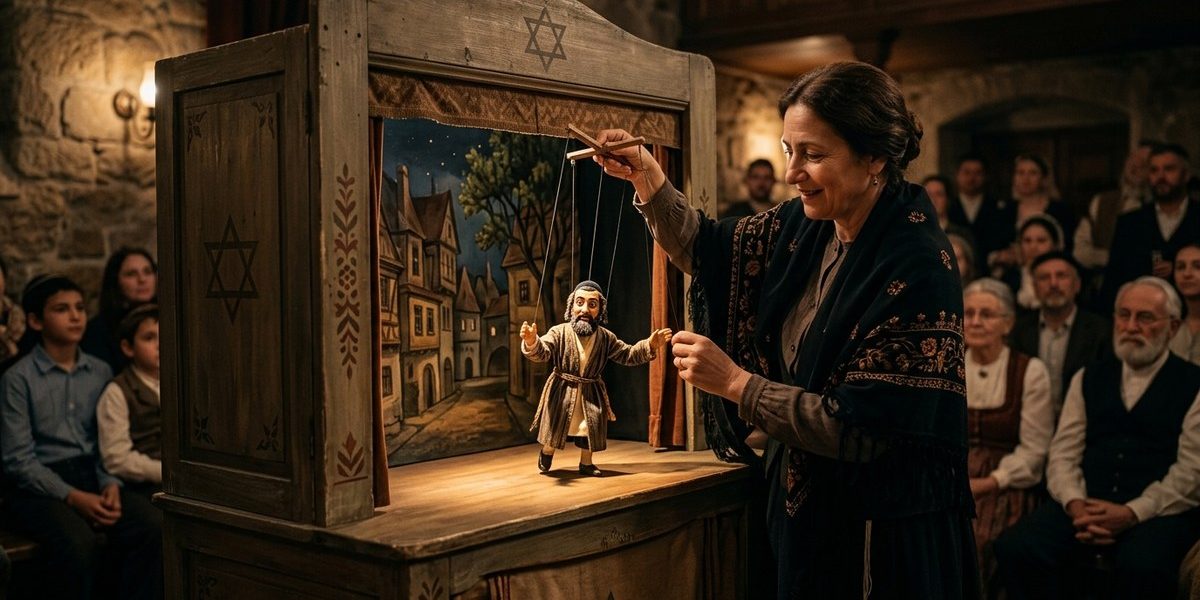
Picture a crowded market square in Prague around the year 1750. A wooden booth painted with stars and moons stands near the church steps. Inside, a single performer makes a carved king argue with a cloth devil. The audience laughs, gasps, and sometimes cries. That performer was likely a Jewish puppeteer. For centuries, Jewish artists in Central Europe used puppets to tell stories when other doors were closed to them. They performed in Yiddish, Hebrew, and local languages. They carried tales from shtetl to city, from wedding to fair. Their art survived expulsions, censorship, and war. Yet most history books skip over them. This article brings their hidden legacy into the light.
Jewish puppeteers in Central Europe were more than entertainers. They preserved Yiddish language and folklore, created safe spaces for community expression, and influenced later theater movements from Prague to Vienna. Their work blended religious themes with local folk traditions. Despite facing bans and persecution, they kept performing. Their legacy lives on in modern puppetry and in revived Yiddish theater projects across Europe and the United States.
Why Puppets Became a Jewish Art Form
Puppetry was not the first choice for most Jewish performers. But it became a natural fit for several reasons. First, puppets offered mobility. A Jewish puppeteer could pack a dozen characters into a single trunk and move from one town to the next. For communities that faced periodic expulsion orders, that mobility meant survival.
Second, puppets bypassed some religious restrictions. While creating graven images was a sensitive topic in Jewish tradition, many rabbis considered puppets acceptable because they were temporary and not worshipped. The puppet was a tool for storytelling, not an idol.
Third, puppets allowed performers to critique authority with less risk. A king puppet could say things a human actor could not. A devil puppet could mock the local priest. If authorities got angry, the puppeteer could claim the puppet did it, not him.
“The puppet speaks truth because it has no throat to choke,” one Yiddish proverb said. Jewish puppeteers understood this deeply.
The Golden Age of Jewish Puppetry
The 18th and 19th centuries marked the peak of Jewish puppeteer activity in Central Europe. Major centers included Prague, Krakow, Lviv, Vilnius, and Budapest. Smaller troupes traveled through Slovenia, Moravia, and Galicia.
These puppeteers performed at weddings, Purim celebrations, and market fairs. Their repertoires included:
- Biblical stories like the binding of Isaac or the Exodus from Egypt
- Yiddish folk tales about clever fools and wise rabbis
- Adapted versions of European classics like Faust or Don Juan
- Political satires about local rulers and tax collectors
- Purimshpil plays with puppets instead of human actors
Some puppeteers became local celebrities. The most famous was probably the “Prague Puppet Rabbi,” a mysterious figure who performed shadow plays during Hanukkah. His shows drew crowds from both Jewish and Christian neighborhoods.
Techniques That Made Jewish Puppetry Unique
Jewish puppeteers developed specific techniques that set their work apart. Here is a breakdown of the main styles and how they worked:
| Puppet Style | Region | Key Character | Typical Story |
|---|---|---|---|
| Hand puppets | Galicia | Hershele Ostropolyer | Trickster tales |
| String marionettes | Prague | King Ahasuerus | Purim story |
| Shadow figures | Vilnius | Elijah the Prophet | Passover legends |
| Rod puppets | Budapest | The Dybbuk | Moral warnings |
| Glove puppets | Krakow | The Fool of Chelm | Humorous lessons |
Each style required different skills. Shadow puppeteers needed precise hand control and a good fire source. Marionette operators needed patience and steady strings. Hand puppeteers needed fast wit because they often improvised dialogue with the audience.
The Purim Connection
Purim was the biggest season for Jewish puppeteers. The holiday celebrates the story of Esther, where Jews in Persia were saved from genocide. Purim traditionally involves costumes, masks, and public performance. Puppets fit right in.
Puppeteers would set up booths near synagogues and perform the Megillah story with wooden and cloth characters. Children especially loved the villain Haman, who would get booed and hit with noisemakers. The puppet Haman could shake and fall in ways a human actor could not, making the audience cheer louder.
Some communities developed Purim puppet traditions that lasted for generations. In parts of Slovenia, families still remember great-grandparents who carved Haman puppets from local pine wood.
How Jewish Puppeteers Kept Yiddish Alive
Yiddish was the daily language of most Central European Jews. But by the late 1800s, assimilation pressures pushed many families toward German or Polish. Puppeteers fought this trend.
They performed in Yiddish at a time when Yiddish theater was banned in many places. Puppet shows were small and mobile, so they slipped under the radar of censors. A puppeteer could set up in a private courtyard, perform for two hours, and be gone before authorities arrived.
This meant that Jewish audiences heard their mother tongue on stage. Children learned Yiddish idioms from puppet characters. Grandparents laughed at jokes that would not translate. The puppet stage became a Yiddish classroom without anyone calling it that.
For more on how Jewish artists preserved culture through performance, read about how Jewish artists shaped modern art movements in Central Europe.
The Tools of the Trade
Making a Jewish puppet was not simple. Puppeteers had to balance artistic quality with portability and cost. Here is a typical process they followed:
- Carve the head from lime wood or pine, keeping it light enough to hold for hours.
- Paint the face with tempera paints, using exaggerated features for comic effect.
- Build the body from cloth stuffed with straw or old rags.
- Attach strings or rods depending on the puppet style.
- Sew costumes from scrap fabric, often reusing old clothing from the family.
- Add props like a wooden staff or a paper crown.
- Practice the voice and movements together until they feel natural.
Many puppeteers passed their tools down to children or apprentices. A well-made puppet could last fifty years. Some surviving examples from the 1800s are now in museum collections in Vienna and Jerusalem.
Challenges and Persecution
Life was not easy for Jewish puppeteers. They faced the same restrictions as other Jews, plus some unique ones.
- Guild laws in many cities banned Jewish performers from public stages.
- Church authorities sometimes accused puppeteers of blasphemy for using biblical characters.
- Anti-Semitic mobs would attack puppet booths during fairs.
- During the 19th century, some governments required special permits for Yiddish performances.
Despite these obstacles, Jewish puppeteers kept working. They performed in private homes, in synagogue courtyards, and at Jewish weddings. They adapted their material to avoid direct confrontation while still telling their stories.
The Holocaust devastated this tradition. Most Jewish puppeteers were murdered or forced to flee. Their puppets were destroyed or lost. Only fragments of their work survive in archives and family memories.
The Slovenian Connection
Slovenia had a small but active Jewish population before World War II. Jewish puppeteers traveled through Slovenian towns like Maribor, Ptuj, and Ljubljana. They performed at local fairs and sometimes stayed with Jewish families for weeks.
Local records from the 1700s mention “Jewish puppet masters” who set up near the Maribor synagogue during holidays. One account describes a puppet show about King Solomon that attracted both Jewish and Christian children. The puppeteer used a Slovenian folk melody for the king’s song, blending traditions.
Today, Slovenian cultural historians are working to recover these stories. The Jewish community site in Slovenia has collected oral histories from families who remember these traveling performers.
What We Lost and What Survives
The physical puppets are mostly gone. Wood rots. Cloth decays. Paper crumbles. But some traces remain.
- The Jewish Museum in Prague has a small collection of 19th century marionettes.
- Yiddish literature contains references to puppet characters and performances.
- Some Hasidic communities preserved puppet traditions for Purim.
- Modern Yiddish theater groups in New York and Tel Aviv have revived puppet segments.
In 2026, a new generation of artists is rediscovering this heritage. Workshops in Berlin and Warsaw teach traditional Jewish puppet carving. A documentary project in Slovenia is interviewing elderly Jews who remember puppet shows from their childhood.
How to Explore This History Today
If you want to learn more about Jewish puppeteers, here are practical steps:
- Visit the Jewish Museum in Prague and ask about their puppet collection.
- Read Yiddish folk tales that mention puppet characters.
- Search archives at YIVO in New York for photographs of puppet booths.
- Attend a Purim celebration at a synagogue that includes puppet performances.
- Connect with the Slovenian Jewish cultural center for local history resources.
The Puppeteer’s Lesson
Jewish puppeteers in Central Europe were not just entertainers. They were memory keepers. They preserved language when languages were forbidden. They told stories when stories were dangerous. They made people laugh when laughter was an act of resistance.
A wooden puppet with painted eyes and a cloth robe carried the weight of a culture. That is a big job for a small figure. But the puppeteers understood something important. Sometimes the smallest voice speaks the loudest truth.
The next time you see a puppet show at a fair or in a theater, remember the Jewish artists who perfected this craft in secret, in motion, and in joy. Their strings may have broken, but their stories still move us.