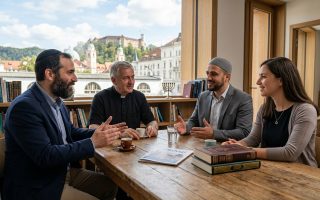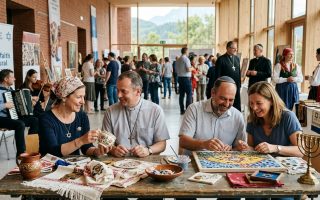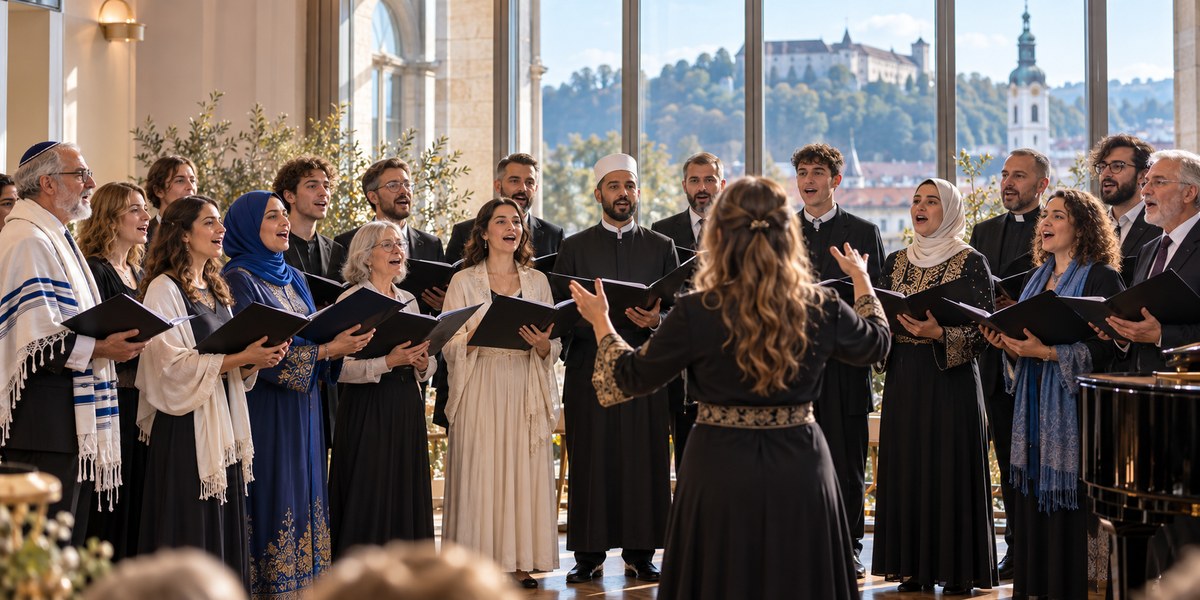
In the heart of Ljubljana, a sound is rising that few expected. It begins with a Hebrew melody, weaves into a Muslim call to prayer, and resolves in a Christian hymn. This is the sound of the Slovenian Interfaith Choir, a project that started small in 2025 and has since grown into one of the most talked-about peace-building efforts in Central Europe. For anyone who believes that music can heal what politics cannot, this choir offers a living, breathing example. In 2026, as religious tensions simmer across the globe, this group of Jewish, Muslim, and Christian singers is proving that harmony is more than a musical term.
The Slovenian Interfaith Choir shows how shared musical practice can break down barriers between Jewish, Muslim, and Christian communities. By focusing on common lyrical themes like peace, gratitude, and compassion, the choir creates a safe space for dialogue. It is a replicable model for any community seeking to build interfaith trust through art.
How This Choir Came to Be
The idea for the choir came from a simple observation. In Slovenia, Jewish, Muslim, and Christian communities often live parallel lives. They attend different houses of worship, celebrate different holidays, and rarely share a meal. A local music teacher named Ana Kovač noticed this gap. She had spent years directing a community choir and knew that singing together forces people to breathe together, listen to each other, and cooperate in real time.
Ana reached out to the Jewish Cultural Center of Ljubljana, the Islamic Community of Slovenia, and the Catholic Archdiocese of Ljubljana. All three said yes. The first rehearsal in early 2025 had only twelve singers. By the fall of 2026, the choir had grown to forty-five members, with a waiting list for auditions.
What They Sing and Why It Works
The choir’s repertoire is carefully chosen. They perform original arrangements that blend traditional Jewish chants, Sufi devotional songs, and Gregorian chants. But they also sing modern pieces that focus on shared themes. Songs about peace, about welcoming the stranger, about gratitude for the earth.
The key is that no one is asked to leave their faith at the door. A Jewish singer might lead a section in Hebrew. A Muslim singer might follow with a verse in Arabic. A Christian singer might respond in Slovenian. The music does not erase differences. It makes them audible and beautiful.
“When we sing together, we are not pretending we are the same. We are showing that our voices can create something new. That is the real miracle.” — Ana Kovač, Choir Director
A Step-by-Step Guide to Starting Your Own Interfaith Choir
If you are inspired by this model, here is how the Slovenian group organized itself. These steps can work in any community.
- Find a neutral host. The Slovenian choir rehearses in a community arts center, not a church, mosque, or synagogue. Neutral ground builds trust from the start.
- Invite religious leaders first. Get buy-in from rabbis, imams, and pastors before you recruit singers. Their endorsement is crucial.
- Choose a musical director who understands interfaith work. Ana Kovač had no formal training in comparative religion, but she had years of experience leading diverse groups. Emotional intelligence matters more than academic credentials.
- Start with simple, familiar songs. The Slovenian choir began with a simple round of “Shalom Aleichem,” “Salaam Alaikum,” and “Peace is Flowing Like a River.” Everyone knew the tune.
- Set ground rules for rehearsal. No proselytizing. No political speeches. The focus stays on the music.
- Plan a public performance early. The choir’s first concert was at a local cultural festival. Having a deadline motivated the group and gave them a sense of purpose.
- Celebrate small wins. After every rehearsal, the choir shares tea and pastries. This social time is as important as the singing.
Common Challenges and How the Slovenian Choir Handled Them
Starting an interfaith choir is not always smooth. The Slovenian group faced real hurdles. Here is a table showing the main issues and their solutions.
| Challenge | How the Choir Addressed It |
|---|---|
| Some singers were nervous about singing in a language they did not understand. | The director provided phonetic guides and translations for every song. Singers learned the meaning of each word. |
| A few community members accused the choir of watering down religious traditions. | The choir invited critics to attend a rehearsal. After hearing the music, many changed their minds. |
| Scheduling conflicts around religious holidays (Shabbat, Friday prayers, Sunday services). | The choir created a rotating rehearsal schedule. No single group was asked to always sacrifice. |
| Initial discomfort with physical proximity (some Muslim women preferred not to stand next to men during singing). | The choir arranged the risers so that singers could choose their position. Respect for personal boundaries was non-negotiable. |
What American Jewish Communities Can Learn
The Slovenian Interfaith Choir offers lessons that apply far beyond Central Europe. For Jewish communities in the United States, the model is especially relevant. American Jews often feel caught between a desire for interfaith cooperation and a fear of assimilation. The choir shows that interfaith work does not require giving up Jewish identity. In fact, it strengthens it.
At every concert, the choir opens with a Jewish melody. Jewish singers are encouraged to share the meanings behind their prayers. The choir has also learned about the melodic legacy of traditional Klezmer music and its Slovenian connections, which has deepened the group’s appreciation for Jewish musical heritage.
The Broader Impact on Slovenian Society
The choir’s influence has spread beyond the rehearsal room. Families of choir members have started attending each other’s religious festivals. A Jewish family attended an iftar dinner during Ramadan. A Muslim family came to a Hanukkah celebration. These small acts of hospitality are building a network of trust that did not exist before.
The choir has also inspired other interfaith projects. A group of teenagers started an interfaith youth movement after attending a choir concert. A local mosque and synagogue launched a joint study circle for young adults. The choir has become a catalyst for a wider culture of dialogue.
A Practical Tool for Measuring Success
How do you know if an interfaith choir is working? The Slovenian group uses three simple metrics.
- Retention rate. Are singers coming back week after week? The choir has a 90 percent retention rate.
- Cross-community friendships. Do members socialize outside of rehearsal? After six months, 60 percent of choir members reported having made a new friend from a different faith.
- Public demand. Are people outside the choir interested? The choir’s concerts now sell out within days.
The Songs That Bring Them Together
Here is a sample of the choir’s current setlist for 2026.
- “Hine Ma Tov” (Hebrew folk song about peace)
- “Tala’ al Badru ‘Alayna” (traditional Islamic song of welcome)
- “Dona Nobis Pacem” (Latin Christian hymn)
- “Moja dežela” (original Slovenian composition about home)
- “Oseh Shalom” (Jewish prayer for peace)
Each song is sung in its original language, with translations projected on a screen. The audience is invited to hum along during the chorus.
Why This Matters for Journalists and Activists
If you are covering interfaith work or looking for a model to replicate, the Slovenian choir is a case study in what works. It is low-cost, high-impact, and deeply human. It does not require large grants or institutional backing. It requires only a willingness to listen and a love of music.
The choir has been featured on national television in Slovenia and was invited to perform at the European Parliament in Brussels in late 2026. Their story is proof that cultural projects can achieve what political summits often cannot.
The Future of the Choir
The group has big plans for 2027. They are working on a recording project and hope to release an album. They are also training other choir directors in the region. A similar group has already started in Zagreb, Croatia, using the same model.
The Slovenian choir is also deepening its connection to local history. Members have visited the hidden synagogues of medieval Ljubljana and learned about how Slovenian Jews survived the Holocaust. This historical awareness adds gravity to their performances.
How You Can Support or Start a Similar Project
You do not need to be a professional musician to get involved. Here are three actions you can take today.
- Attend a concert. If you are in Europe, check the choir’s schedule. Their concerts are open to all.
- Donate to the choir’s scholarship fund. They offer free membership to singers who cannot afford the modest dues.
- Start a conversation. Talk to your local synagogue, mosque, or church about the idea. Share this article with them.
A Final Note on Harmony
The Slovenian Interfaith Choir is not trying to create a single, unified religion. It is not about blending traditions into a bland soup. It is about letting each voice ring out clearly while still finding a common rhythm. In a world that often asks us to choose sides, the choir offers a third way. It says that we can be different and still be together.
If you are curious about how other interfaith projects are reshaping Slovenian society, read about how Jewish and Catholic communities in Ljubljana are creating lasting friendships or explore what Muslims and Jews in Slovenia can teach us about coexistence.
The next time you hear a choir sing, listen for the spaces between the notes. That is where the real harmony lives. And if you ever find yourself in Ljubljana on a Tuesday evening, follow the sound. It will lead you to a room where Jews, Muslims, and Christians are singing together, proving that peace is not just possible. It is already here.