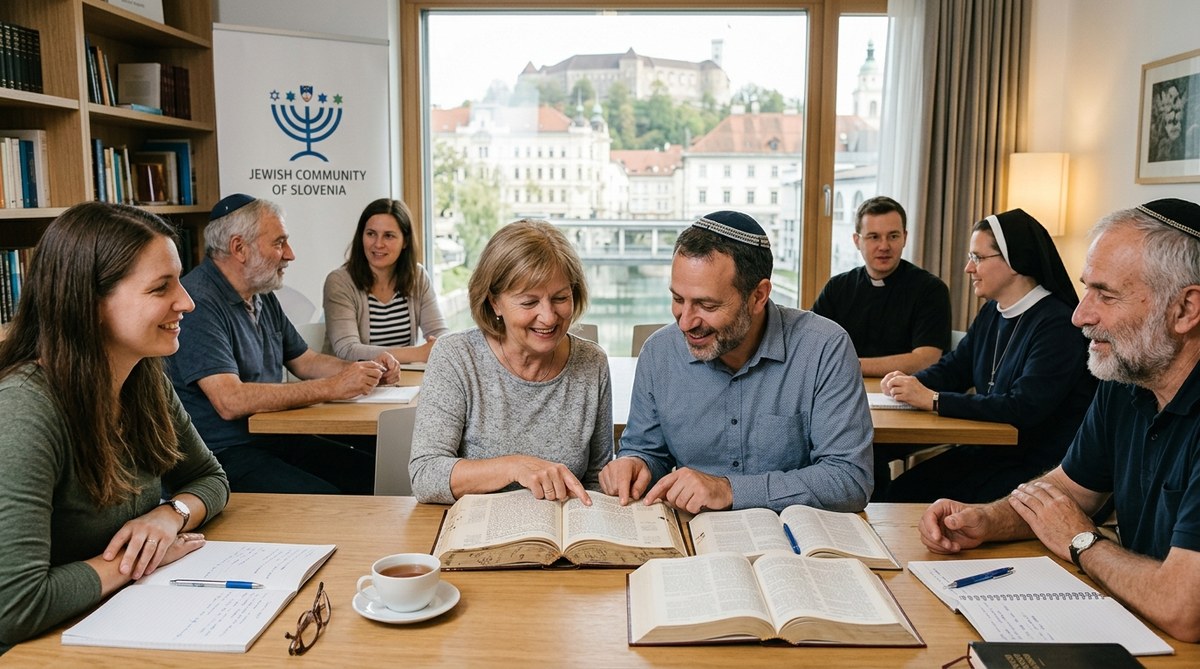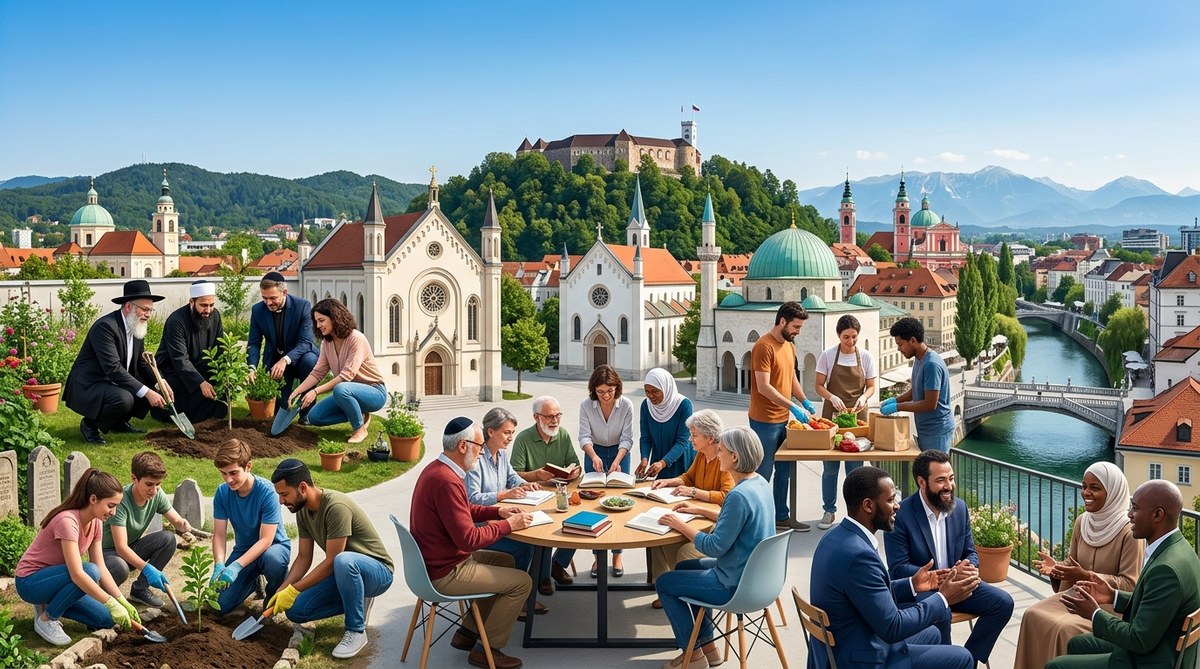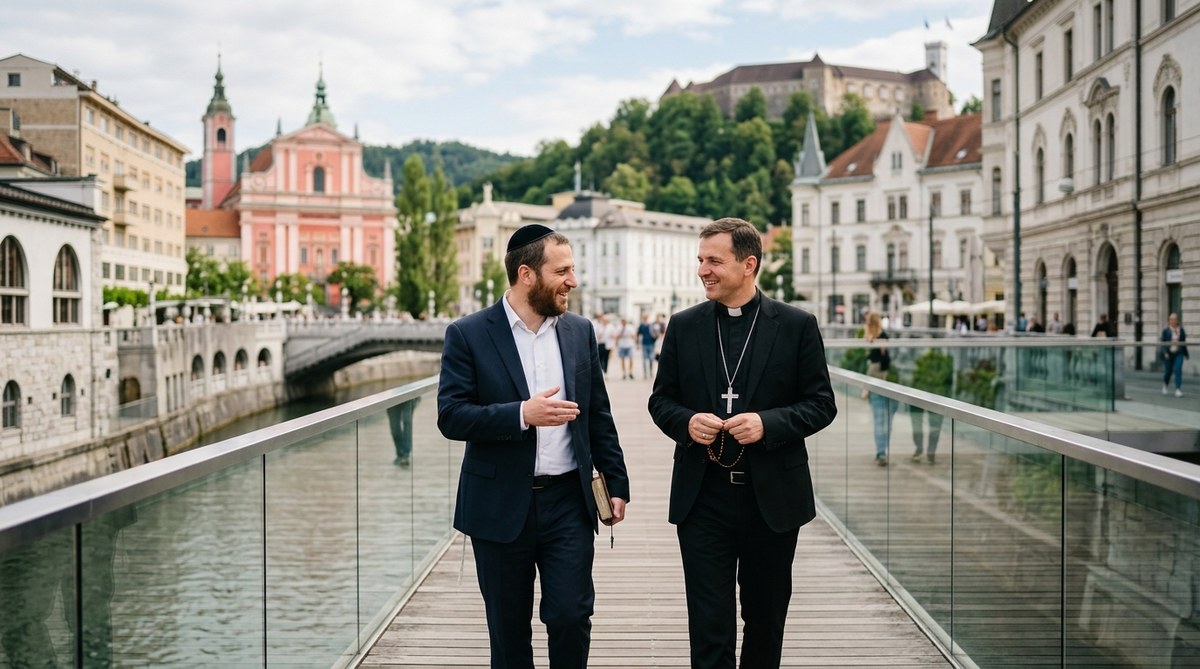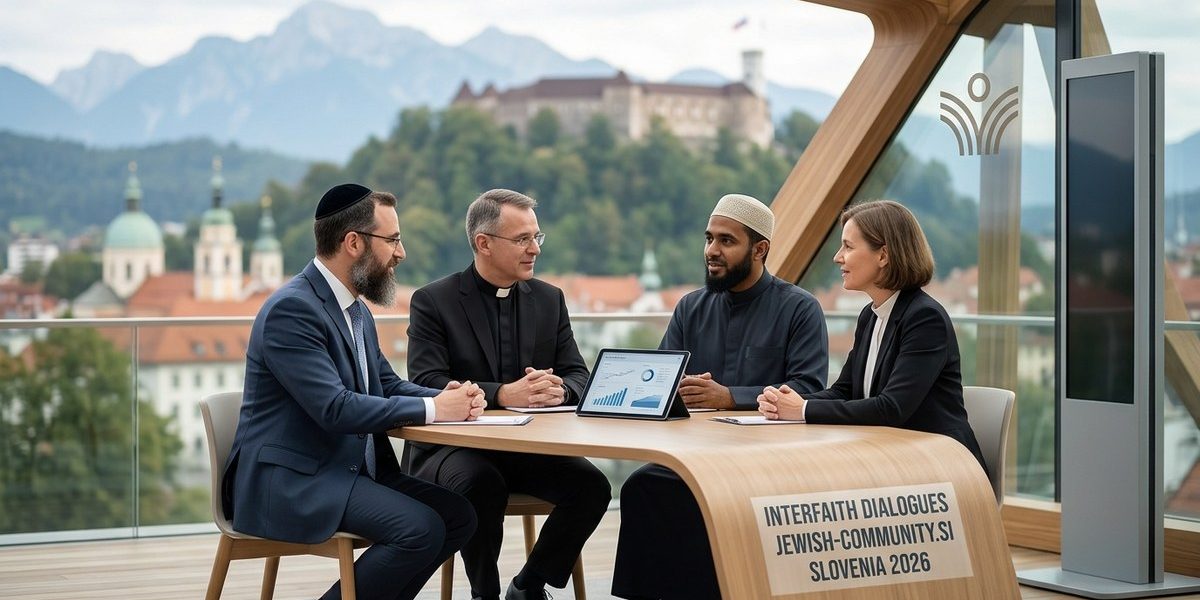
In the spring of 2026, as Slovenia heads toward a tightly contested parliamentary election, the country’s interfaith leaders are doing something that might surprise many American observers. They are not retreating to their respective corners. Instead, a rabbi, a Catholic bishop, an imam, and a Lutheran pastor are sitting down together every Tuesday morning in a small coffee shop in Ljubljana. They talk about scripture, yes. But they also talk about tax policy, immigration, and the environment. Their goal is not to agree on every issue. Their goal is to model a different kind of political engagement. One where disagreement does not mean dehumanization.
Slovenian interfaith leaders are using structured dialogue, shared civic projects, and public accountability to bridge political divides ahead of the 2026 elections. Their approach offers a replicable model for American communities facing similar polarization. This case study breaks down the specific processes, common mistakes, and measurable outcomes that academics and policy analysts can apply to their own research and practice.
Why Slovenian Interfaith Leaders Are Uniquely Positioned to Mediate
Slovenia is a small country. Fewer than 2.1 million people live there. But its religious landscape is surprisingly diverse. The majority is Catholic, but there are active Muslim, Serbian Orthodox, Lutheran, and Jewish communities. The Jewish community is small. Yet it plays an outsized role in interfaith work. This is partly because of history. Slovenian Jews have been present since the Middle Ages. They survived expulsion, Holocaust, and socialism. Their resilience gives them moral authority.
In 2026, that moral authority is being tested. The election cycle has brought sharp divisions to the surface. Populist rhetoric targets immigrants. Economic anxiety fuels resentment. Some politicians try to pit religious groups against each other. But the interfaith leaders are pushing back. They are using a set of practical tools to keep the conversation productive.
The Three Pillars of Their Approach
The Slovenian interfaith model rests on three main pillars. Each one is designed to build trust before conflict arises.
- Shared civic projects. Leaders co-host food drives, environmental cleanups, and blood donation campaigns. These projects give people a reason to work together that has nothing to do with theology or politics.
- Structured dialogue. Meetings follow a strict format. Each person gets equal time to speak. No interruptions are allowed. The goal is understanding, not debate.
- Public accountability. Leaders sign joint statements before elections. They commit to not using religious language to attack political opponents. They hold each other accountable when someone breaks that promise.
This approach did not happen by accident. It was built over years of relationship. For a deeper look at how these relationships started, read about a Protestant pastor and a rabbi who walk into a dialogue and turned a casual meeting into a lasting institution.
A Numbered Process for Mediating Political Conflict
Here is the exact process that Slovenian interfaith leaders use when political tensions rise. It is designed to be replicable.
- Identify the flashpoint. Before the election season began in late 2025, the leaders mapped the most divisive issues. These included immigration quotas, religious education in public schools, and welfare policy. They agreed to focus on these three.
- Draft a shared vocabulary. They created a glossary of terms that everyone could use without triggering each other’s communities. For example, they agreed to say “new residents” instead of “migrants” when discussing integration.
- Host a closed-door session. No press. No social media. Just the leaders and a trained facilitator. This session is where they air their real disagreements. It is often uncomfortable.
- Issue a joint public statement. After the closed session, they release a brief statement. It names the areas of disagreement honestly. But it also reaffirms their commitment to civil discourse.
- Model the behavior publicly. Each leader then goes to their own community and preaches or teaches about the value of staying in relationship across political lines.
- Debrief after the election. They meet one month after election day to assess what worked and what did not. They adjust the process for the next cycle.
“We do not pretend that politics is easy. But we have learned that when we stop talking to each other, the extremists win. Our job is to keep the door open, even when it is hard.” — Rabbi Alenka K., Ljubljana Jewish Community
Common Mistakes in Interfaith Political Mediation
Even well-meaning groups make errors. The Slovenian leaders have identified several pitfalls. The table below shows common mistakes and how they correct them.
| Mistake | Why It Happens | Slovenian Correction |
|---|---|---|
| Avoiding hard topics | Fear of conflict | Start with the hardest issue first. Get it out in the open. |
| Using vague language | Trying to please everyone | Use precise terms. Disagree openly but respectfully. |
| Focusing only on theology | Ignoring real-world impact | Tie every discussion to a concrete civic outcome. |
| Meeting only during crises | Lack of ongoing relationship | Meet weekly, not just when elections approach. |
| Forgetting to include youth | Generational disconnect | Invite young leaders to every meeting. |
For more on how these leaders handle difficult historical wounds, see what Slovenian interfaith dialogues teach us about healing historical wounds.
What American Communities Can Learn
The United States is far larger and more complex than Slovenia. But the core principles translate well. American Jewish communities, in particular, have a long history of interfaith work. The Slovenian model offers a few specific lessons.
First, consistency matters more than scale. The Ljubljana group meets every week. They do not cancel meetings because of bad news or low attendance. The routine itself builds trust.
Second, they prioritize the relationship over the outcome. They do not measure success by how many policies they change. They measure it by whether the conversation continues after a heated election.
Third, they include people who are not professional religious leaders. Teachers, nurses, and small business owners sit on their advisory board. This prevents the dialogue from becoming too academic or disconnected from daily life.
If you are interested in how this connects to broader community education, read about how interfaith dialogue can prevent antisemitism through Slovenia’s community programs.
Practical Steps for Researchers and Policy Analysts
If you are studying this model or hoping to apply it, here are three concrete actions to take.
- Interview local interfaith leaders in your own area. Ask them about their biggest challenges. Compare their answers to the Slovenian case.
- Map the political divides in your community. Identify which issues are most likely to cause religious tension. Use the Slovenian glossary method to create shared language.
- Pilot a six-session dialogue group. Use the numbered process above. Document what happens. Share your results with other practitioners.
The Slovenian interfaith youth movement is already adapting this model for a younger generation, proving that the approach can evolve.
A Model for Staying Connected Through Disagreement
The 2026 Slovenian election will be closely watched. Analysts expect a close race between centrist and populist parties. The interfaith leaders do not know who will win. But they do know that they will still be sitting in that coffee shop the Tuesday after the votes are counted.
That commitment is the real lesson. Political divides are not going away. But we can choose how we navigate them. The Slovenian leaders chose connection over isolation. They chose structured conversation over shouting. They chose to stay in the room together.
You can make that choice too. Start small. Find one person from a different political or religious background. Invite them for coffee. Listen more than you talk. See what happens.