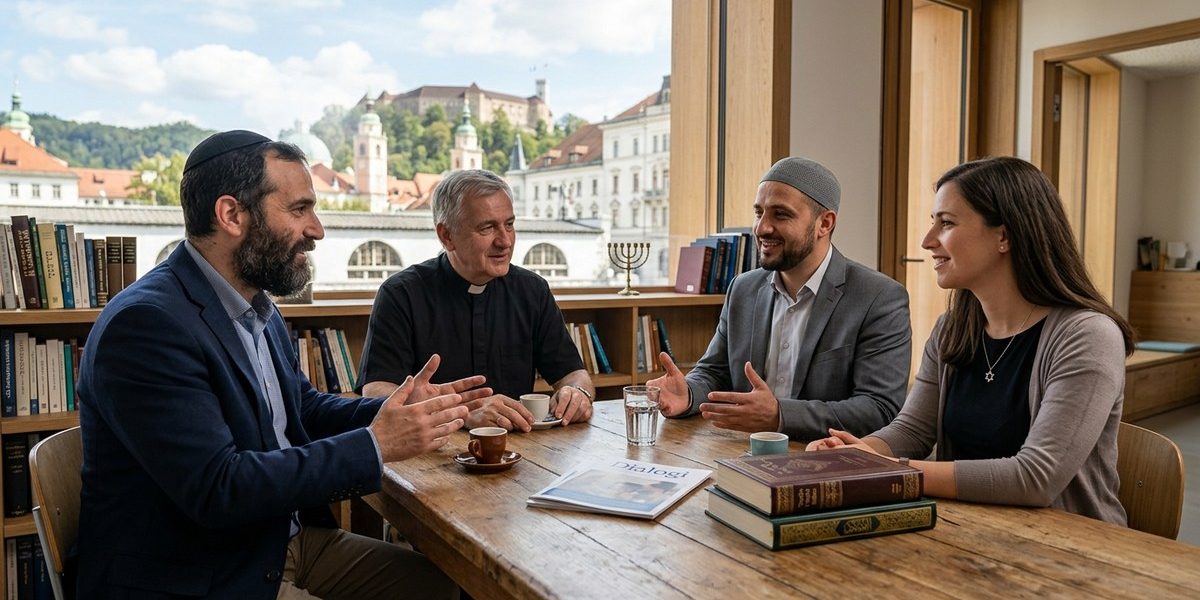
In a small room in Ljubljana, a Catholic priest, a rabbi, and an imam sit around a table with cups of tea. They talk about the Holocaust. They talk about the expulsion of Jews from Slovenian lands in 1515. They also talk about their children’s school projects. This scene repeats every month. It is not a one-off event. It is a living practice that has been healing wounds older than anyone in that room. Slovenian interfaith dialogue is not just academic theory. It is a hands-on, human process of facing painful history and choosing to move forward together.
Slovenian interfaith dialogue shows that healing historical wounds requires more than official statements. It needs sustained personal relationships, honest acknowledgment of past wrongs, shared rituals, and a commitment to listen without defense. The lessons from Slovenia’s small but determined interfaith circles offer a practical roadmap for any community dealing with inherited division.
Why Slovenian Interfaith Dialogue Matters for Reconciliation
Slovenia is a small country. Its Jewish community is tiny. But its interfaith work punches above its weight. Why? Because the country’s history is marked by deep fractures. The Holocaust, the expulsions, the Communist era, and the independence wars all left scars. Slovenian interfaith dialogue did not ignore those scars. It placed them at the center of the conversation.
One powerful example is the annual joint commemoration of the 1515 expulsion of Jews from Slovenian lands. Catholic and Protestant leaders stand alongside Jewish representatives to read names of expelled families. They do not shy away from the role the Church played in that expulsion. This kind of honest reckoning builds trust. It also models how to handle historical guilt without getting stuck in shame.
The Three Pillars of Slovenian Interfaith Dialogue
Across Slovenia, interfaith initiatives share common structures. These pillars make the process sustainable and effective.
1. Shared Study of Sacred Texts
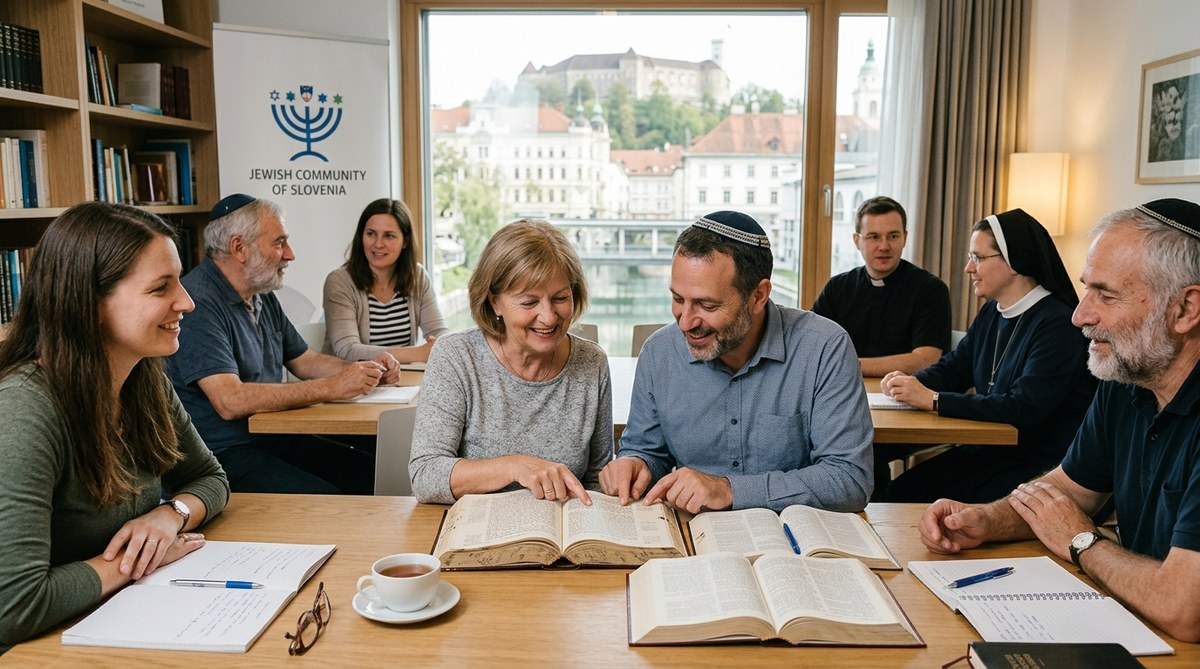
The most consistent practice is joint text study. Jewish and Christian groups meet to read the Hebrew Bible and the New Testament side by side. They do not try to convert each other. They ask, “What does this passage mean in your tradition?” This opens windows. A Jewish-Christian study group in Ljubljana has been meeting for over a decade. Members say they now understand their own faith better because of the questions asked by the other.
2. Shared Commemorations and Holidays
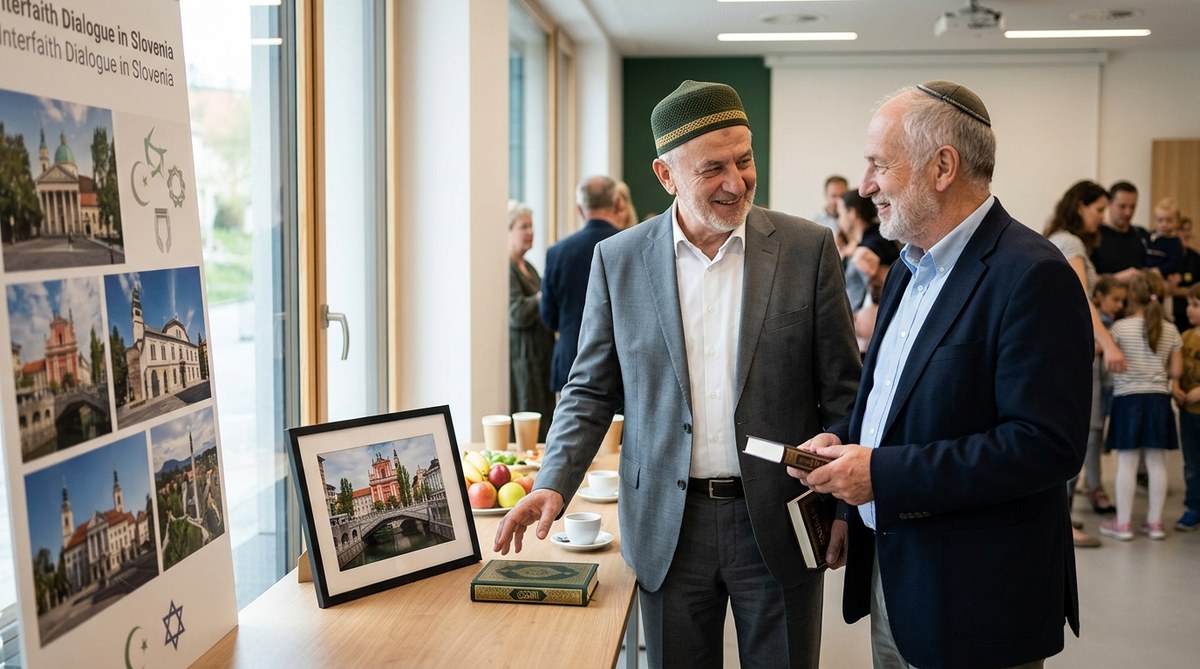
Interfaith Seders are becoming a tradition in Slovenia. Non-Jewish neighbors join for Passover. They taste the bitter herbs and hear the story of liberation. This is not mere tourism. It is an embodied learning experience. Similarly, Muslims and Jews share iftar meals during Ramadan and Passover when the calendars overlap. These events create bonds that formal meetings cannot. They build friendship over food.
3. Joint Social Action
Slovenian interfaith groups do not only talk. They act together. They run food drives for refugees. They clean up Jewish cemeteries. They advocate for Holocaust education in schools. Action builds trust faster than conversation alone.
The Practical Process: A Numbered List
How does a typical Slovenian interfaith dialogue session unfold? Here is a step-by-step process used by the Ljubljana Interfaith Roundtable.
- Begin with personal check-in. Each person shares one thing from their week that is not about religion. This humanizes everyone before any heavy topic.
- Present a piece of history or a text. It could be a diary entry from a Holocaust survivor or a passage from the Quran about justice. The facilitator keeps it short.
- Silent reflection for three minutes. People write down initial reactions. This prevents the loudest voice from dominating.
- Paired sharing in mixed-faith pairs. Each person speaks for five minutes while the other listens without interrupting. This is the core of the method.
- Group sharing with a talking stick. The group discusses themes that emerged. No one may speak twice until everyone has spoken once.
- Close with a shared ritual. It might be lighting candles, a moment of silence, or sharing a simple blessing.
This structure is not original. But in Slovenia it has been refined over years. It works because it balances structure with spontaneity.
Common Mistakes in Interfaith Work: A Table
Even well-intended dialogue can go wrong. Here are common mistakes seen in interfaith initiatives outside Slovenia and how Slovenian practitioners avoid them.
| Mistake | Slovenian Practice |
|---|---|
| Avoiding difficult history to keep peace | They start with hard topics (expulsion, Holocaust) but frame them as shared history to be held, not weaponized. |
| Letting one faith dominate the agenda | A rotating chair system ensures each community sets the topic every third meeting. |
| Focusing only on similarities | They celebrate differences. A Catholic explains why Mary matters; a Jew explains why she does not. Respectful disagreement is encouraged. |
| No follow-up after events | Every meeting ends with a concrete next date and a shared action item (e.g., “we will attend the synagogue’s Hanukkah party”). |
| Using professional facilitators who are not from the community | Facilitators are trained community members, not outsiders. This builds ownership. |
What Slovenian Interfaith Dialogue Teaches About Healing Wounds
“We cannot undo the 1515 expulsion. We cannot bring back the Jews who were killed in the camps. But we can sit in the same room and say, ‘We remember. We are sorry. And we will build a different future.’ That act itself is a form of repair.” — Dr. Mateja Kljajić, coordinator of the Slovenian Interfaith Council
This quote captures the essence. Healing does not mean erasing the wound. It means learning to live with the scar without letting it dictate the present. Slovenian interfaith dialogue teaches us that repair is possible when we:
- Acknowledge specific harms without defensiveness.
- Create spaces where vulnerability is safe.
- Replace grand gestures with small, repeated acts of presence.
- Invite the next generation to design their own rituals.
The Role of Youth in Slovenian Interfaith Dialogue
Young people are not just the future of this work. They are active leaders today. The Slovenian Interfaith Youth Movement organizes annual weekend retreats where teenagers from Jewish, Muslim, Catholic, and Orthodox backgrounds live together. They cook together, hike, and then tackle topics like antisemitism and Islamophobia. The results are transformative. Many alumni have gone on to study conflict resolution or theology.
A key insight from these retreats: they do not force interfaith prayer. Instead, they have “silent morning time” where each person can pray or meditate in their own way. This avoids the pitfall of syncretism while still sharing space.
How Slovenian Interfaith Dialogue Prevents Antisemitism
This is a critical question for researchers. Can interfaith dialogue actually reduce antisemitism? Evidence from Slovenia suggests yes, but with qualifications. Programs that bring non-Jewish Slovenians into Jewish spaces to learn about Jewish life have led to measurable drops in antisemitic attitudes in participant surveys. The key is interfaith education programs that do not lecture but invite personal contact.
When a Catholic student learns to bake challah with a Jewish grandmother, stereotypes crumble. When a Muslim teen sees a Jewish peer reading the same psalms she reads, she realizes they are not so different after all. This is not naive. It is proven.
Adapting the Slovenian Model to Your Context
You do not need to be in Slovenia to apply these lessons. Here are three principles that travel well.
Principle one: Start small. A regular meeting of six people is more powerful than a one-time event with a hundred.
Principle two: Mix social time with serious content. Slovenian dialogues always include tea and cake. Relationships form during the informal parts.
Principle three: Be patient. Healing takes years. The Ljubljana group started in 2009. They only began to see real shifts in 2014. Do not expect a single dialogue to resolve centuries of pain.
The Future of Healing Through Dialogue
The work in Slovenia continues. In 2025, a new interfaith center opened in Maribor. It houses a Jewish museum, a Muslim prayer room, and a Christian chapel under one roof. The architects designed the building so that the three spaces share a common courtyard. It is a physical symbol of what the dialogue has achieved.
For researchers and practitioners looking for a model, Slovenia offers a modest but powerful example. It is not perfect. There are still tensions. But the commitment to stay in relationship despite those tensions is the real lesson.
What Slovenian Interfaith Dialogue Means for the Wider World
The wounds of history are heavy. But they do not have to be permanent. Slovenian interfaith dialogue shows that healing is not a destination. It is a practice. It happens one meeting, one shared meal, one honest conversation at a time. The room in Ljubljana where the priest, rabbi, and imam sit together is a small room. But it holds a big idea: that we can choose to be different from our past. And that choice, repeated over and over, becomes the future.
If you are involved in interfaith work or historical reconciliation, start with what Slovenia teaches. Find one person from a different tradition. Invite them for tea. Ask them a real question. Then listen. That is where healing begins.