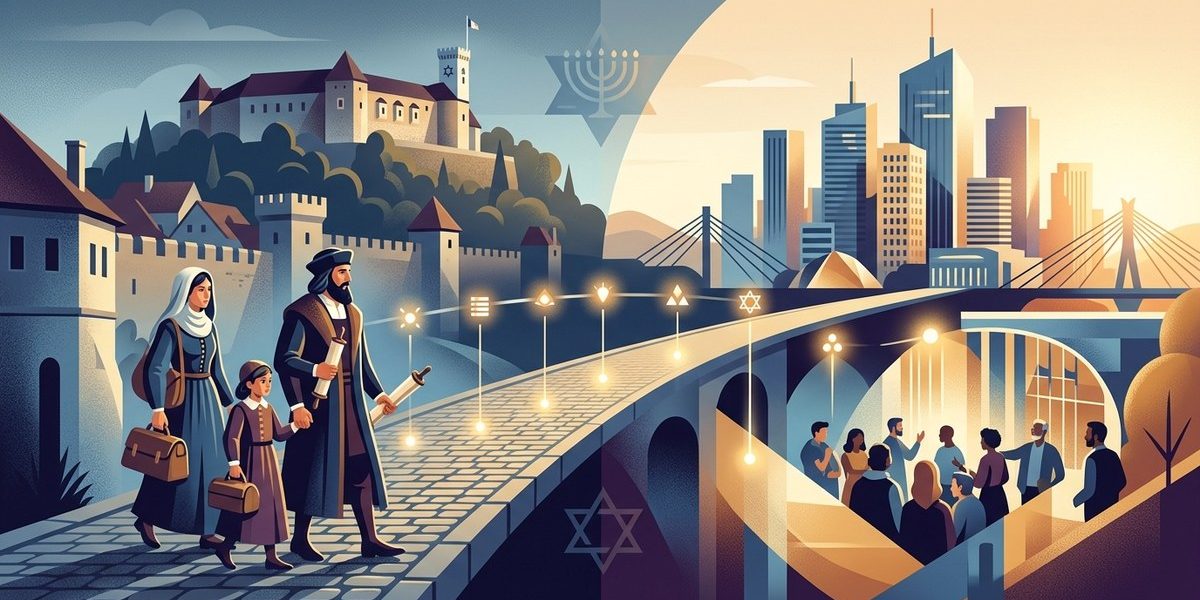
In 1496, the Jewish community of Ljubljana received a devastating order. They had to leave their homes, their synagogue, and their lives within a matter of days. Emperor Maximilian I, under pressure from local estates, signed the decree that ended centuries of Jewish life in the city. This event, known as the 1496 Jewish expulsion from Ljubljana, is more than a footnote in history books. It is a mirror. When we look at it closely, we see patterns that repeat in modern times: the scapegoating of minorities during economic hardship, the fragility of legal protections, and the resilience of a displaced people. For history researchers, students of Jewish diaspora studies, and educators, this case study offers seven critical lessons that resonate powerfully in 2026.
The 1496 expulsion from Ljubljana was not an isolated act of cruelty. It was a calculated political move driven by debt relief, religious prejudice, and local power struggles. Its lessons on economic scapegoating, the fragility of charters, and the importance of preserving cultural memory remain urgent for Jewish communities and educators examining cycles of displacement in 2026.
Why Ljubljana Matters to Jewish Diaspora Studies
Ljubljana sits at a crossroads of Central Europe and the Balkans. In the late 15th century, its Jewish community was small but vital. Jewish merchants connected the city to trade routes stretching from Venice to Vienna. They paid taxes, ran moneylending operations, and lived in a designated quarter near the town hall. For decades, they operated under charters granted by the Habsburg rulers. These charters promised protection. Yet in 1496, those promises vanished overnight.
The expulsion did not happen because of a crime or a riot. It happened because the local nobility and city council wanted to cancel their debts to Jewish lenders. By expelling the community, they erased their financial obligations. This cynical move is a textbook example of how economic motives often hide behind religious rhetoric. For educators looking for a clear case study of state-sponsored antisemitism, the 1496 Jewish expulsion from Ljubljana provides a perfect, if painful, example.
Lesson 1: Economic Crises Often Trigger Scapegoating
In the 1490s, Ljubljana faced economic strain. Crop failures and shifting trade patterns hurt local merchants. Instead of addressing these structural problems, the city leaders blamed the Jewish community. They claimed Jewish moneylenders charged unfair interest. The truth was simpler. The city owed them money.
This pattern repeats across history. When economies contract, minorities become targets. In 2026, we see similar rhetoric in political campaigns around the world. The lesson is clear. Economic anxiety does not cause antisemitism on its own. But it provides fuel for those who want to exploit it. Researchers studying diaspora history should note how the 1496 expulsion from Ljubljana mirrors later expulsions in Spain (1492) and Portugal (1497). The dates are close for a reason. A wave of intolerance swept across Europe, and Ljubljana was part of that wave.
Lesson 2: Legal Charters Are Only as Strong as the Politics Behind Them
The Jews of Ljubljana had a legal charter. It was granted by the Habsburg emperor. It stated they could live, work, and worship in the city. But when the local estates demanded their removal, the emperor folded. He needed their political support more than he needed to protect a small Jewish community.
This teaches us a hard truth about minority rights. Written protections are fragile. They depend on the willingness of authorities to enforce them. In 2026, Jewish communities around the world still rely on legal frameworks for protection. Antisemitism laws, hate crime statutes, and nondiscrimination policies exist on paper. But if political winds shift, those protections can erode. The 1496 expulsion from Ljubljana reminds us that vigilance is not optional.
Lesson 3: Displacement Creates Cultural Erasure
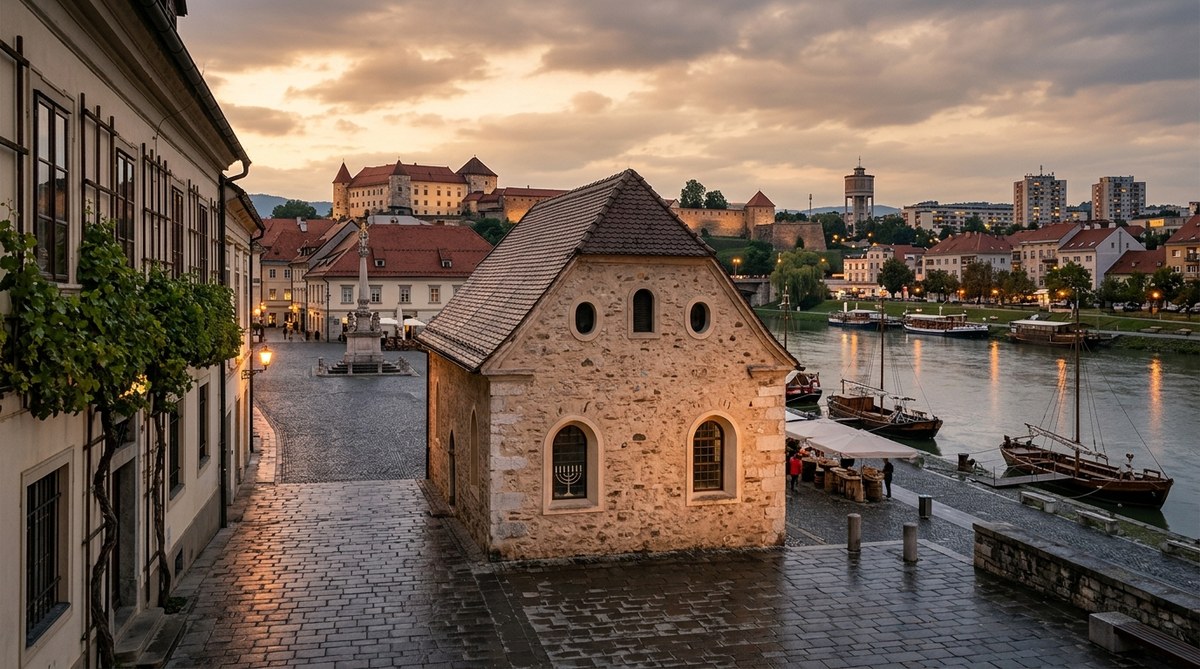
When the Jews left Ljubljana, they did not just lose their homes. They lost their synagogue, their cemetery, and their communal records. The city confiscated their property. The synagogue was converted into a church. Jewish names vanished from city documents. For centuries, the memory of their presence faded.
This is a pattern seen in many diaspora communities. Displacement is not just physical. It is cultural and historical. When a community is forced out, its stories disappear from the dominant narrative. For educators, this highlights the importance of preserving memory. We cannot rely on the host society to remember us. We must do the work ourselves. That is why projects like Preserving Memory Through Art: Jewish Museums and Cultural Centers in Slovenia are so vital. They restore what was erased.
Lesson 4: Scapegoating Follows a Predictable Pattern
Historians have identified a clear sequence in the 1496 expulsion from Ljubljana. First, economic tensions rise. Second, Jewish success is framed as exploitation. Third, rumors spread about Jewish rituals or loyalty. Fourth, political leaders demand action. Fifth, the community is expelled or segregated.
This five-step pattern is not unique to the 15th century. It appears in modern contexts too. Let us break it down in a simple format.
| Step | Description | Modern Example |
|---|---|---|
| 1 | Economic hardship creates anxiety | Recession or job market shifts |
| 2 | Jewish financial roles are highlighted | Stereotypes about wealth or control |
| 3 | False accusations circulate | Conspiracy theories on social media |
| 4 | Politicians call for restrictions | Proposed laws targeting minority groups |
| 5 | Expulsion or forced migration occurs | Displacement, emigration, or ghettoization |
For students of diaspora studies, this table is a useful tool. It shows that antisemitism is not random. It follows a logic. Understanding that logic helps communities prepare and resist.
Lesson 5: The Role of Local Elites Cannot Be Ignored
The 1496 expulsion from Ljubljana was not ordered by the emperor alone. It was pushed by the local nobility and city council. They had the most to gain. They owed money to Jewish lenders. They also wanted to eliminate economic competition.
This is an important nuance. Antisemitism often comes from above, but it is enabled by local power structures. In modern terms, we might think of local governments, business associations, or civic leaders who stay silent when hate speech rises. Their complicity is just as damaging as the actions of the central authority. For researchers, this means looking beyond national policies. You have to examine local dynamics. The story of Ljubljana is a story of local politics as much as imperial decree.
Lesson 6: Jewish Resilience Takes Many Forms
After the expulsion, the Jews of Ljubljana did not simply disappear. Some converted and stayed. Others moved to nearby towns like Maribor or Trieste. A few made their way to Ottoman territories where they were welcomed. They adapted, rebuilt, and preserved their identity.
Resilience is a core theme in Jewish history. But it is not just about survival. It is about transformation. The expelled community carried their traditions, their knowledge, and their faith to new places. They enriched the communities they joined. This is a lesson for 2026. When Jewish communities face pressure, they do not just endure. They innovate. You can see this in The Revival of Jewish Life in Post-Independence Slovenia Since 1991, where a small but vibrant community has reestablished itself after decades of decline.
Lesson 7: Memory Is an Act of Resistance
For centuries, the 1496 expulsion from Ljubljana was forgotten. It did not appear in standard histories of Slovenia. Jewish life in the city was reduced to a footnote. Only in recent decades have scholars and community leaders worked to recover this history.
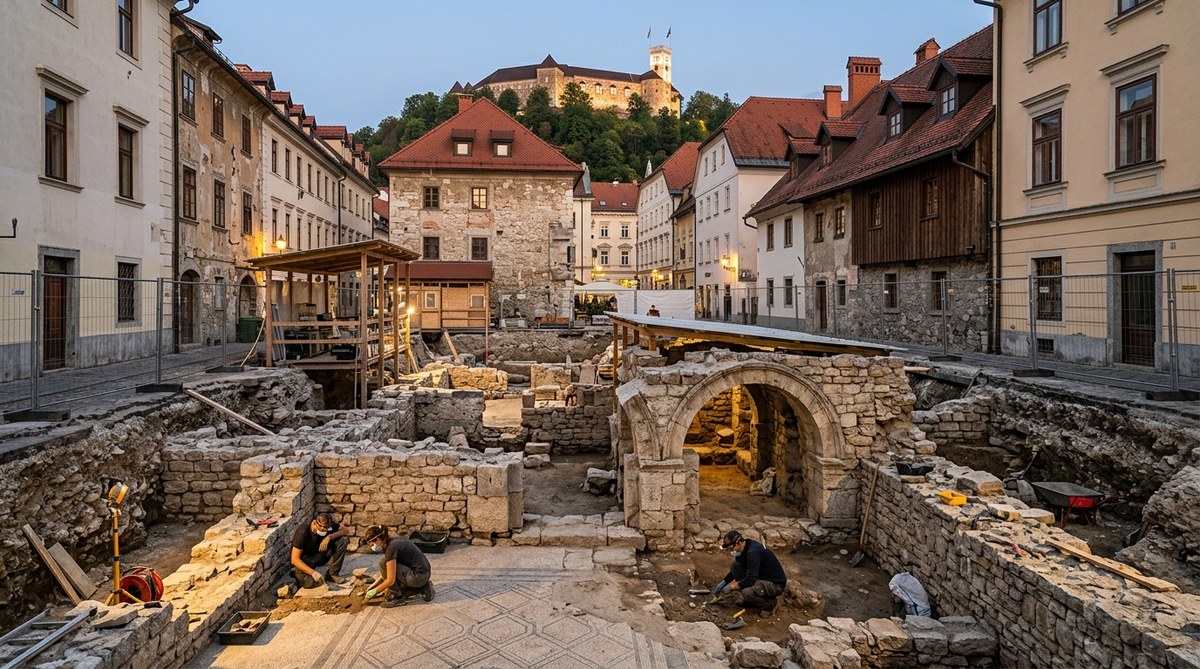
Memory is not passive. It is an active choice. By studying and teaching about the expulsion, we resist the erasure that the original perpetrators intended. Every time a student reads about this event, they undo a small part of the cultural destruction. For educators, this is the most important lesson of all. Teaching Jewish history is not just about the past. It is about ensuring that future generations know who we were and what we faced. You can support this work by exploring The Hidden Synagogues of Medieval Ljubljana: Uncovering Lost Jewish Architecture and other resources that bring these stories to light.
A Practical Framework for Studying the Expulsion
For researchers and students who want to analyze the 1496 Jewish expulsion from Ljubljana in depth, here is a numbered process to follow.
- Start with primary sources. Look at the original expulsion decree from Emperor Maximilian I. Analyze the language used. Note who signed it and under what conditions.
- Examine local economic records. City tax rolls, debt ledgers, and trade documents reveal the financial motivations behind the expulsion.
- Map the diaspora. Trace where the expelled families went. Use census records and community histories from Maribor, Trieste, and Ottoman lands.
- Compare with contemporary expulsions. Place Ljubljana in the context of the Spanish expulsion of 1492 and the Portuguese expulsion of 1497. Identify common causes and differences.
- Assess the long-term impact. How did the expulsion affect Ljubljana’s economy and culture? Did the city recover? What traces of Jewish life remain?
- Connect to modern parallels. Identify similar patterns in 20th and 21st century displacements. Use the five-step table above as a guide.
- Share your findings. Publish your research, teach a class, or contribute to community memory projects. This ensures the story is not forgotten again.
Common Mistakes When Studying This Event
Researchers often make a few errors when approaching the 1496 expulsion from Ljubljana. Here are some to avoid.
- Assuming it was a religious conflict only. The expulsion was driven by economics and politics, not just theology.
- Ignoring the local context. National narratives often overshadow the role of city officials and local nobility.
- Treating it as an isolated event. The expulsion was part of a broader wave of expulsions across Central Europe.
- Focusing only on the victims. Study the perpetrators and their motivations too. Understanding the enemy is part of the work.
- Forgetting the aftermath. The story does not end in 1496. Jewish life in Slovenia continued, changed, and eventually revived.
“The 1496 expulsion from Ljubljana teaches us that history is not a straight line. Progress and regression exist side by side. Our job is to recognize the patterns and act before they repeat.” — Dr. Helena Krajnc, historian of Slovenian Jewish studies.
What This Means for Jewish Communities in 2026
The seven lessons from the 1496 Jewish expulsion from Ljubljana are not just academic. They are practical. They apply to how we build community, how we advocate for legal protections, and how we teach our children.
- We must document our presence. Do not assume that the next generation will know our history.
- We must build alliances. The Jewish community in Ljubljana had few allies in 1496. That made them vulnerable.
- We must watch for the early warning signs. Economic scapegoating, political opportunism, and local complicity are red flags.
- We must invest in cultural preservation. Museums, archives, and educational programs are not luxuries. They are defenses against erasure.
For those interested in deeper connections, consider reading about What Role Did Jewish Intellectuals Play in Slovenian Academic Life? and How Slovenian Jews Survived the Holocaust: Stories of Resistance and Rescue. These stories show the full arc of Jewish experience in Slovenia, from expulsion to survival to renewal.
The Unfinished Work of Memory
The 1496 expulsion from Ljubljana is a wound that took centuries to begin healing. Even now, the Jewish community in Slovenia is small. But it is alive. It gathers for Shabbat, celebrates holidays, and teaches its children. That is the ultimate rebuttal to the expulsion decree. The emperor and the city council wanted to erase Jewish life from Ljubljana. They failed.
Every time a researcher writes a paper about this event, or a student reads about it, or a community holds a memorial, the erasure is reversed. Memory is not a passive act. It is a declaration that we were here, we are here, and we will continue to be here. For educators and students of diaspora studies, this is the core lesson. The past is not finished. It lives in the choices we make today.
So take these seven lessons. Apply them to your research, your teaching, and your community work. The story of the 1496 Jewish expulsion from Ljubljana is not just a history lesson. It is a guide for how to protect Jewish life in an uncertain world.