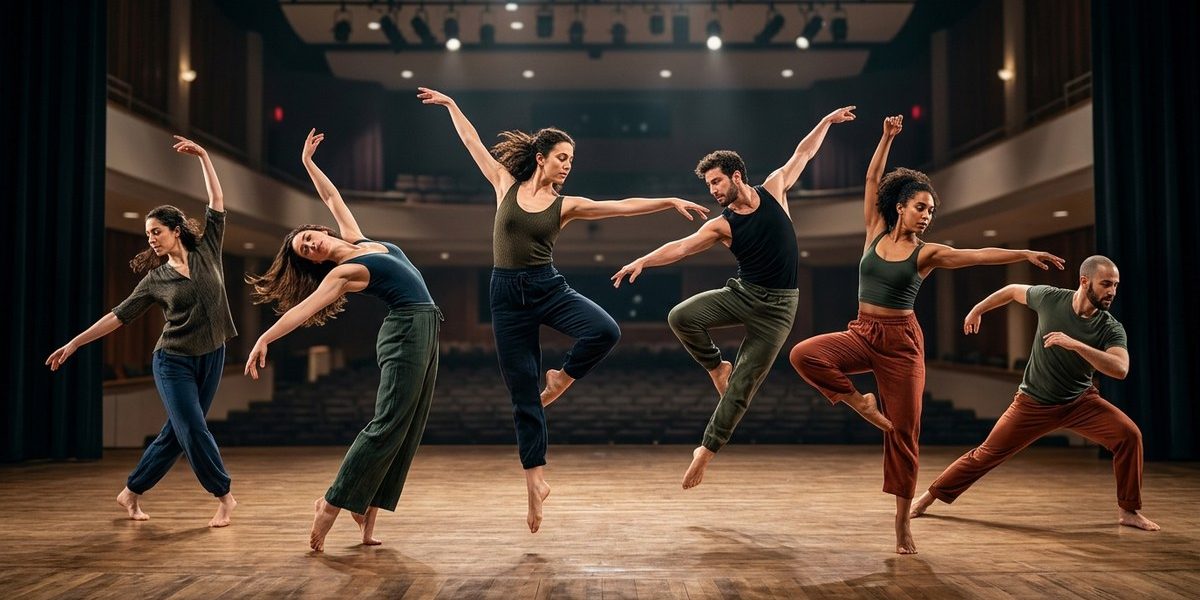
When you think about modern dance, names like Martha Graham and Jerome Robbins come to mind. But did you know that many of the people behind those iconic names were Jewish? Jewish dancers didn’t just participate in the modern dance revolution. They helped invent it. From the early 1900s to today, Jewish choreographers brought their cultural heritage, emotional depth, and a hunger for innovation to stages around the world. Their work changed how we think about movement, storytelling, and expression. Let’s look at six Jewish dancers who transformed modern choreography forever.
Jewish dancers and choreographers were central to shaping modern dance in the 20th century. From Martha Graham’s emotional expression to Jerome Robbins’ Broadway fusion, their contributions broke barriers and influenced generations. Understanding their Jewish roots adds depth to their artistic legacy and helps us see how culture, identity, and movement intersect in powerful ways.
Why Jewish Dancers Became Pioneers of Modern Choreography
Modern dance emerged in the early 20th century as a rebellion against rigid ballet traditions. Jewish artists were often outsiders in European and American society. That outsider perspective gave them the freedom to question conventions and create something new. Many Jewish dancers came from immigrant families. They understood displacement, longing, and the need for self expression. Those emotions naturally flowed into their art.
In addition, Jewish cultural traditions like folk dance and klezmer music provided a rhythmic and emotional palette that modern choreographers could draw from. The result was a rich blend of personal story and universal themes. As we see in the article How Jewish Dance Traditions Continue to Shape Modern Performance Art, these roots remain alive today.
Six Transformative Jewish Dancers and Choreographers
Here are six figures whose work reshaped modern choreography. Each brought a unique voice and a deep connection to their Jewish identity.
1. Martha Graham (1894-1991)
Martha Graham is often called the mother of modern dance. Her technique emphasized contraction and release, which she said came from the breath and the emotions of the human body. Graham was born to a family of Scottish descent, but she was of Jewish ancestry through her mother’s line. She identified with Jewish themes in several works, including “Primitive Mysteries” and “Appalachian Spring.” Her company became a training ground for generations.
2. Jerome Robbins (1918-1998)
Jerome Robbins, born to Jewish parents in New York City, revolutionized American musical theater. His choreography in “West Side Story” blended ballet, jazz, and street movement. He also worked with the New York City Ballet, creating masterpieces like “Fancy Free.” Robbins often drew on his Jewish upbringing. His ballet “The Dybbuk” directly referenced Jewish mysticism.
3. Anna Sokolow (1910-2000)
Anna Sokolow was a student of Martha Graham. She created works that were raw and political. Her piece “Rooms” captured urban alienation. Sokolow was born to Jewish immigrant parents in New York. She used dance to express social justice themes. Her choreography influenced modern dance worldwide.
4. Pearl Lang (1921-2009)
Pearl Lang was a principal dancer in Martha Graham’s company and later led her own group. She choreographed works rooted in Jewish literature and history. Her piece “Shira” took inspiration from the Song of Songs. Lang’s work often explored Jewish identity and heritage. She helped preserve and expand Graham’s technique.
5. Sophie Maslow (1911-2006)
Sophie Maslow combined modern dance with folk traditions. She grew up in a Yiddish speaking home in New York. Her piece “Champion” was based on a poem by a Jewish writer. Maslow believed dance should be accessible and relatable. She founded the New Dance Group, which encouraged dancers from all backgrounds.
6. Donald McKayle (1930-2018)
Donald McKayle was an African American Jewish choreographer. He converted to Judaism later in life and embraced Jewish themes in his work. His piece “Rainbow ‘Round My Shoulder” addressed racial injustice. McKayle’s choreography blended modern dance with African and Jewish rhythms. He taught at prestigious universities and influenced many dancers.
How Their Jewish Heritage Influenced Their Art
The connection between Jewish dancers and modern choreography goes beyond individual stories. Here are common ways Jewish identity shaped their work:
- Use of expressive, storytelling movement over abstract form.
- Incorporation of folk dance motifs from Eastern European Jewish communities.
- Themes of exile, hope, and community resilience.
- Collaboration with Jewish composers and musicians.
- Emphasis on social justice and human dignity.
These elements appear again and again in the works of the six dancers listed above. To see how this tradition continues, check out From Shtetl to Stage: Jewish Theater Traditions and Their Modern Revival.
A Practical Process for Studying Their Choreographic Methods
If you want to understand how these Jewish dancers created their work, try this numbered process:
- Watch a full performance video of a key piece (e.g., Graham’s “Lamentation” or Robbins’ “West Side Story” dances).
- Read the dancer’s biography or interviews to learn their background and Jewish influences.
- Identify three specific movements or sequences that feel emotionally charged.
- Write down what you think those movements express in terms of the dancer’s cultural identity.
- Compare your observations with an analysis by a dance historian.
- Practice a short phrase from the piece and reflect on how it makes you move and feel.
Common Mistakes When Analyzing Jewish Influence in Dance
Many students or researchers make errors when connecting Jewish dancers to modern choreography. Here is a table that clarifies common mistakes and how to avoid them.
| Mistake | Why It is Wrong | Correct Approach |
|---|---|---|
| Assuming all Jewish dancers created explicitly Jewish themed works. | Not every choreographer focused on Jewish subjects. Some expressed identity indirectly. | Look for subtle themes like community, memory, or longing. |
| Overlooking dancers from Sephardic or Mizrahi backgrounds. | Most discussions focus on Ashkenazi Jews. The Jewish world is diverse. | Include dancers from varied Jewish traditions in your research. |
| Ignoring the influence of Jewish composers and musicians. | Music and dance are connected. Jewish musicians often collaborated with these choreographers. | Listen to the scores alongside the choreography. |
| Treating Jewish identity as a monolith. | Jewish experience differs by time, place, and family. | Contextualize each dancer’s specific background. |
Expert Advice on Preserving Their Legacy
“The Jewish dancers who shaped modern choreography were not just artists. They were cultural bridges. They took the pain of exile and turned it into beauty. To study them is to understand how identity becomes art.”
Dr. Naomi Fischer, dance historian and author of “Staging the Jewish Body”
This quote reminds us that the impact of these dancers extends beyond technique. They gave voice to a community that often felt invisible.
How You Can Continue to Learn
If you are a student, researcher, or dance enthusiast, here are some steps to go further:
- Attend performances by companies that continue the tradition, like the Martha Graham Dance Company.
- Read memoirs by Jewish dancers such as Anna Sokolow’s writings.
- Visit archives at the New York Public Library for the Performing Arts.
- Connect with Jewish cultural organizations that host dance events.
For a broader view of Jewish contributions to the arts, you might enjoy How Jewish Artists Shaped Modern Art Movements in Central Europe or 5 Influential Jewish Writers Who Changed World Literature.
Why Their Stories Matter for Today’s Dance World
The legacy of these six Jewish dancers lives on in every modern dance class, every Broadway stage, and every community dance festival. Their Jewish heritage gave them a unique lens. They turned personal history into universal movement. As you watch a dancer contract and release, remember that this language was shaped in part by people who came from shtetls and tenements, who carried their culture in their bodies. Their work invites us to ask: what does your identity look like when you dance?
Next time you see a performance, look for the stories hidden in the steps. They might just lead you back to a Jewish neighborhood in New York or a village in Eastern Europe. That connection is what makes modern dance so powerful. It is always personal, always cultural, and always transforming.