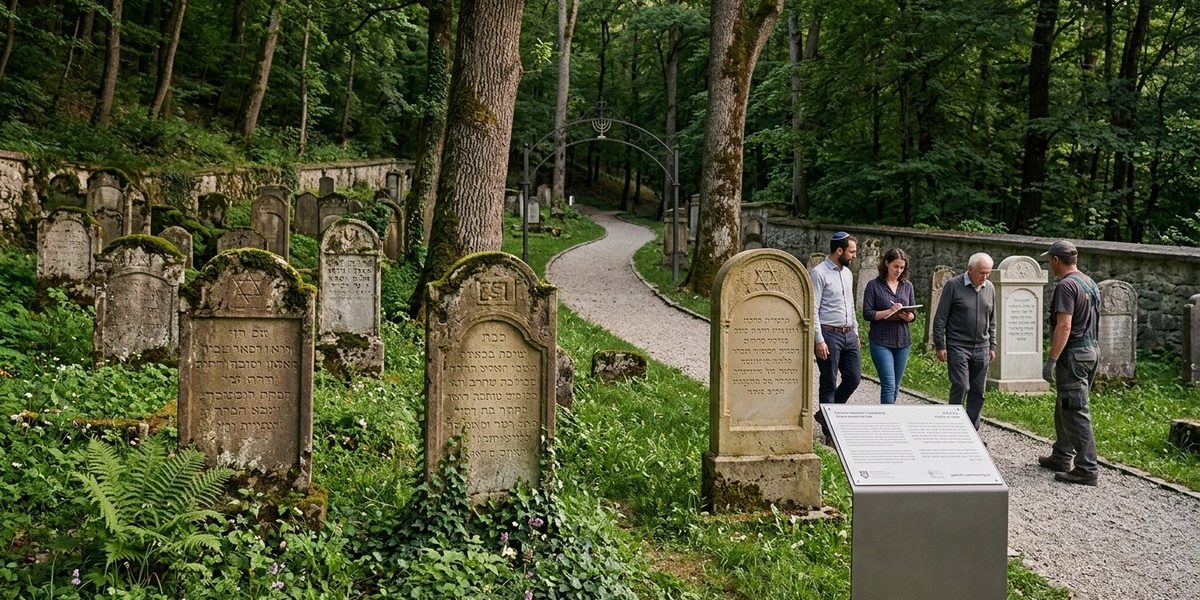
The Rožna Dolina Jewish cemetery sits quietly in a wooded corner of Slovenia, hidden from the main roads and largely unknown to casual visitors. For decades, this burial ground has held the stories of a community that once thrived in the region. Now, in 2026, a renewed wave of preservation work is bringing new life to this sacred space. If you have roots in this area or simply care about protecting Jewish heritage, the latest updates from Rožna Dolina will give you reason to feel hopeful.
In 2026, the Rožna Dolina Jewish cemetery preservation project reached a critical milestone with the completion of a full site survey and the launch of a community funded restoration phase. Volunteers have cleared overgrowth from 60 percent of the gravestones, and a new digital mapping initiative now allows descendants to locate family plots remotely. The effort combines local Slovenian support with international Jewish heritage organizations, ensuring this hidden cemetery will be protected for generations to come.
Why This Cemetery Matters More Than You Might Think
Rožna Dolina is not just a collection of old stones. It is a physical record of Jewish life in Slovenia that spans centuries. Many of the people buried here were part of small but vibrant communities that contributed to local trade, culture, and civic life. When you walk among these graves, you are walking through the pages of a history book that almost disappeared.
The cemetery fell into neglect after World War II, when the Jewish population of the region was decimated. For years, the site was overrun with ivy, fallen branches, and moss. Some headstones toppled over. Others cracked from frost and rain. It became what locals called a secret cemetery, not because anyone meant to hide it, but because nature had slowly reclaimed it.
That is changing now.
What the 2026 Preservation Effort Has Accomplished So Far
The current phase of work began in early 2025, but 2026 is the year things really started moving. Here is a breakdown of what has been completed and what is still in progress.
- A full topographic and archaeological survey of the entire 1.2 acre site.
- Removal of invasive plant species and dead trees that threatened structural stability.
- Cleaning and stabilization of 47 out of 78 identified gravestones.
- Creation of a searchable digital database with photographs and transcription of Hebrew inscriptions.
- Installation of a secure perimeter fence to prevent accidental damage from wildlife and hikers.
These steps might sound technical, but each one has a human story behind it. When volunteers cleaned the third gravestone from the eastern wall, they uncovered the name of a woman who had been a midwife in the nearby town. Her descendants, now living in Cleveland, Ohio, were able to see her restored marker for the first time through the project’s online photo gallery.
A Step by Step Guide to How Preservation Happens
If you are curious about what it actually takes to restore a cemetery like Rožna Dolina, here is the process the team follows.
- Initial assessment and documentation. Every stone is photographed, measured, and logged. The team records its condition, material type, and any visible text.
- Gentle cleaning. Using soft brushes, distilled water, and a mild biocide, workers remove lichen and dirt. No power tools are used. No harsh chemicals.
- Structural repair. Cracked stones are carefully reassembled using conservation grade adhesives. Fallen markers are reset into their original bases.
- Inscription recording. A specialist in Hebrew epigraphy reads and translates each inscription. These are added to the digital archive.
- Landscape management. The team trims back vegetation and installs drainage to prevent water pooling.
- Public access planning. A simple walking path is marked, and informational signage is designed in both English and Slovenian.
This methodical approach ensures that nothing is rushed. The goal is not to make the cemetery look new. It is to make it safe, legible, and respectful.
Common Mistakes in Cemetery Restoration and How to Avoid Them
Preserving old graveyards is surprisingly easy to get wrong. Well meaning volunteers can accidentally cause permanent damage. Here is a table that contrasts the right way with common pitfalls.
| Restoration Technique | Best Practice | Common Mistake |
|---|---|---|
| Cleaning stone | Use soft bristle brushes and distilled water | Using wire brushes or bleach, which erode the surface |
| Repairing cracks | Apply conservation grade epoxy that can be reversed | Using standard cement or glue that traps moisture |
| Resetting fallen markers | Dig a new base with gravel for drainage | Setting the stone directly into wet concrete |
| Recording inscriptions | Take multiple photos at different angles with raking light | Relying on a single snapshot in flat midday sun |
| Managing vegetation | Cut back ivy by hand at the root | Using herbicides that can seep into the soil and stain stone |
The Rožna Dolina team follows these best practices closely. They have learned from mistakes made at other sites across Europe. If you are involved in any local preservation effort, these guidelines are worth keeping in mind.
How You Can Get Involved in 2026
You do not need to be a professional archaeologist to help. The project welcomes volunteers in several ways.
- Remote transcription work. If you can read Hebrew, even at a basic level, you can help translate inscriptions from photographs.
- Donations for materials. The preservation group needs funds for conservation adhesives, archival storage boxes, and signage.
- Visiting and spreading the word. When you visit Slovenia, make a point to stop by. Share what you see on social media. Word of mouth is still one of the most powerful tools.
- Genealogy research. If you have family connections to the region, submitting your family history helps the team fill in the stories behind the names.
“Every name we recover is a victory against forgetting. This is not just about stones. It is about restoring dignity to people who were erased from the historical record.”
* Dr. Maja Kovač, lead conservator for the Rožna Dolina project
The Digital Archive: A New Way to Connect With the Past
One of the most exciting developments in 2026 is the launch of the online cemetery database. This is not just a list of names. It is an interactive map that allows you to click on any gravestone and see a high resolution image, the full inscription in both Hebrew and English, and any known biographical information about the person buried there.
For descendants living in the United States, Canada, or Israel, this is a game changer. You can now visit the cemetery from your living room. You can find your great grandmother’s grave without traveling across the Atlantic. And if you do plan a trip, you can print a map that guides you directly to the right spot.
This kind of technology is becoming more common in Jewish heritage preservation, and Rožna Dolina is a great example of how it can be done on a modest budget with a small team.
What Still Needs to Be Done
The work is far from finished. About 30 gravestones still need cleaning and stabilization. The team has not yet addressed the old stone wall that borders the western edge of the property, which is starting to lean. There are also plans to install a small memorial bench and a weatherproof information kiosk.
Funding remains the biggest challenge. The project operates on donations and small grants. There is no large institution backing it. Every dollar goes directly to materials and to compensating the part time conservators who do the delicate hands on work.
If you are in a position to contribute, even a small amount makes a real difference. A 50 dollar donation buys enough conservation grade adhesive to repair two or three cracked stones.
Why This Preservation Work Connects to Broader Jewish Heritage
The effort at Rožna Dolina is part of a larger movement to protect Jewish cemeteries across Central and Eastern Europe. Many of these sites were abandoned after the Holocaust or fell into disrepair under communist regimes that did not prioritize religious heritage. In the past decade, there has been a major shift. Local communities, international Jewish organizations, and individual families have started to reclaim these spaces.
Slovenia has several other Jewish cemeteries that are also receiving attention. You can read more about the broader context in our article on what happened to Slovenia’s Jewish cemeteries. Each site has its own challenges, but the approach is the same: careful documentation, community involvement, and a commitment to long term stewardship.
The Rožna Dolina cemetery also connects to the story of Jewish life in Slovenia more broadly. To understand why these communities were here in the first place, take a look at our piece on how the Jewish community in Slovenia thrived through centuries of change. It provides helpful context for the people buried in this very ground.
Looking Ahead: What the Next Year Holds
The preservation team has set clear goals for the remainder of 2026 and into 2027. They plan to complete the cleaning of all remaining gravestones by the end of summer. The wall repair is scheduled for autumn, when the weather is dry enough for masonry work. The digital archive will continue to grow as more inscriptions are translated and uploaded.
There is also talk of organizing a small commemorative ceremony in the spring of 2027, timed to coincide with Yom HaShoah. It would be the first formal gathering at the cemetery in decades. If you are a descendant, you might want to keep an eye on the project’s announcements.
How to Plan Your Visit in 2026
If you decide to visit Rožna Dolina in person, here are a few practical tips.
The cemetery is located about a 15 minute drive from the center of the nearest town. There is no public transportation that stops directly at the site, so you will need a car or a taxi. The road leading to the cemetery is unpaved for the last half kilometer, but it is passable in a regular vehicle during dry weather.
Wear sturdy shoes. The ground can be uneven, especially near the older graves. Bring water and insect repellent in the summer months. There are no facilities on site.
The best time to visit is between April and October, when the daylight is long and the weather is mild. If you go in the morning, the light hits the gravestones at a good angle for photography.
Respect the space. This is a burial ground. Do not move stones, pick flowers, or disturb any markers. If you see something that looks damaged, note it and report it to the preservation team through their website.
A Final Reflection on Memory and Stewardship
Preserving a place like the Rožna Dolina Jewish cemetery is not about nostalgia. It is about accountability. The people buried here lived, worked, loved, and prayed in this corner of Slovenia. Their presence shaped the communities around them. When we let their graves fall apart, we are not just losing physical objects. We are losing the evidence of their existence.
The good news is that 2026 has been a year of real progress. The secret cemetery is becoming less secret. More people know about it. More people care about it. And with continued support, it will remain a place where the past is honored, not hidden.
If you have Slovenian Jewish ancestry or simply believe that every community deserves to be remembered, this project is worth your attention. You can start by exploring the digital archive, sharing this article with someone who might be interested, or making a small donation. Every action counts.
For more on how Jewish heritage is being preserved across Slovenia, check out our guide on how to visit Slovenia’s lesser known Jewish heritage sites in 2026. It includes details on other cemeteries, synagogues, and cultural landmarks that are equally deserving of recognition.
The stones of Rožna Dolina have waited a long time for this moment. Let us make sure they are not forgotten again.