Tu BiShvat, the Jewish New Year for Trees, often gets overlooked. It sits quietly between the winter holidays and Passover. But for those who take the time to look closer, this minor holiday holds a surprising amount of depth. It is a day to celebrate nature, eat seasonal fruits, and reflect on our connection to the land. While many people know about the traditional Tu BiShvat seder with its four cups of wine and specific fruits, there are many other ways to mark the day. Some of the most interesting ideas come from small Jewish communities around the world, including the community in Slovenia.
Tu BiShvat is more than just a seder. You can celebrate by planting a native tree, hosting a “forest feast” with foods from seven species, creating a nature journal, or learning how Slovenian Jews honor the day through community tree dedications. These unique ways to celebrate Tu BiShvat help you connect with nature, your heritage, and your local environment in a fresh way.
Why Tu BiShvat Deserves a Fresh Look
The holiday falls on the 15th day of the Hebrew month of Shevat. In 2026, that lands in late January or early February. In Israel, it marks the beginning of spring when the almond trees start to bloom. But for Jews living in colder climates, especially in the United States, the ground is often frozen solid. That makes planting a tree outside feel impossible. So how do you celebrate the birthday of trees when you cannot actually plant one?
This is where creativity comes in. The Slovenian Jewish community, a small but resilient group, has developed some beautiful traditions that work even when the weather does not cooperate. Their approach blends Jewish law with local nature. They focus on what is available rather than what is missing.
7 Unique Ways to Celebrate Tu BiShvat
Here are seven fresh ideas to make your Tu BiShvat celebration feel meaningful and new. Some come from Slovenian tradition. Others are modern twists that fit any Jewish home.
1. Host a “Winter Seder” with Foraged or Local Fruits
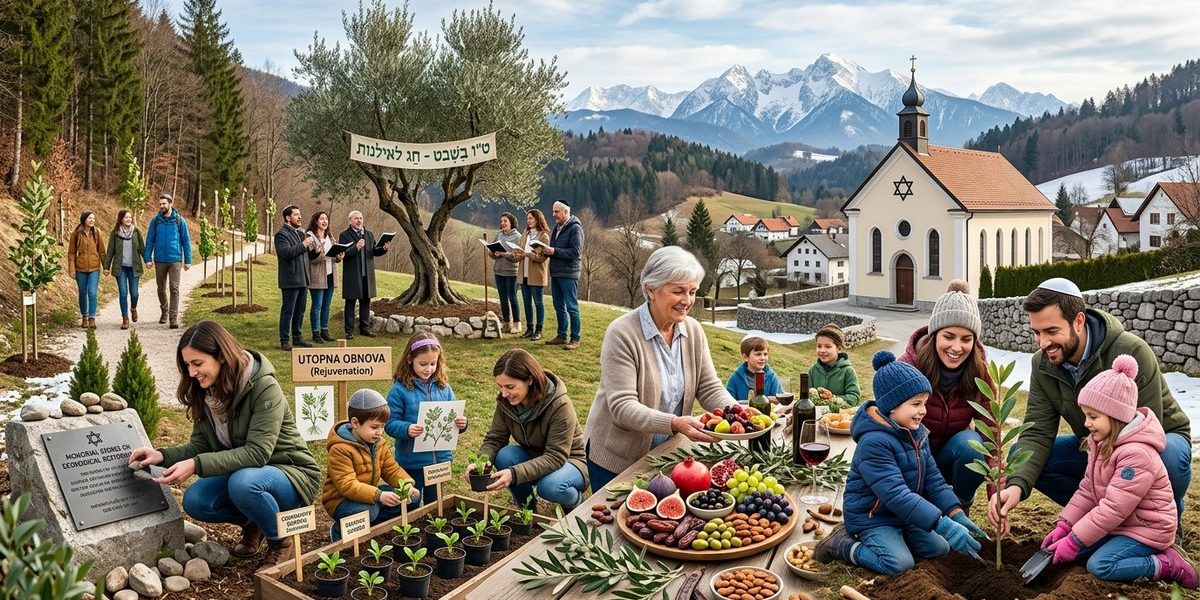
The traditional Tu BiShvat seder includes fruits from the Land of Israel: figs, dates, grapes, pomegranates, and olives. But the Slovenian community adapts the menu to what grows locally. In January, that means dried apples, pears, and nuts from the autumn harvest. They also use preserved fruits like plum jam or pickled grapes.
You can do the same. Visit a local farmers market or a winter CSA box. Look for dried fruits, winter squash, or root vegetables. The point is not to recreate an Israeli seder exactly. The point is to honor the idea of the land by using what your local land provides.
2. Plant a Native Tree in a Pot for Indoor Growth
If the ground is frozen, plant a tree in a large pot indoors. Choose a species native to your region. For example, if you live in the Midwest, try a potted oak or maple sapling. Keep it near a sunny window. Water it weekly and talk about its growth during the seder.
The Slovenian community often does this with saplings from local forests. They care for the tree indoors until spring, then transplant it outside on Lag B’Omer. This turns Tu BiShvat into the start of a longer commitment to the tree.
3. Create a “Forest Feast” with Seven Species
Another idea is to build a meal around the seven species mentioned in the Torah: wheat, barley, grapes, figs, pomegranates, olives, and dates (honey). You do not need to eat them all at once. Instead, create a tasting menu.
- Start with challah made from local wheat or spelt flour.
- Serve a barley soup or stew.
- Add a side of roasted grapes or a glass of kosher wine.
- Offer dried figs and pomegranate seeds for dessert.
- Finish with date honey drizzled over yogurt.
This approach turns the seder into a full dinner. It makes the holiday feel more substantial.
4. Dedicate a Tree in Someone’s Honor
In Slovenia, families often dedicate a tree in a local park or forest to mark Tu BiShvat. They choose a spot that needs restoration, like a section damaged by storms or pests. They work with the city to plant a new tree and place a small stone marker nearby.
You can do this in your own town. Contact your local parks department or a conservation group. Many cities have tree planting programs where you can sponsor a tree for a small fee. Dedicate it to a loved one, a teacher, or a community member. It becomes a living memory.
5. Host a Nature Journaling Session
Tu BiShvat is a good time to slow down and observe the natural world. Even in winter, there is life. Gather a few friends or family members. Go for a walk in a nearby park or nature preserve. Bring notebooks and pencils. Write down what you see: birds, bare branches, frost patterns, animal tracks. Draw the shapes of trees without leaves.
This practice is popular among Slovenian Jewish families who live near the Ljubljana Marshes. They use the holiday to document the changing seasons. It is a way to appreciate the beauty that exists even in the cold.
6. Make a “Tree of Life” Art Project
Art can be a powerful way to connect with the holiday. Create a collaborative “Tree of Life” with your family or community. Draw a large tree trunk on a piece of paper or canvas. Each person adds a leaf. On each leaf, write something you are grateful for, a hope for the coming year, or a memory of a favorite tree.
This activity works well for children. It also ties into the Jewish concept of the Etz Chaim, the Tree of Life. You can hang the finished piece in your home as a reminder of the holiday.
7. Learn About the Slovenian Jewish Community’s Tree Rituals
The Slovenian Jewish community has a special custom for Tu BiShvat. They gather at the Jewish cemetery in Ljubljana and recite blessings over the ancient yew trees that grow there. These trees are hundreds of years old. They have witnessed centuries of Jewish life in the region.
You can adapt this. Find an old tree in your neighborhood. It could be a giant oak in a city park or a historic tree on a college campus. Visit it on Tu BiShvat. Say the blessing for trees (the Birkat Ha’Ilanot) if you can see blossoms or buds. Even if the tree is bare, you can say a simple prayer of gratitude for its presence.
How to Plan Your Own Tu BiShvat Celebration
If you want to organize a celebration, follow these steps.
Step 1: Set a Date and Time
Tu BiShvat 2026 begins at sundown on the evening of the 15th of Shevat. Check a Jewish calendar for the exact date. Plan for a gathering that lasts about two hours. That gives you time for a seder, a meal, and an activity.
Step 2: Choose Your Focus
Decide what matters most to you. Is it the seder? The tree planting? The nature walk? Pick one main activity and build around it. Do not try to do everything.
Step 3: Gather Your Materials
- For a seder: fruits, nuts, wine or grape juice, a seder plate or bowl, and printed blessings.
- For planting: a pot, soil, a native sapling, and a watering can.
- For journaling: notebooks, pencils, and warm clothing for an outdoor walk.
Step 4: Invite Others
Tu BiShvat is a great holiday for interfaith gatherings. Invite neighbors, friends from other faiths, or community members who care about the environment. It is a low pressure holiday. There are no strict rules about who can participate.
Step 5: Reflect and Share
End your celebration with a moment of reflection. Ask each person to share one thing they will do to care for the earth in the coming year. This turns the holiday into a commitment.
Common Mistakes and How to Avoid Them
Even well meaning celebrations can miss the mark. Here is a table to help you avoid common pitfalls.
| Mistake | Why It Happens | How to Fix It |
|---|---|---|
| Serving only dried fruits | People think fresh fruit is not available in winter | Use preserved fruits, frozen berries, or winter squash to add variety |
| Forgetting the environmental aspect | The seder becomes just a fruit tasting | Add a discussion about climate change or local conservation efforts |
| Skipping the blessings | People feel rushed or do not know the words | Print the blessings in advance and read them together slowly |
| Planting a non native species | It seems easier to buy whatever is at the garden center | Research native trees for your area and buy from a local nursery |
| Making it too long | The seder can drag on for hours | Keep the seder to 45 minutes, then move to a meal or activity |
A Practical Checklist for Your Celebration
Use this list to stay organized.
- Check the Hebrew date for Tu BiShvat 2026.
- Buy or gather fruits and nuts for the seder.
- Print or download the Tu BiShvat seder blessings.
- Choose a tree species native to your area.
- Purchase a pot and soil if planting indoors.
- Contact your local parks department about tree dedications.
- Invite friends or family at least one week in advance.
- Prepare a simple meal based on the seven species.
- Set up a nature journaling station with supplies.
- Plan a short walk outdoors, weather permitting.
What to Do If You Cannot Celebrate on the Exact Day
Tu BiShvat is a minor holiday. It does not have the same strict observance rules as Yom Kippur or Passover. If the actual date falls on a busy weekday, you can celebrate on the weekend before or after. Many Jewish communities hold their seders on a Sunday afternoon to make it easier for everyone to attend.
The Slovenian community sometimes celebrates on the nearest Shabbat. They incorporate tree themed readings into the Torah service. This flexibility makes the holiday accessible.
Connecting Tu BiShvat to Broader Jewish Traditions
Tu BiShvat is part of a cycle of nature based holidays. It connects to Shavuot, which celebrates the wheat harvest, and to Sukkot, which celebrates the fall harvest. It also echoes the theme of renewal found in Rosh Hashanah.
If you enjoy Tu BiShvat, you might also appreciate learning about the role of nature in other Jewish festivals. For example, the tradition of a sukkah in Slovenia) shows how Jews adapt outdoor rituals to local climates. Similarly, the traditions in Slovenia) reflect a deep connection to seasonal foods.
Bringing the Spirit of Tu BiShvat Into Your Daily Life
The best part of Tu BiShvat is that its message does not end after one day. The holiday asks us to think about our relationship with the earth all year long. You can carry its spirit forward by:
- Planting a vegetable garden in the spring.
- Reducing your use of single use plastics.
- Supporting local farms and farmers markets.
- Joining a community tree planting event on Lag B’Omer.
- Learning about Jewish environmental ethics, known as Bal Tashchit (do not destroy).
These actions turn a one day celebration into a lifelong practice.
Your Next Step for Tu BiShvat 2026
Tu BiShvat does not require a big production. It does not need a large crowd or a formal seder. It just needs your attention. Pick one idea from this list. Try it. See how it feels.
Maybe you will plant a potted oak and watch it grow through the spring. Maybe you will host a small forest feast with your family. Maybe you will visit an old tree and say a blessing. Whatever you choose, you are connecting to a tradition that goes back thousands of years.
The Slovenian Jewish community shows us that even in a small, cold place, the New Year for Trees can be warm and full of life. Let their example inspire you to create your own unique ways to celebrate Tu BiShvat this year.