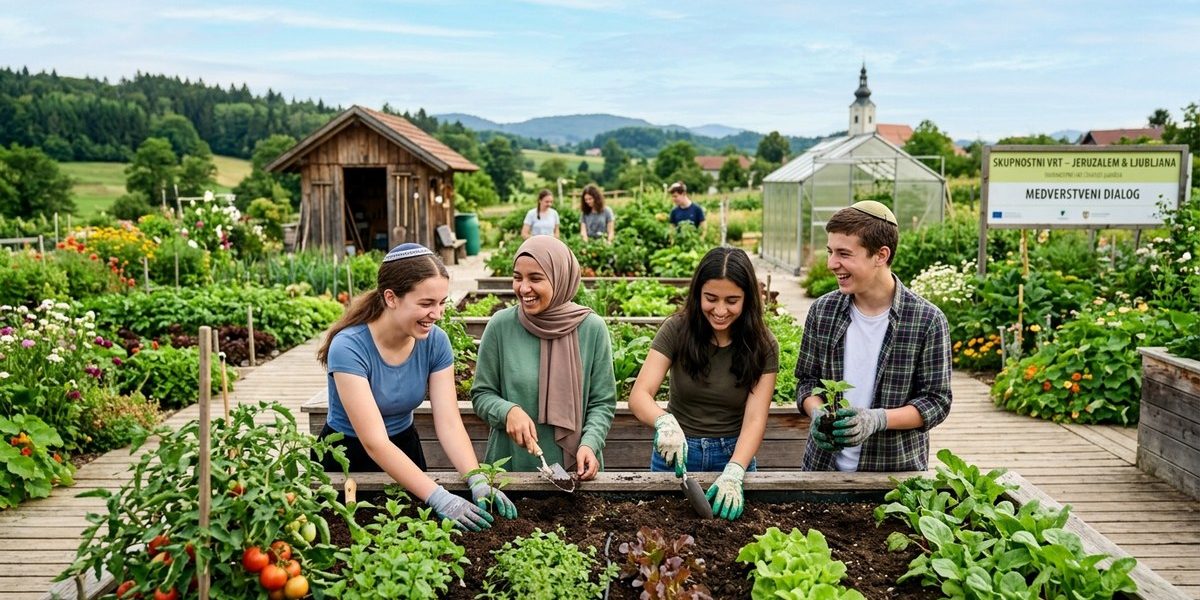
In a small corner of Slovenia, teenagers from three different faiths are kneeling together in the dirt. They are planting tomatoes, pulling weeds, and learning about each other’s lives. This is not a formal workshop or a tense dialogue session. It is a garden. And it is changing how Jewish, Muslim, and Christian teens see one another.
The interfaith teen garden project in Slovenia proves that shared physical work can break down religious barriers faster than lectures ever could. By growing food together, Jewish, Muslim, and Christian teenagers build trust, learn about each other’s traditions, and create friendships that last well beyond harvest season. It offers a replicable model for community builders everywhere.
A Seed of an Idea
The project started in early 2025 when a local interfaith council in Ljubljana wanted to find a way to bring teens together. Many young people in Slovenia have limited exposure to peers from other religious backgrounds. The Jewish community is small, and Muslim families often live in separate neighborhoods. Christian teens might attend religious schools. The groups rarely mixed.
Organizers decided to skip the typical panel discussions. Instead, they asked a simple question: what if we built a garden together?
The answer surprised everyone. Within weeks, fifteen teenagers from Jewish, Muslim, and Christian families signed up. They came from Ljubljana, Maribor, and smaller towns. Some had never met someone from another faith before.
How the Garden Works
The garden sits on a plot of land donated by a local church. It is about half an acre. The teens meet twice a week after school during the growing season, from April through October. Each session lasts two hours.
Here is how a typical afternoon unfolds:
- The group gathers for a short check in. Everyone shares one thing about their week.
- A task is assigned based on the season. Planting, watering, weeding, or harvesting.
- Teens work in mixed faith pairs or small groups. No one works alone.
- A short break includes snacks. Families take turns providing food that reflects their traditions.
- The session ends with a group reflection. Teens talk about what they learned or noticed.
The structure is simple. That is the point. There are no long speeches or forced activities. The work itself creates the connection.
What They Grow
The garden is not just symbolic. It produces real food that goes home with the teens and their families.
- Vegetables: tomatoes, cucumbers, peppers, zucchini, and leafy greens.
- Herbs: mint, basil, parsley, and dill. These are used in all three cuisines.
- Fruit: strawberries and raspberries along one fence line.
- Flowers: sunflowers and marigolds that attract pollinators and brighten the space.
Each teen gets a small personal plot. They decide what to plant there. This ownership matters. A Muslim teen grew mint for tea. A Jewish teen planted dill for pickles. A Christian teen filled her plot with flowers for her grandmother.
Lessons from the Soil
The garden teaches skills that go beyond farming. Teens learn patience, cooperation, and responsibility. But the real lesson is about each other.
One afternoon, a Jewish teen explained why she could not eat the cheese sandwich offered during snack time. This led to a conversation about kashrut. A Muslim teen shared that she faced similar rules with halal. A Christian teen asked if there were any foods her family avoided during Lent.
These moments happen naturally. They are not scripted. The garden provides a safe space for questions that might feel awkward in a classroom.
“When you are pulling weeds next to someone for an hour, you stop seeing them as a label. You see them as a person who gets blisters just like you do.” – Maja, 17, Jewish participant
A Table for Comparing Approaches
Different faith traditions approach food, holidays, and community service in distinct ways. The garden helps teens see these differences as interesting rather than threatening.
| Aspect | Jewish Tradition | Muslim Tradition | Christian Tradition |
|---|---|---|---|
| Dietary rules | Kosher laws separate meat and dairy | Halal prohibits pork and alcohol | Fasting during Lent, no meat on Fridays |
| Harvest celebration | Sukkot involves building a hut | Eid al Adha includes sharing meat | Thanksgiving or harvest festival services |
| Community service | Tikkun olam, repairing the world | Zakat, charitable giving | Caritas, charity and service |
| Weekly rest | Shabbat from Friday sundown | Jumu’ah prayers on Friday | Sunday church and rest |
The teens created this table themselves during a reflection session. They wanted to compare their practices. The result was not division. It was curiosity.
Common Mistakes to Avoid
Starting an interfaith youth project sounds good in theory. In practice, organizers often stumble. Here are the most common mistakes the Slovenian team learned to avoid:
- Forcing deep conversations too early. Teens need time to feel comfortable before discussing theology.
- Ignoring dietary needs. Always provide snacks that work for everyone.
- Making it too structured. Leave room for spontaneous conversation and play.
- Focusing only on differences. Celebrate shared values like family, charity, and kindness.
- Adults talking too much. Let the teens lead the discussions.
Why This Matters for the United States
American educators and interfaith coordinators often look for models that work. The Slovenia garden project offers one. It is low cost, low tech, and highly effective.
The project costs less than two thousand dollars per season. That covers seeds, tools, soil, and a small stipend for a coordinator. Most of the labor comes from the teens themselves.
In the United States, similar projects could work in church basements, synagogue gardens, or mosque courtyards. The key is not the location. It is the shared activity.
How to Start Your Own Project
If you want to bring this model to your community, here is a practical checklist.
- Find a plot of land. A church, synagogue, or mosque with unused yard space is ideal.
- Recruit a diverse planning team. Include parents from each faith community.
- Set a regular schedule. Consistency builds trust.
- Provide all supplies. Do not ask families to bring tools. That creates barriers.
- Plan for food. Shared meals are the heart of the experience.
- Let the teens decide. Give them real ownership over what gets planted and how the time is structured.
What the Teens Say Now
After two growing seasons, the results speak for themselves. Friendships have formed across faith lines. Several teens now attend each other’s religious celebrations. A Jewish teen went to a Muslim family’s Eid celebration. A Christian teen visited a synagogue for the first time during Hanukkah.
One participant said the garden changed how she sees her own faith. “I used to think being Jewish meant keeping to myself,” she said. “Now I see that my traditions are stronger when I share them with others.”
A Model That Keeps Growing
The garden project in Slovenia is expanding. In 2026, a second plot opened near Maribor. Organizers are training teens to become peer leaders. The goal is to have alumni run future sessions.
For more context on how interfaith work is reshaping communities across Slovenia, read about how Slovenian religious leaders are building interfaith collaborations. You can also explore 5 successful interfaith projects that transformed Slovenia’s religious landscape.
What Slovenian Teens Can Teach Us About Connection
The teens in this garden are not professional peacebuilders. They are ordinary young people who showed up, got their hands dirty, and decided to stay. Their example offers a simple truth: you do not need a grand plan to bring people together. You just need a patch of soil, some seeds, and the willingness to work side by side.
If you are a journalist, educator, or coordinator looking for a story of hope, look to this garden. It is small. It is local. But it is growing something that the world needs more of: real friendship across lines of faith.