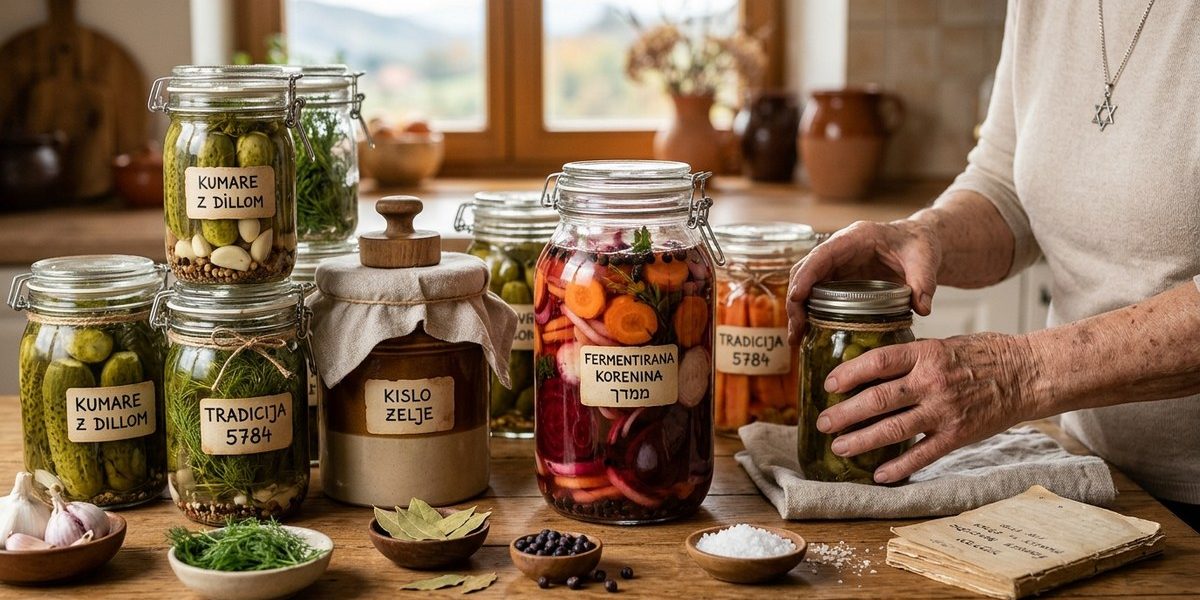
The scent of dill and brine drifts from a cool cellar in the foothills of the Julian Alps. Inside, rows of glass jars hold cabbage, turnips, and cucumbers submerged in a cloudy liquid. This is not a typical Slovenian pantry. It is a living archive of a tradition that very few people know about: the Slovenian Jewish practice of pickling and fermenting vegetables.
For centuries, Jewish families in Slovenia developed a distinct method of food preservation. They combined Ashkenazi techniques brought from Eastern Europe with the abundant produce of the Alpine region. The result was a style of pickling that was both practical and deeply cultural. It kept communities fed through harsh winters and connected them to their heritage. Today, this tradition is being rediscovered by food historians, fermentation enthusiasts, and anyone curious about how two cultures merged in a single jar.
Slovenian Jewish pickling traditions represent a unique fusion of Ashkenazi fermentation methods with local Alpine vegetables. These techniques were essential for winter survival, kosher food preparation, and cultural identity. Modern revival efforts are now preserving these recipes through community workshops, historical research, and a growing interest in artisanal fermented foods across Slovenia.
A History Written in Brine
Jewish communities have lived in Slovenian lands since the Middle Ages. They settled in towns like Maribor, Ptuj, and Ljubljana. By the 18th and 19th centuries, these families had developed a cooking style that reflected both their religious practices and their surroundings.
Preserving food was not optional. It was a necessity. Without refrigeration, families needed ways to store vegetables for the long winter months. Pickling using salt and brine was one of the most reliable methods. For Jewish families, it also had to meet the requirements of kashrut, the Jewish dietary laws. This meant using only kosher salt, avoiding any cross-contamination with non-kosher ingredients, and preparing the food in a way that respected the rules of the kitchen.
The Slovenian landscape provided a bounty of ingredients. Cabbage grew well in the cooler climate. Cucumbers thrived in the river valleys. Turnips, carrots, and beets were staples of the local diet. Jewish cooks took these vegetables and applied their own techniques. They added dill, garlic, and horseradish. They used wooden barrels and stoneware crocks. The result was a distinctly Slovenian Jewish pickle: crisp, tangy, and full of flavor.
The Core Ingredients of Slovenian Jewish Pickling
What made this tradition different from other European pickling styles? It comes down to a few key elements.
- Local vegetables: Cabbage, cucumbers, turnips, and green tomatoes were the most common.
- Kosher salt: Coarse salt without additives was used to create the brine.
- Aromatics: Dill, garlic, bay leaves, and horseradish root added flavor and helped with preservation.
- Natural fermentation: No vinegar was used. The vegetables fermented in a saltwater brine using naturally occurring lactic acid bacteria.
- Wooden vessels: Oak or beech barrels were preferred for large batches. Smaller stoneware crocks were used for household quantities.
These ingredients and tools were available in most Slovenian homes. The Jewish community simply adapted them to fit their own needs and tastes.
How the Fermentation Process Works
Understanding the science helps explain why this method was so effective. Lactic acid fermentation is a natural process. Beneficial bacteria convert sugars in the vegetables into lactic acid. This acid acts as a preservative. It also creates the sour flavor that pickles are known for.
The process also produces probiotics. These good bacteria support digestive health. In a time before modern medicine, fermented foods were valued for their ability to keep people healthy during the winter. This was especially important for communities that relied on stored food for months at a time.
A traditional Slovenian Jewish pickle follows a simple sequence.
- Prepare the vegetables: Wash them thoroughly. Cut cabbage into quarters or shred it for sauerkraut. Leave cucumbers whole or slice them lengthwise.
- Make the brine: Dissolve kosher salt in cold water. The ratio is typically 3 to 5 tablespoons of salt per quart of water. This creates a 3% to 5% brine solution.
- Pack the jar: Layer the vegetables with garlic cloves, dill sprigs, bay leaves, and slices of horseradish root. Press everything down firmly to remove air pockets.
- Cover with brine: Pour the salt water over the vegetables until they are completely submerged. Leave at least an inch of headspace at the top of the jar.
- Weight and seal: Place a clean weight on top of the vegetables to keep them below the brine. Close the jar loosely to allow gases to escape during fermentation.
- Ferment: Store the jar at room temperature, out of direct sunlight. Check it daily. Bubbles will appear as fermentation begins. Taste the pickles after 5 to 7 days. They will become more sour over time.
- Store: Once the pickles reach your preferred taste, move the jar to a cool cellar or refrigerator. This slows down the fermentation and preserves the texture.
Common Mistakes and How to Avoid Them
Pickling is simple, but a few errors can ruin a batch. Here is a table that shows the most frequent problems and their solutions.
| Mistake | Result | How to Fix It |
|---|---|---|
| Using iodized salt | Brine turns cloudy, vegetables become soft | Always use kosher salt or sea salt without additives |
| Not submerging vegetables completely | Mold grows on exposed pieces | Use a weight or a smaller jar to keep everything under brine |
| Fermenting in too warm a temperature | Vegetables become mushy and sour too fast | Keep jars between 60 and 70 degrees Fahrenheit |
| Skipping the daily check | Gas buildup can crack the jar | Open the lid slightly each day to release pressure |
| Using tap water with chlorine | Slows or stops fermentation | Use filtered or bottled water for best results |
| Adding too little salt | Vegetables rot instead of fermenting | Measure carefully; a 3% to 5% brine is the safe zone |
“The most important rule my grandmother taught me was to never rush the brine. Let the vegetables tell you when they are ready. A good pickle cannot be forced. It takes patience and a gentle hand.” — Miriam K., descendant of a Slovenian Jewish pickling family
The Cultural Importance of the Pickling Tradition
Pickling was never just about food. It was a way to maintain Jewish identity in a region where the community was small and often isolated. The act of preparing vegetables for the winter was a family event. Grandmothers passed down recipes to their daughters. Neighbors shared tips and traded jars. The pickling season marked the rhythm of the year.
Kashrut also played a role. Fermented vegetables were a reliable way to add flavor and nutrition to meals without violating dietary laws. They could be served alongside meat or dairy dishes. They were pareve, meaning they contained neither meat nor dairy, so they worked with any meal. This made pickled vegetables a staple on the Shabbat table and during holidays.
The tradition also reflected the resourcefulness of the community. Nothing was wasted. Stale bread was used to start a sourdough ferment for pickles. The leftover brine was used as a soup base or a marinade for meat. Every part of the process had a purpose.
Rediscovering the Tradition in 2026
Interest in traditional food preservation has grown in recent years. Fermentation workshops are becoming popular in Ljubljana and other Slovenian cities. Chefs and home cooks alike are looking to the past for inspiration. The Slovenian Jewish pickling tradition is part of this revival.
Several organizations are working to document and share these recipes. The Jewish community in Slovenia has partnered with local culinary historians to collect oral histories from older generations. They are recording the exact methods, the specific ratios of salt to water, and the preferred varieties of vegetables. This work is helping to preserve a piece of cultural heritage that was in danger of being lost.
For those who want to try it themselves, the process is accessible. You do not need special equipment. A clean glass jar, kosher salt, fresh vegetables, and a little patience are all it takes. The result is a crunchy, tangy pickle that connects you to a tradition stretching back centuries.
Bringing the Tradition into Your Kitchen
If you are ready to try making your own Slovenian Jewish pickles, here are a few tips to get started.
- Start with cucumbers. They are forgiving and ferment well.
- Use organic vegetables if possible. They have more natural bacteria on their skins, which helps fermentation.
- Do not be afraid of the smell. Fermenting vegetables have a strong aroma. It is a sign that the process is working.
- Taste your pickles every few days. The flavor changes over time. You might prefer them after a week or after a month.
- Share them with friends. Pickling is a communal activity. Passing on the tradition is part of the joy.
The hidden art of Slovenian Jewish pickling is not just a historical footnote. It is a living practice that can enrich your kitchen and your understanding of how food and culture intersect. Every jar you open is a small connection to the past.
Preserving More Than Vegetables
This tradition teaches us something important. Preservation is not just about extending the shelf life of food. It is about preserving memory, identity, and community. The Slovenian Jewish community may have been small, but their culinary contributions are significant. By keeping these pickling methods alive, we honor their story.
The next time you bite into a crisp, sour pickle, think about the hands that prepared it. Think about the cellars in the Alpine valleys where jars lined the shelves. Think about the families who gathered around tables, sharing food and stories. That is the true legacy of Slovenian Jewish pickling. It is a tradition of resilience, resourcefulness, and connection.
So grab a head of cabbage, some kosher salt, and a few cloves of garlic. Find a clean jar and a quiet corner of your kitchen. Start your own batch. You will be joining a tradition that has been passed down through generations, from the hills of Slovenia to your own table.