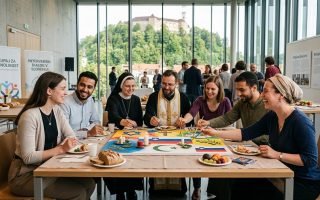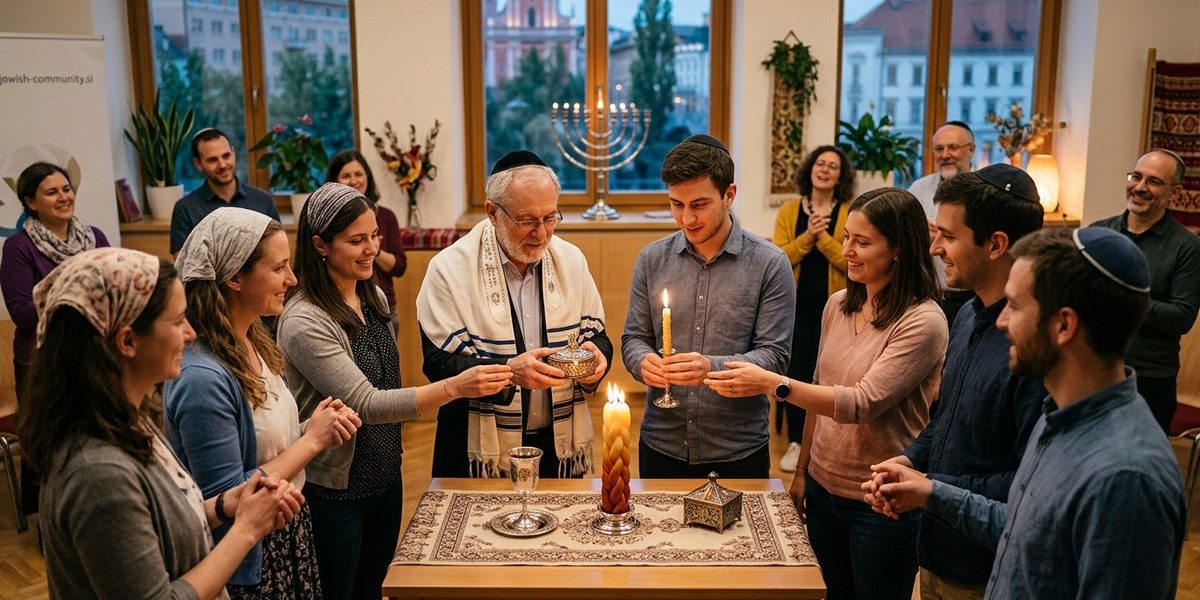
On a warm Saturday evening in Ljubljana, a small crowd gathers in a garden behind the Jewish cultural center. The air carries the scent of cloves and wine. A braided candle glows at the center. But the faces around it tell a different story. Jews, Muslims, Catholics, and Protestants stand together, each holding a piece of the Havdalah ritual. This is the interfaith Havdalah Slovenia has quietly pioneered, and American Jewish communities have a lot to learn from it.
Slovenia’s interfaith Havdalah celebrations show how a small Jewish community can lead meaningful multi-religious ritual. By focusing on sensory elements (candle, spice, wine) and shared values of rest and renewal, these gatherings attract diverse participants without diluting Jewish content. American communities can replicate this model to build trust, reduce antisemitism, and create lasting friendships.
The Unique Charm of a Slovenian Saturday Night
Havdalah marks the end of Shabbat. It is a threshold ritual, a moment of transition from sacred time back to ordinary time. In Slovenia, that threshold has become a bridge.
The Jewish community there is small. Estimates put it at fewer than 500 people. Yet they have managed to create a regular interfaith Havdalah that draws dozens of participants from other faiths. Why does it work?
First, the format is intimate. Instead of a lecture hall, people sit in a circle. Instead of a sermon, the ritual itself does the teaching. The leader lights the candle, holds the spice box, and pours the wine. Guests watch, smell, taste. No long explanations. Just presence.
Second, the event is held at a time that feels natural. Saturday night, after sunset, when most people are winding down. It does not clash with other religious obligations. It feels like a gift of time.
Third, the community invites people personally. A Catholic neighbor, a Muslim colleague, a Buddhist friend. The invitation is not a mass email. It is a handshake.
American Jewish communities often struggle to get non-Jews to attend Jewish events. They worry about translation, about awkwardness, about making people feel like outsiders. Slovenia’s example suggests that the opposite can be true. When the ritual is done with confidence and openness, guests feel honored to be included.
How to Borrow This Model for Your Own Community
You do not need a large budget or a professional organizer. You need intention and a few good partners. Here is a process that follows the Slovenian approach.
-
Identify three to five trusted interfaith contacts. These should be people who already respect Jewish practice. A pastor you have worked with, a Muslim community leader, a university chaplain. Ask them to co-host, not just attend.
-
Pick a regular date. Monthly or bimonthly works best. The same Saturday evening each month builds a rhythm. People start to plan around it.
-
Keep the ritual short and authentic. Use the full Havdalah blessings in Hebrew, but provide a printed phonetic guide and a simple English translation. Let the scents and sounds do the heavy lifting. Do not skip the blessings or replace them with generic readings.
-
Serve a light, kosher-friendly meal afterward. Slovenian hosts often offer burek (a savory pastry) or strudel. In America, think challah, fruit, and tea. The meal after the ritual is where real conversations happen.
-
Rotate hosting locations. Sometimes at the synagogue, sometimes at a church, sometimes in a backyard. Each location adds its own flavor and signals that this is a shared venture.
This numbered list is not a rigid formula. It is a starting point. The Slovenian model works because it adapts to local circumstances. In one community, the Havdalah might include a reading from the Quran about rest. In another, a Buddhist meditation on letting go. The core ritual remains Jewish, but the frame welcomes other traditions to add their touch.
Common Mistakes and How to Avoid Them
Based on what Slovenian organizers have learned over the years (and what American communities often get wrong), here is a table of typical pitfalls and their remedies.
| Mistake | What Happens | How Slovenia Sidesteps It |
|---|---|---|
| Overexplaining the ritual | Guests feel lectured, not welcomed. | Let the ritual speak. A short welcome, then start the blessings. |
| Choosing a location that feels exclusive | Non-Jews feel like outsiders in a synagogue. | Rotate venues or use neutral spaces like community gardens. |
| Serving non-kosher food | Jewish participants cannot eat. | Keep everything pareve or kosher. Use vegetarian options. |
| Inviting too broadly without personal connection | Low turnout and awkward silence. | Start with personal invites. Build trust before expanding. |
| Making it a one time event | No momentum. | Commit to a monthly gathering. Consistency builds community. |
| Removing Jewish identity to be “inclusive” | Ritual loses meaning. | Keep Hebrew blessings. Add English explanations, not replacements. |
The table shows a clear pattern. The Slovenian approach does not try to water down Judaism. It actually does the opposite. It makes Jewish practice visible, tangible, and shareable. That confidence attracts people. Insecurity pushes them away.
What Religious Educators Say
I spoke with a rabbi who helped start one of the first interfaith Havdalah gatherings in Slovenia. Here is what he told me.
“We did not plan to create a model. We just wanted to share the beauty of Havdalah with friends. But we soon noticed something. When people smell the spices and see the flame, they stop thinking about differences. They start thinking about what connects us. The ritual is older than our divisions. That is its power.”
This insight is crucial for American religious educators. Havdalah is not a teaching tool. It is an experience. You cannot explain it into existence. You have to let it happen.
Many interfaith programs focus on dialogue. They sit in circles and discuss theology. Slovenia’s interfaith Havdalah focuses on practice. People do things together. They light a candle. They pass a spice box. They sip wine. Afterward, they talk, but the talk is grounded in shared action.
Key Strategies That Make Interfaith Havdalah Work in America Too
Based on the Slovenian experience, here are the strategies that American communities can adopt right now.
- Use the five senses. Havdalah already engages smell, sight, taste, and touch. Lean into that. The senses bypass intellectual defenses.
- Keep the group small. Twenty to thirty people is ideal. Larger groups lose intimacy.
- Invite families. Children love the flame and the spices. Their presence softens the atmosphere.
- Share leadership. Let a Muslim friend recite a verse about light. Let a Christian friend lead a blessing over the wine. But keep the Havdalah blessings Jewish.
- End with a shared meal. Food is the universal connector. Keep it simple and kosher.
- Follow up. Send a thank you note. Ask for feedback. Invite them to the next one.
These strategies do not require a large budget or a professional staff. They require a willingness to trust the ritual and the people.
Learning from Slovenia’s Interfaith Landscape
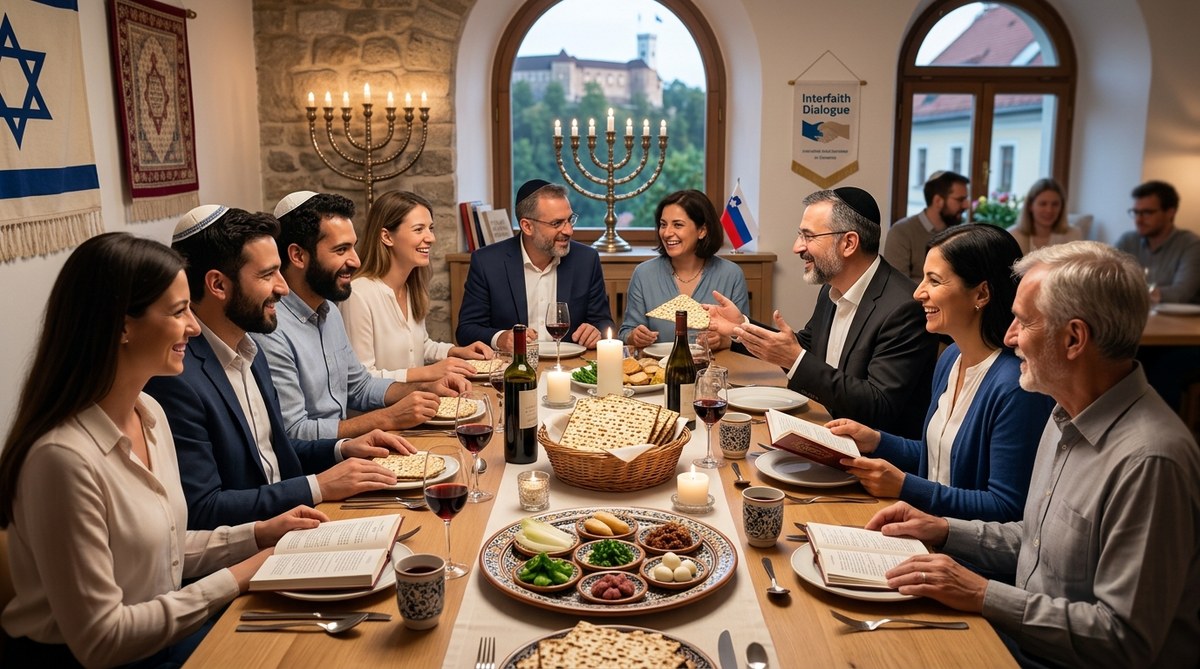
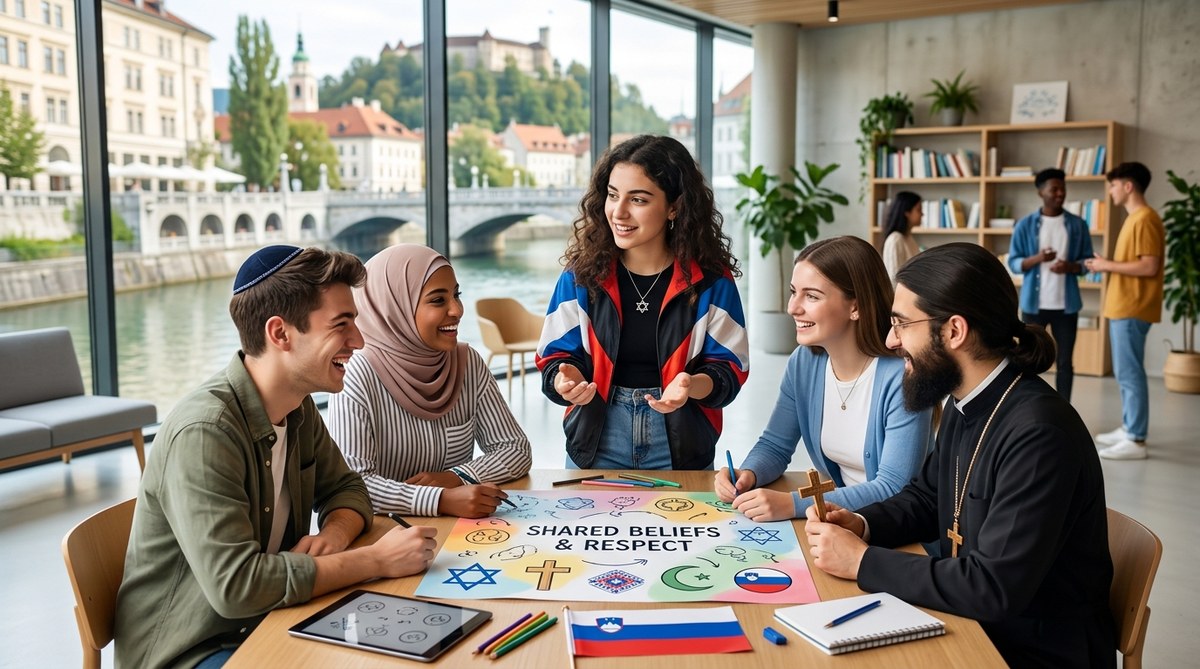
Slovenia’s Jewish community is small, but it has built robust relationships with other faith groups. Their interfaith projects have transformed the religious landscape. For example, Jewish and Catholic communities in Ljubljana have created lasting friendships through shared meals and study. Muslims and Jews have shown that religious coexistence is possible even in a small country. Interfaith Seders are also gaining traction. And a youth movement is redefining religious identity for a new generation.
All of these efforts share a common thread. They start with personal relationships. Then they build ritual. Then they build trust.
American Jewish communities can look to Slovenia not as a copycat model but as a proof of concept. If a tiny community in Central Europe can host a monthly interfaith Havdalah that draws people from different backgrounds, larger American communities can certainly do the same.
What to Do Next
Start small. Pick a date two months from now. Invite three friends from different faith communities. Ask them to help you plan. Keep the ritual authentic. Trust the Havdalah to do its work.
Within a few months, you might see something beautiful. New faces at your Friday night services. Conversations that go beyond politeness. A sense that Judaism has something to offer the world, not just the Jewish community.
Slovenia has shown the way. Now it is our turn.