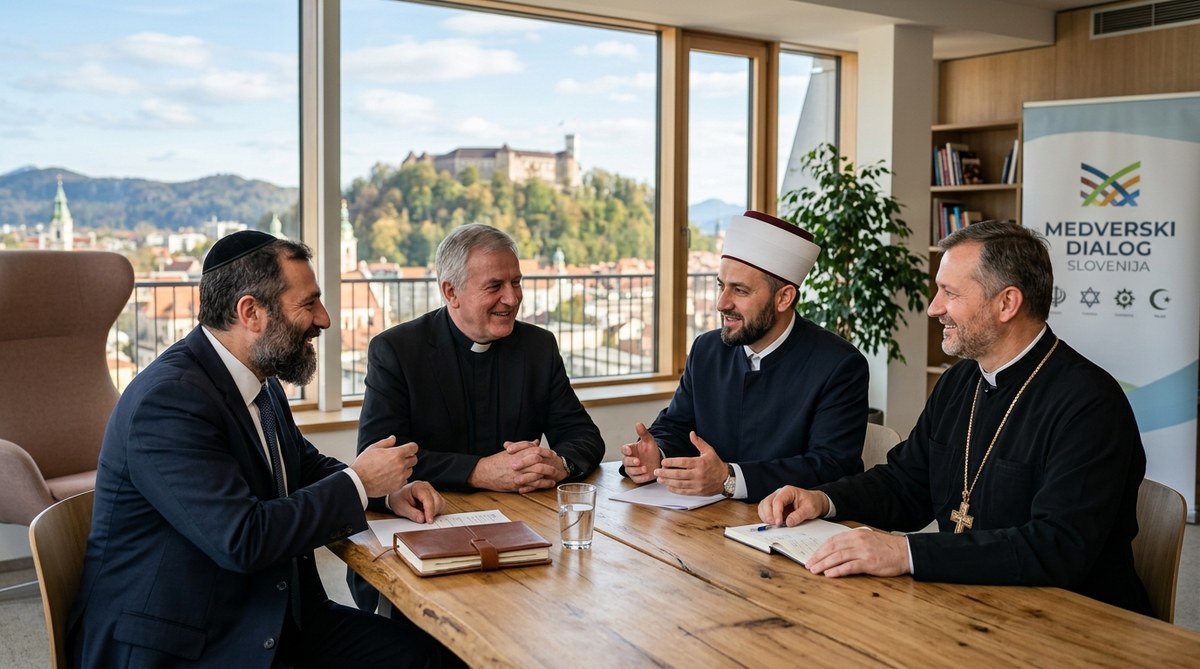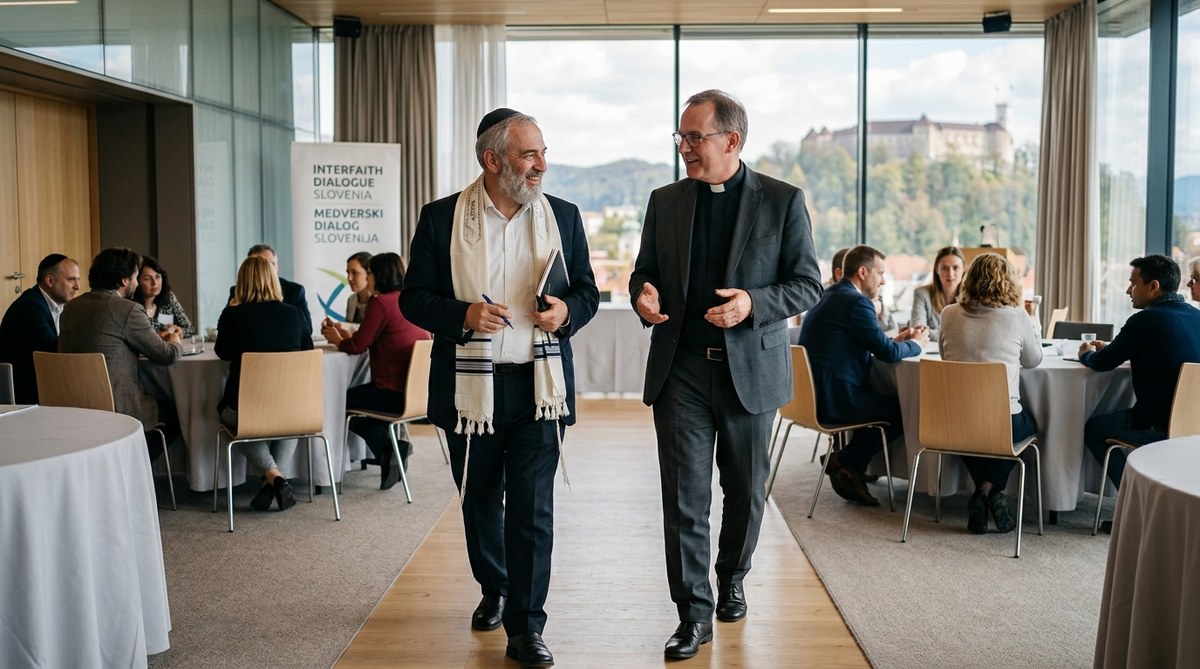
A small country in Central Europe is showing American Jewish communities a new way to build bridges. In Slovenia, Jewish, Muslim, and Christian teenagers meet regularly not just to talk but to cook, hike, and volunteer together. The results are real friendships and a measurable drop in prejudice. This isn't a one-off feel good project. It is a repeatable model that youth program coordinators and community leaders in the United States can adapt starting tomorrow.
Slovenia's interfaith youth exchange works because it prioritizes shared activities over lectures, empowers teens as co-leaders, and uses local cultural heritage as a neutral meeting ground. American Jewish communities can apply these same principles by starting small, focusing on action, and measuring trust instead of attendance.
Why a Tiny Jewish Community in Slovenia Leads the Way
Slovenia's Jewish community is small around 500 people. The Muslim community is larger but still a minority. Both groups know what it feels like to be misunderstood. That shared experience created a foundation. In 2022, a handful of youth workers from Ljubljana's synagogue and the Islamic Community of Slovenia decided to try something different. They didn't start with theology. They started with a pizza night.
Today that informal gathering has grown into a structured exchange program that involves dozens of teens every year. The program runs alongside similar efforts described in our article on what Muslims and Jews in Slovenia can teach us about religious coexistence. But the youth track has its own distinct rhythm.
The core insight is simple. Teenagers do not want to sit in a circle and debate the nature of God. They want to do something. Once they do something together, the questions come naturally.
The Three Pillars of the Slovenian Model
The exchange program rests on three pillars that make it repeatable and scalable. Each pillar addresses a weakness common in American interfaith youth programs.
Pillar One: Action Before Dialogue
Most interfaith programs in the United States start with a panel or a lecture. The Slovenian model flips that order. Teens first participate in a shared activity. It could be a soccer tournament, a graffiti art workshop, or a community garden cleanup. Only after several sessions do facilitators introduce structured conversations.
This sequence works because shared physical activity lowers anxiety. Teens who have passed a soccer ball to each other find it easier to ask challenging questions later.
Pillar Two: Teen Co-Leadership
Adults in Slovenia's program design the framework, but teens run the sessions. Each cohort elects two coordinators one from the Jewish community and one from a partner community. These teen leaders help choose activities, set ground rules, and mediate disagreements.
American programs often treat teens as participants rather than partners. The Slovenian model shows that handing over real responsibility builds ownership and reduces the "mandatory retreat" feeling.
Pillar Three: Neutral Cultural Ground
Slovenia's exchange uses local history and culture as a meeting point. Teens visit the Jewish Cultural Center in Ljubljana, explore a medieval mosque site, and learn about the shared cultural heritage of the region. This approach avoids forcing any single tradition to be the host.
For American communities, this could mean meeting at a public library, a museum, or a community park instead of always at a synagogue or a church.
How to Start a Slovenia-Style Exchange in Your Community
Here is a practical process used by Slovenian coordinators. You can adapt it to your local context.
- Find a co-host from a different faith community. Reach out to a mosque, church, or Buddhist center. Start with a coffee meeting. Do not ask for a commitment. Just listen to their hopes and fears.
- Pick a neutral activity without religious content. Choose something everyone can enjoy: hiking, board games, cooking a meal that avoids dietary conflicts (e.g., vegetarian pizza or salad). Run it once before discussing deeper goals.
- Invite teens to the first session as equal participants, not as representatives. Do not ask them to speak for their entire tradition. Let them be individuals first.
- After three to four sessions, hold a retrospective. Ask teens: What was fun? What made you uncomfortable? What do you want to learn about each other's traditions?
- Let the teens design the next phase. If they want a holiday exchange, help them plan it. If they want to volunteer together at a homeless shelter, make it happen.
- Measure trust, not attendance. Use a simple anonymous survey before and after the program. Ask: "How comfortable would you feel inviting a peer from the other community to your home?" Track the change.
Tools and Techniques That Work
The Slovenian program uses several techniques that American coordinators can borrow. The table below maps common techniques to common mistakes.
| Technique | How It Works in Slovenia | Mistake to Avoid |
|---|---|---|
| Shared meals | Teens cook together using recipes from each tradition (e.g., kosher-friendly baklava). | Forcing a "potluck" where some foods are off limits. Check dietary rules in advance. |
| Community service | Groups clean a local park or pack food boxes for a secular charity. | Picking a charity tied to one religion. Keep the cause neutral. |
| "Two truths and a question" | Each teen shares two personal facts and one question about the other's tradition. | Letting the conversation turn into debate. Frame it as curiosity, not challenge. |
| Peer-led reflection | Teen coordinators guide a 10 minute check-in after each activity. | Adults taking over the debrief. Step back unless safety is an issue. |
What American Programs Often Get Wrong
Slovenian coordinators learned from early failures. They shared these insights during a workshop in 2025. Many of the mistakes mirror what we see in American youth programs.
"Our first attempt failed because we tried to cover too much too fast. We wanted to fix centuries of misunderstanding in one weekend. The teens felt pressured and stopped coming. We had to learn to slow down and let the relationships breathe."
* Maja K., youth coordinator, Ljubljana Jewish Community
Common mistakes include:
- Starting with theology rather than shared humanity.
- Expecting one youth from a community to speak for the entire tradition.
- Ignoring the real power dynamics between majority and minority groups.
- Measuring success by number of events rather than depth of connection.
- Forgetting about follow-up after the program ends.
Real Results from 2024 and 2025
The Slovenian exchange program has published some encouraging numbers. In a 2025 survey of participating teens:
- 84% said they made at least one close friend from a different faith.
- 72% reported feeling more comfortable asking questions about other religions.
- 61% said they would defend a peer from another faith if they heard a prejudiced comment.
These numbers come from a small sample, but they are consistent across three cohorts. The same survey found that the biggest predictor of positive change was the number of shared non religious activities a teen attended. More soccer games equaled less prejudice.
Adapting the Model for American Jewish Communities
American Jewish communities face different challenges than those in Slovenia. Your community may be larger, more diverse, or more polarized. But the core principles still apply.
Start with a single partnership. Do not try to replicate the entire Slovenian program at once. Find one mosque or church whose leaders share your values. Offer a simple event like a joint hike at a state park. See how it feels.
Use your cultural heritage as a bridge. Share the story of your community's history through a lens of resilience and contribution. That approach has worked well in the program described in how Slovenian religious leaders are building interfaith collaborations. American Jewish history is rich with similar stories of immigration, creativity, and community building. Use those stories to connect, not to compete.
Make sure teens have real agency. Give them budget responsibility for one activity. Let them choose the location and the food. When they own the program, they will show up.
Measuring What Matters
Many interfaith programs in the United States track attendance numbers or social media likes. Those are vanity metrics. The Slovenian model tracks something deeper. It asks participants to rate their trust in the other community on a scale of one to ten before and after the program. A change of even one point is meaningful.
You can do this too. Use a simple Google Form. Ask the same questions every year. Over time you will see whether your program is actually changing hearts or just filling a room.
What the Future Holds
Slovenia's interfaith youth exchange is still young. It has not solved every problem. There have been tense moments, miscommunications, and dropouts. But the program continues because both communities trust the process.
American Jewish communities face rising antisemitism and growing polarization. You cannot afford to wait for a perfect model. The Slovenian approach offers a path that is practical, low cost, and grounded in human connection. You do not need a big budget or a large staff. You need a willingness to start small, listen carefully, and let teenagers lead.
The first step is the hardest. Pick up the phone. Call a leader from a different faith community. Ask if they want to share a pizza with your teens. That is how Slovenia started. It can work in your town too.
Taking the First Step Toward Lasting Change
The Slovenian interfaith youth exchange offers a blueprint that American Jewish communities can implement right now. It does not require government grants or academic experts. It requires a few committed adults and a group of teenagers who are ready to do something together. The pizza will get eaten. The soccer ball will get kicked. And somewhere between the second meeting and the fifth, something shifts. A Jewish teen learns the name of a Muslim teen's grandmother. A Muslim teen realizes a Jewish home looks a lot like her own. Those small moments build the trust that no lecture can create.
So call that leader today. Invite their teens to join yours for a hike, a game, or a cooking class. Let the relationships grow slowly. Measure the trust. And watch what happens when you stop talking about interfaith work and actually do it together.