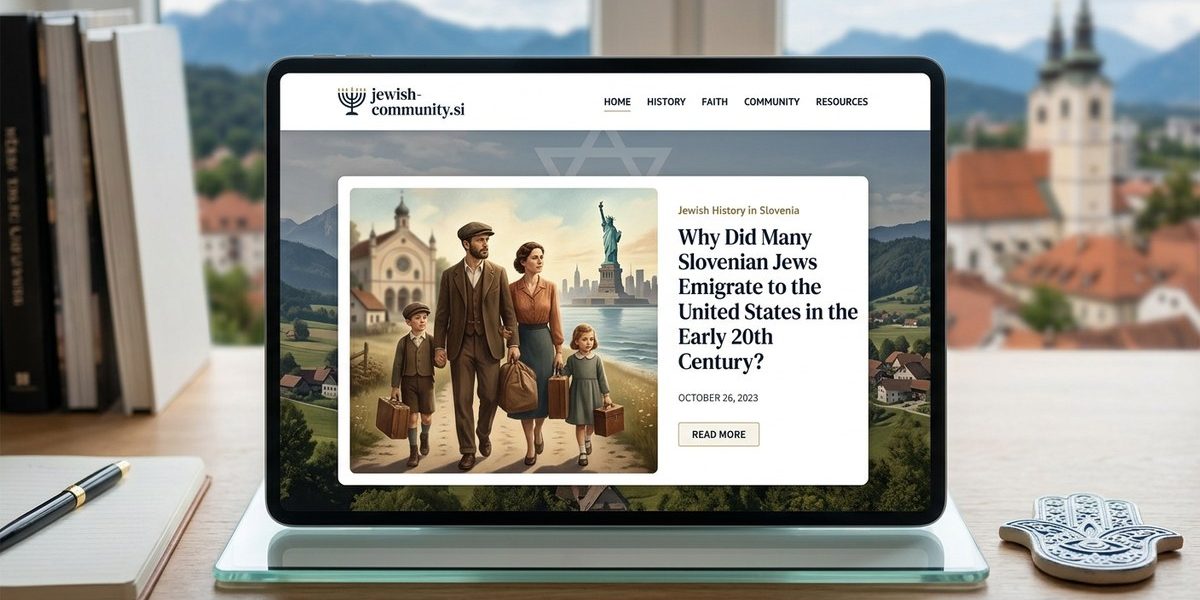
In 1903, a young Jewish tailor named Moishe left the small Slovenian town of Murska Sobota with little more than a sewing kit and a crumpled letter from a cousin in Chicago. He was one of hundreds of Slovenian Jews who, in the early twentieth century, made the long voyage to America. Their stories are often overlooked, overshadowed by the much larger waves of Eastern European Jewish immigration. But the Slovenian Jewish emigration to the United States has its own unique blend of causes, routes, and outcomes. For researchers and genealogy enthusiasts, understanding this chapter opens a door to a rich, hidden past.
Slovenian Jews left their homeland due to a combination of economic hardship, rising nationalism, and limited civil rights. Many sought better opportunities in American cities, especially Cleveland, Chicago, and New York. Their migration followed a pattern similar to other Central European Jews but with distinct local triggers. Understanding these reasons helps modern descendants trace their roots.
A Brief History of Jewish Life in Slovenia Before the Exodus
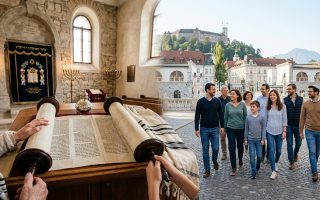
Jewish communities in the Slovenian lands date back to the Middle Ages. Towns like Maribor, Ptuj, and Ljubljana once had vibrant Jewish quarters. But by the late nineteenth century, the Jewish population had shrunk to just a few thousand. A series of expulsions in the 1500s and 1600s had forced many to leave or convert. After the Edict of Toleration under Emperor Joseph II in the 1780s, Jews were allowed to return and settle, but they faced heavy restrictions. They paid special taxes, could not own land in most areas, and were limited in their trades.
Most Slovenian Jews in the 1800s made a living as small merchants, peddlers, or artisans. They lived in rural villages or small towns, not in large urban centers. The arrival of the industrial age brought new pressures. Smaller workshops could not compete with factories. Crop failures in the late 1800s hit the countryside hard. For many Jewish families, economic survival became a daily struggle.
Around the same time, nationalistic movements began to grow across Central Europe. In the Slovenian lands, the rise of a distinct Slovenian national identity sometimes came with an unwelcome side effect: anti-Jewish sentiment. Jewish communities found themselves caught between German-speaking elites and Slovenian-speaking peasants, neither fully accepted by either group.
These conditions set the stage for a wave of emigration that would take Slovenian Jews across the Atlantic.
The Push Factors: Why Slovenian Jews Left Home
Several forces pushed Slovenian Jews to consider leaving their homeland. Understanding these factors is key to understanding the broader story of Slovenian Jewish emigration to the United States.
- Economic hardship: Many Jewish families lived on the edge of poverty. The decline of traditional crafts and small-scale trade meant fewer opportunities. A tailor or shoemaker in a village could not earn enough to support a growing family.
- Legal restrictions: Even after emancipation in Austria-Hungary in 1867, local regulations still limited where Jews could live and what professions they could pursue. Marriage licenses for Jews were sometimes denied to control population growth.
- Antisemitism and social exclusion: While Slovenia was not home to violent pogroms like those in Russia, Jews faced everyday discrimination. They were often barred from certain clubs, schools, and public offices. Many felt like outsiders in their own towns.
- Military conscription: Young Jewish men dreaded mandatory service in the Austro-Hungarian army. The army was notoriously harsh toward Jewish soldiers, and service could last three years or more. Emigration offered a way to escape the draft.
- Natural disasters and famines: A series of bad harvests in the 1890s and early 1900s made food scarce. When your children are hungry, the idea of starting over somewhere new becomes very attractive.
Each family had its own mix of reasons. Some left because a father lost his business. Others left because they wanted their children to attend university without quotas. The cumulative effect was a steady trickle of departures that turned into a steady stream between 1900 and 1914.
The Pull Factors: What Drew Slovenian Jews to America
America was not the only destination. Some Slovenian Jews went to Vienna, Berlin, or even South America. But the United States became the top choice for many. Here is why:
- Jobs and opportunities: Letters from earlier emigrants described factories, garment shops, and booming cities where a hard worker could earn a decent living. The promise of upward mobility was real.
- Religious freedom: America offered the chance to practice Judaism openly without fear. There were no ghettos, no special taxes, no quotas on professions.
- Chain migration: One person from a village would leave, find work, and then send money for tickets for relatives. This created a self-sustaining pattern. By 1910, nearly every Slovenian Jewish family had a cousin or uncle in Cleveland or Chicago.
- Land of the free: For young men escaping the draft, the United States represented freedom from military service. For women, it meant a chance to marry outside a limited local pool.
“The letters my grandfather received from his brother in Cleveland were like gold. They talked about a synagogue on every corner, and jobs where you did not have to hide your Jewishness. That was enough for him to book a ticket.” — Historian Dr. Ana Kovač, University of Ljubljana
How the Journey Worked: A Step-by-Step Look
Emigrating from Slovenia to the United States in the early 1900s was not simple. It required planning, money, and courage. Here is the typical process, as pieced together from family stories and ship manifests.
-
Save money for passage. A steerage ticket from a European port to New York cost around $30 to $50 (roughly $900 to $1,500 in 2026 dollars). Many families had to borrow from relatives or sell possessions.
-
Obtain a passport and visa. Slovenian Jews were subjects of Austria-Hungary. They needed a passport from the local district office, plus a visa from the American consulate. This could take weeks and required paying fees.
-
Travel to a departure port. Most Slovenian Jews left from the port of Trieste (then part of Austria-Hungary, now in Italy). Others went to Hamburg or Bremen via train. The journey from a small village to the coast could take three days.
-
Board a steamship. Steerage class was cramped, insanitary, and uncomfortable. The Atlantic crossing lasted 10 to 14 days. Passengers slept in bunk beds in crowded compartments. Seasickness was common.
-
Arrive at Ellis Island. New York was the main entry point. Immigrants underwent medical inspections and interviews. Most were processed within a few hours, but some were detained for health reasons.
-
Meet a contact. Upon release, a relative or landsman (a person from the same region) would meet them. They would then travel by train to the final destination, usually Cleveland, Chicago, or New York City.
Patterns of Settlement: Where Did Slovenian Jews Go?
Slovenian Jewish emigrants did not scatter randomly. They formed small enclaves in specific American cities. The table below summarizes the major destinations and the reasons behind them.
| City | Reason for Settlement | Estimated Population by 1920 | Key Industries |
|---|---|---|---|
| Cleveland, Ohio | Strong existing Slovenian Christian community; Jewish aid societies | ~400 | Garment manufacturing, metalworking |
| Chicago, Illinois | Industrial boom; chain migration from Prekmurje region | ~300 | Slaughterhouses, retail, tailoring |
| New York City, NY | Entry port; large Jewish infrastructure | ~200 | Textile sweatshops, peddling |
| Minneapolis, MN | Opportunity in grain trade; smaller community | ~50 | Milling, wholesale |
| San Francisco, CA | Transcontinental railroad; few but notable | ~30 | Import/export, real estate |
Cleveland became the most popular destination because of the established Slovenian Catholic community. Catholic Slovenians had been immigrating to Cleveland since the 1880s. Jewish Slovenians found familiar language and culture there, plus Jewish fraternal organizations that helped newcomers get jobs and housing.
Chicago attracted Jews from the Prekmurje region in eastern Slovenia. That area had a higher concentration of Jewish families, and once a few settled in Chicago, others followed. By 1920, there was even a small Slovenian Jewish synagogue in Chicago, though it later merged with a larger congregation.
Tracing Your Slovenian Jewish Ancestors: A Genealogist’s Guide
If you suspect your family came from Slovenia, you have several tools at your disposal. Here are practical steps to start your search.
- Start with family interviews. Talk to older relatives. Ask for names, towns, and stories. Write down any Yiddish or German phrases they remember. Slovenian Jews often spoke German as their primary language, but many also knew Slovenian.
- Search ship manifests. Use websites like Ellis Island records or Ancestry.com. Look for surnames ending in “ic” or “ski,” but be aware that names were often anglicized. A surname like “Kohn” might have been originally “Kohne” or “Koen.”
- Check naturalization records. After five years of residence, immigrants could become US citizens. The paperwork often lists the exact birthplace in Austria-Hungary. Use the town name to find records in Slovenia.
- Contact Slovenian archives. The National Archives of Slovenia in Ljubljana holds census records, Jewish community registers, and passport applications. Many are now digitized. You can also reach out to the Jewish community of Slovenia for guidance.
- Use DNA testing. Autosomal DNA tests like 23andMe or AncestryDNA can connect you with distant cousins. Some Slovenian Jewish descendants have formed Facebook groups to share research.
For a deeper look at Jewish life in Slovenia before the emigration wave, check out our article on from emancipation to integration: Jewish life in 19th century Slovenia.
Common Mistakes in Slovenian Jewish Genealogy
Even experienced researchers can hit dead ends. Avoid these pitfalls.
- Assuming all Slovenian Jews spoke Yiddish as a first language. Many were German-speaking and used Slovenian for daily trade. Yiddish was more common in the east of Slovenia (Prekmurje), but not everywhere.
- Confusing “Slovenian” with “Slovak” or “Slavonian.” These are different regions. A record saying “born in Slovenia” might actually refer to Slavonia (in Croatia). Always verify the specific town.
- Overlooking name changes at Ellis Island. Officials often wrote down names phonetically. “Moishe” became “Morris.” “Leib” became “Louis.” Look for sound-alike spellings.
- Assuming the family left because of antisemitism alone. As discussed, economic factors were often equally or more important. Do not overlook the pull of American jobs.
The Legacy of Slovenian Jewish Emigration
The Slovenian Jewish community in the United States never grew very large. Perhaps a few thousand people in total. But its impact was felt. Families built businesses, sent children to college, and contributed to American Jewish life. Some descendants became prominent lawyers, doctors, and artists.
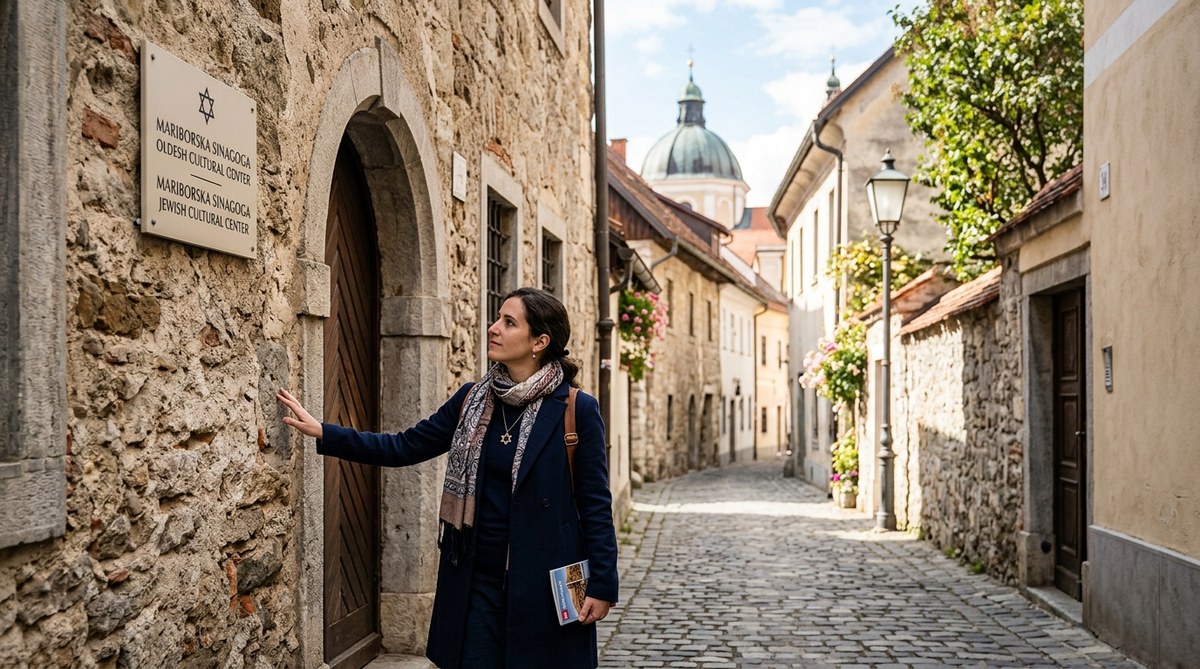
Back in Slovenia, the Jewish community almost disappeared after the Holocaust. The few who remained rebuilt after World War II, but emigration had already thinned the ranks. Today, you can visit the Jewish cemetery in Ljubljana or the restored synagogue in Maribor and see the names of families who once lived there.
For a closer look at one of the historical Jewish centers in Slovenia, read about why did Maribor once have Slovenia’s largest Jewish community.
How to Honor Your Slovenian Jewish Heritage
If you discover you have Slovenian Jewish roots, there are ways to connect with that heritage. You can join genealogy groups focused on Central European Jewry. You can visit Slovenia and walk the streets your ancestors knew. You can also share your family’s story on websites like the Jewish Museum of Slovenia’s digital archive.
Another meaningful step is to research the Jewish partisan fighters in Slovenia during World War II, who included some descendants of the earlier emigration wave who returned to fight.
Every family’s story matters. The Slovenian Jewish emigration to the United States may be a small thread in the larger tapestry of Jewish migration, but it is a thread worth pulling. Your great-grandfather’s journey from a village in Slovenia to a tenement in Chicago is not just a footnote. It is a testament to courage, hope, and the belief that a better life is possible.
Start your search today. Talk to your elders. Dig into the archives. Share what you find. And remember: behind every name on a ship manifest is a real person who took a leap of faith. They did it so that you could be here.